
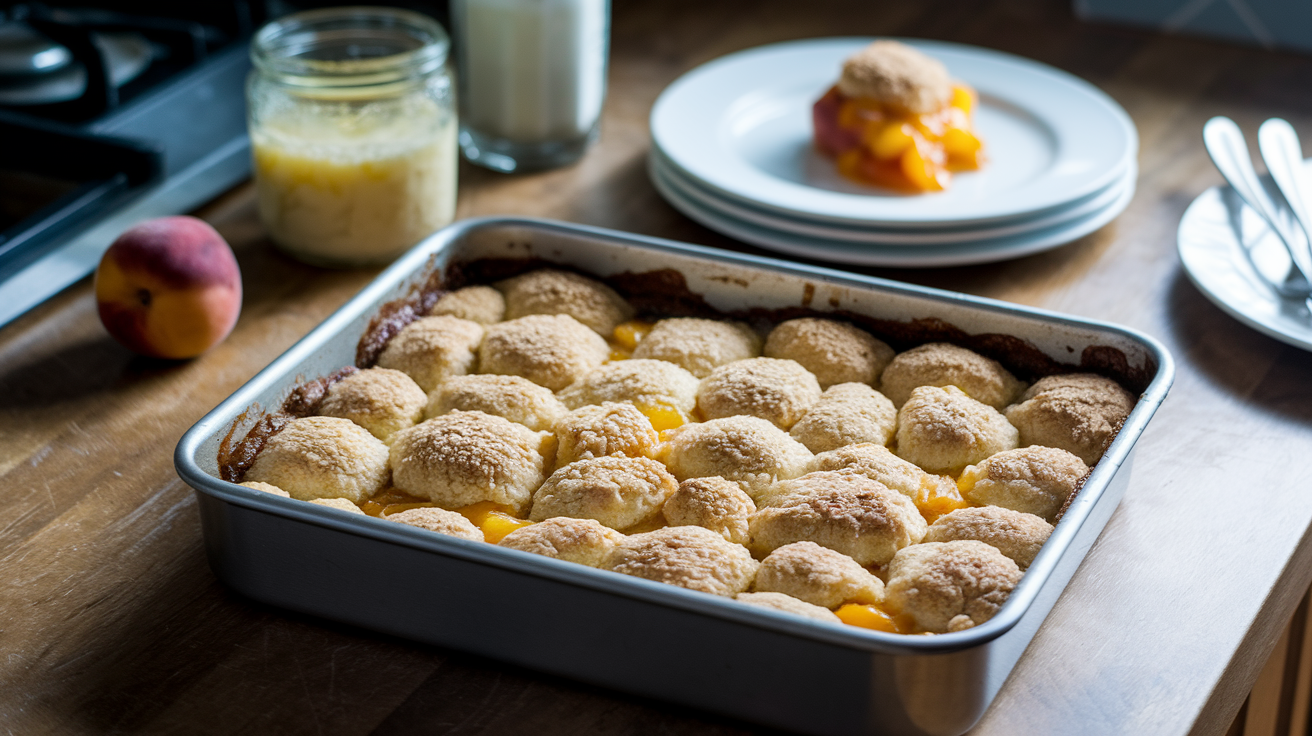
Think the best peach cobbler comes from a can? Think again.
With five fresh peaches, a thin, pourable batter, and a hot pan of melted butter, you get jammy fruit beneath a golden, crisp top, and it only takes about five minutes to assemble once the peaches are ready.
This step by step recipe teaches the easy peel trick, how to cook the peaches until glossy and thick, and how to pour the batter so it bakes into tender cake pockets through the fruit.
No fuss, just buttery smell, bubbling edges, and a steamy scoop of vanilla ice cream.
Fully Detailed From‑Scratch Peach Cobbler Instructions (Fresh Peach Focus)

A classic peach cobbler starts with five fresh peaches, peeled, sliced, and cooked until jammy and sweet. The batter’s thin and pourable, not thick like cake. Once it bakes under the fruit, it rises through the peaches and forms a golden, crisp top with tender cake underneath. This recipe takes about five minutes to assemble once your peaches are ready.
Start by peeling your peaches the easy way. Bring a pot of water to a boil and drop in two to three peaches at a time for about thirty seconds. Pull them out with a slotted spoon and drop them straight into a bowl of ice water. The skins should slide right off without a peeler or any frustration. Slice the peeled peaches into even wedges about half an inch thick so they cook evenly and hold their shape.
Now cook the peaches. Toss four cups of sliced peaches (about 600 to 700 grams) into a saucepan with three-quarters cup granulated sugar and a quarter teaspoon salt. Set the heat to medium and stir gently for a few minutes until the sugar dissolves and the peaches release their juices. They should look glossy and slightly softened but not mushy. Set them aside while you build the batter.
-
Preheat your oven to 350°F and place a 9 by 13 inch glass baking dish inside with 6 tablespoons of sliced butter (about 85 grams). Let the butter melt completely while the oven heats up.
-
In a medium bowl, whisk together 1 cup all-purpose flour (120 grams), 1 cup granulated sugar (200 grams), 2 teaspoons baking powder, and a quarter teaspoon salt.
-
Add three-quarters cup milk (180 milliliters) to the dry ingredients and stir just until everything’s moistened. The batter will be very thin, almost like pancake batter. That’s exactly what you want.
-
Carefully pull the hot baking dish from the oven. The butter should be fully melted and sizzling.
-
Pour the thin batter evenly over the melted butter. Don’t stir it in. Just let it pool on top.
-
Spoon the cooked peaches and all their juices directly over the batter in an even layer. Again, don’t stir.
-
Sprinkle ground cinnamon generously across the top for a warm, spiced finish.
-
Bake at 350°F for 38 to 40 minutes, until the topping’s golden brown with a few deeper spots and the filling’s bubbling in the center, not just around the edges.
Choosing the Best Peaches for a Classic Cobbler
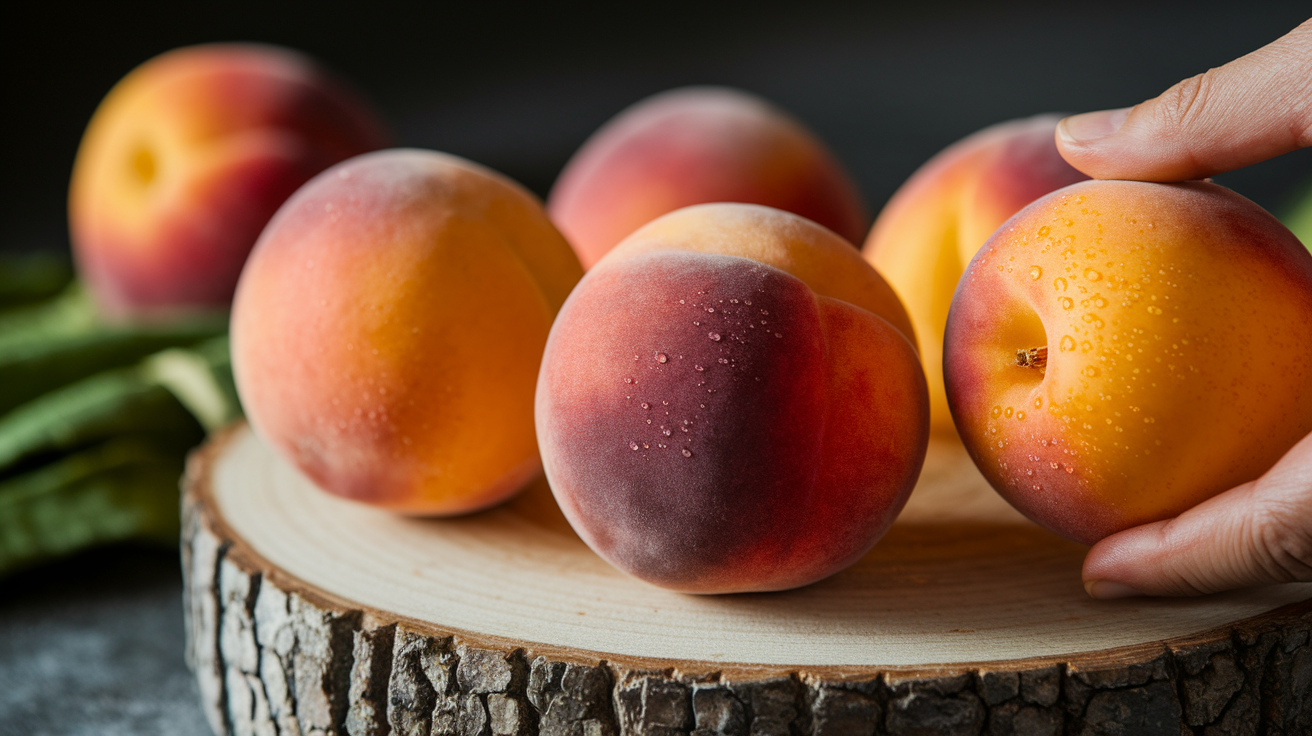
Ripe, in-season peaches make all the difference in a cobbler. When peaches are picked at peak ripeness during summer, their natural sugars are high, their flesh is tender, and their juice is thick and sweet. If your peaches are hard or taste tart, the cobbler filling will be thin and you’ll need to add extra sugar to balance the flavor.
Look for peaches that give slightly when you press them near the stem end. They should smell sweet and peachy, not green or grassy. Avoid rock-hard fruit that won’t soften in the short bake time. Pass on overly soft peaches that might turn to mush instead of holding their sliced shape.
Choose freestone peaches when you can because the pit pulls away cleanly and makes slicing faster.
Yellow peaches deliver classic peach flavor with plenty of sweetness and juice for the filling.
White peaches are milder and slightly floral. They work beautifully if you want a softer, less tangy cobbler.
If your peaches taste tart after slicing, bump the sugar in the fruit mixture from three-quarters cup to a full cup. Early-season or late-season peaches can be less sweet, so taste a slice before you start cooking and adjust the sugar right then.
Classic Cobbler Batter and Topping Techniques
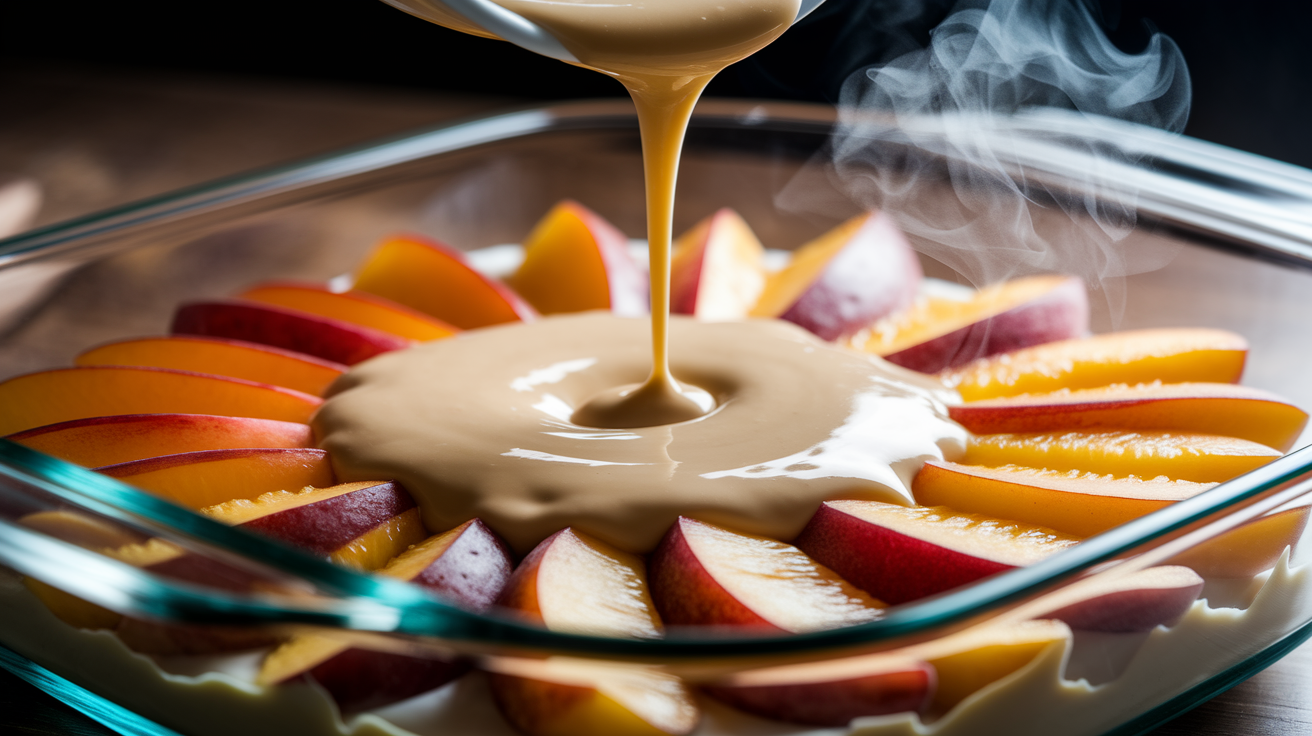
The pour-over batter technique is what makes this cobbler so foolproof. You don’t roll dough or cut biscuits. You just mix a thin, sweet batter and pour it over hot melted butter. As the cobbler bakes, the batter rises up through the fruit and forms pockets of tender cake with crisp, buttery edges where it touches the pan. The fruit juices sink down and create a jammy layer underneath.
Keep your mixing light and fast. Stir the flour, sugar, baking powder, and salt together, add the milk, and stop as soon as everything looks moistened. A few small lumps are fine. Overmixing will develop the gluten in the flour and make the topping dense instead of soft and cake-y. The batter will look almost too thin, like you made a mistake, but that texture is exactly what lets it rise around the fruit instead of sitting like a pancake on top.
Achieving the Ideal Classic Cobbler Texture
The melted butter in the bottom of the pan does more than grease the dish. It fries the edges of the batter as it bakes, giving you crisp, golden corners and sides that taste almost like shortbread. The center stays softer because the fruit juices keep it moist and tender. When you scoop a serving, you should get a little bit of both textures in every spoonful.
Pour the batter slowly and evenly so it spreads across the butter without gaps. Spoon the peaches toward the center and avoid piling them right against the pan edges, where sugar can burn. Don’t stir the batter and fruit together or the layers won’t form correctly. Let the cobbler rest for ten minutes after baking so the filling thickens and doesn’t run when you serve it.
Preventing Soggy Bottoms and Ensuring Proper Cobbler Bake

A soggy bottom happens when the filling stays too wet or the oven’s not hot enough to set the batter. Bake your cobbler at 350°F on the center rack so heat circulates evenly. The batter underneath needs enough time and heat to cook through, and the fruit on top needs to bubble hard enough to thicken its juices. You’ll know the cobbler’s done when the topping is golden brown all over, not just at the edges, and the filling’s bubbling steadily in the middle of the pan.
If the top starts to brown too fast before the center is set, tent the cobbler loosely with aluminum foil and keep baking. The foil slows down the browning without stopping the bake. Check the center by gently shaking the pan. If the middle still jiggles like liquid, it needs more time. When it looks thick and the bubbles move slowly, pull it out.
The filling should bubble in the center, not just around the edges where heat hits first. A golden-brown top with a few deeper brown spots means the sugar has caramelized and the batter is baked through. Let the cobbler cool for at least ten minutes so the juices settle and thicken before you scoop.
Ingredient Swaps, Variations, and Southern‑Style Twists
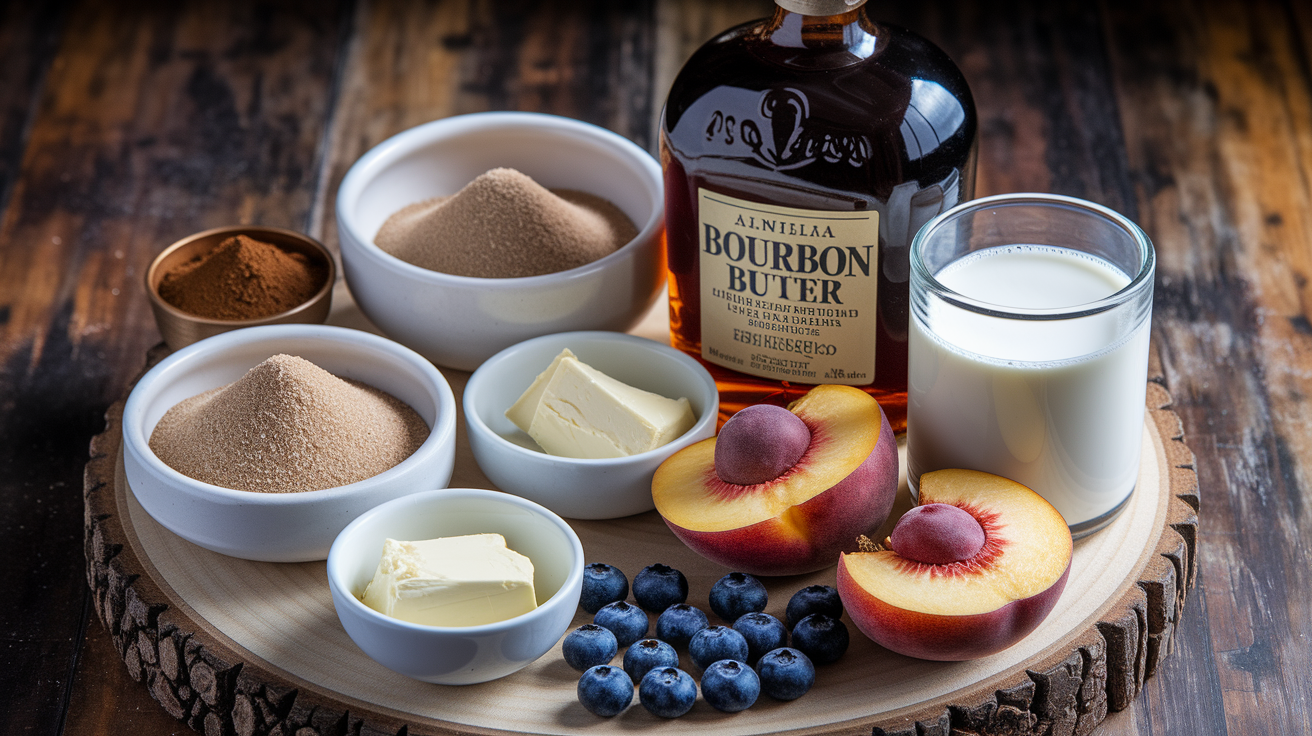
Classic peach cobbler is already crowd-friendly, but small tweaks let you make it your own. You can add spice, swap fruit, change the sweetness, or adjust for dietary needs without losing the warm, jammy heart of the dessert.
Southern‑Inspired Enhancements
For a deeper, more molasses-rich flavor, replace half the granulated sugar in the fruit with light brown sugar. Add a half teaspoon of ground cinnamon or a pinch of nutmeg to the batter for extra warmth. A tablespoon of bourbon stirred into the cooked peaches gives the filling a subtle, grown-up edge that pairs perfectly with vanilla ice cream.
Dietary Alternative Cobblers
Swap the butter for dairy-free butter or melted coconut oil in a one-to-one ratio. Use unsweetened almond milk, oat milk, or soy milk instead of regular milk. For gluten-free cobbler, replace the all-purpose flour with a gluten-free baking blend that includes xanthan gum, and expect a slightly more tender, less structured topping. These swaps don’t require any other changes to the recipe.
Fruit Mix‑Ins and Substitutions
Nectarines work exactly like peaches and don’t need peeling, which saves time. A handful of blueberries or pitted cherries mixed with the peaches adds color and a little tartness. White peaches give you a milder, floral cobbler with less acidity. A teaspoon of fresh lemon or lime juice squeezed over the fruit before baking brightens the flavor and cuts through the sweetness without making the cobbler taste citrusy.
Toss in a cup of blueberries with the peaches for a summer-berry twist. Use half peaches and half raspberries for a peach-melba vibe. Add a teaspoon of vanilla extract to the batter for a softer, sweeter flavor. Sprinkle a handful of chopped pecans over the top before baking for crunch.
Baking Pans, Dish Materials, and Scaling the Peach Cobbler Recipe

A 9 by 13 inch glass baking dish is the standard for this recipe. Glass heats evenly and lets you see the edges as they brown. You can also use a ceramic dish or a metal pan, but metal conducts heat faster, so check the cobbler a few minutes early. Cast iron skillets work beautifully for a rustic presentation, and the heavy pan gives you extra-crisp edges. If you want individual servings, divide the batter and fruit between small loaf pans or ramekins, but you’ll need to adjust the bake time.
Doubling the recipe is simple. Use two 9 by 13 pans and split the batter and fruit evenly between them. The bake time stays the same because the depth of the cobbler doesn’t change. If you’re halving the recipe for a smaller group, use an 8 by 8 or 9 by 9 inch square pan and keep the oven temperature and timing the same.
| Pan Type | Expected Bake Time | Notes |
|---|---|---|
| 9×13 glass dish | 38–40 minutes | Standard recipe size; even heat and easy to monitor. |
| Small loaf pans | 30–35 minutes | Thicker layers; tent with foil if top browns early. |
| 10-inch cast iron skillet | 38–42 minutes | Crisp edges; check center for doneness before pulling. |
Serving and Storing a Classic From‑Scratch Peach Cobbler
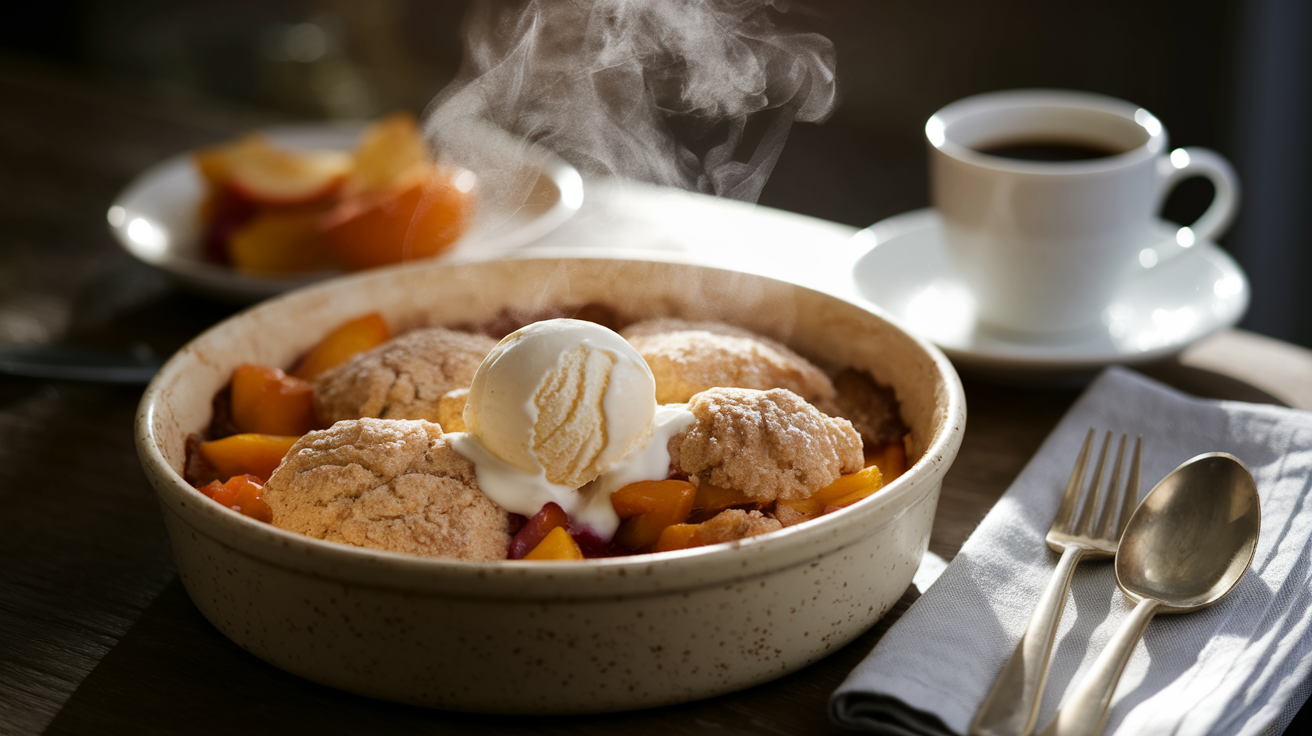
Serve peach cobbler warm, straight from the oven, with a scoop of vanilla ice cream melting into the jammy fruit. The contrast between hot cobbler and cold ice cream is the whole point. Let the cobbler rest for ten minutes after baking so the filling thickens and doesn’t run all over the plate. If you’re not serving it right away, you can let it cool completely and reheat individual portions in the microwave or warm the whole pan in the oven.
Store leftover cobbler covered in the refrigerator for four to five days. To reheat, bring it to room temperature and bake at 350°F for about twenty minutes, or until warmed through. Tent the top with foil if it starts to brown again. You can freeze baked cobbler for up to three months. Wrap it tightly in plastic wrap and then foil. Thaw it overnight in the fridge and reheat as you would fresh cobbler.
Vanilla ice cream is classic, but whipped cream, Greek yogurt, or a drizzle of heavy cream also work. Dust the top with powdered sugar just before serving for a simple, elegant finish. Serve it straight from the baking dish for a casual, family-style vibe. Pair it with hot coffee or sweet iced tea for a true southern dessert moment.
Final Words
You’ve prepped five peaches with a quick blanch and peel, cooked them with sugar until juicy, mixed a simple batter, poured it over melted butter, and spooned the peaches on top. Bake at 350°F for 38–40 minutes until the filling bubbles and the top is golden.
We also covered picking ripe fruit, topping tricks for crisp edges, how to prevent a soggy bottom, plus easy swaps, pan options, and storing and reheating.
Once the peaches are prepped, it’s really five minutes to assemble. Use this best classic peach cobbler recipe from scratch for weeknight desserts or weekend gatherings, warm, steamy, and hard to resist. You’ll get cheers every time.
FAQ
Q: How many peaches do I need and how should I prepare them for a classic cobbler?
A: The number of peaches and prep: use five peaches (about 4 cups or 600–700 g). Blanch 30 seconds in boiling water, cool in an ice bath, then slice about 1/2 inch thick.
Q: What is the batter recipe and how should I prep the pan?
A: The batter recipe and pan prep: mix 1 cup flour, 1 cup sugar, 2 tsp baking powder, 1/4 tsp salt, and 3/4 cup milk. Melt 6 tbsp (85 g) butter in a 9×13 pan while preheating oven to 350°F.
Q: Is it true I can assemble the cobbler in 5 minutes once the peaches are ready?
A: The assembly time and method: once peaches are prepped you can assemble in 5 minutes. Pour batter over melted butter, then spoon peaches on top without stirring so the batter rises through the fruit.
Q: What oven temperature and bake time should I use, and how will I know it’s done?
A: The oven temperature, bake time, and doneness cues: bake at 350°F for 38–40 minutes. It’s done when juices bubble in the center, topping is golden with a few brown spots, and the center feels set.
Q: How can I prevent a soggy bottom in my peach cobbler?
A: The way to prevent a soggy bottom: bake at 350°F on the middle rack so heat circulates. Wait until the filling bubbles in the center. Tent loosely with foil mid bake if the top browns too fast.
Q: How should I mix the topping and get a crisp, cake‑like texture?
A: The topping texture and mixing: the batter should be mixed just until moistened; a thin batter is normal. Minimal mixing keeps the topping light and melted butter in the pan helps browning and crisp edges.
Q: How do I adjust sugar if my peaches are tart or out of season?
A: Adjusting sugar for tart peaches: taste and add about 1 to 2 tablespoons sugar to the cooked filling for tart fruit. Add 1 teaspoon lemon juice for brightness without extra sweetness if needed.
Q: Can I use frozen fruit or nectarines, and how does that affect baking?
A: Using frozen fruit or nectarines in cobbler: nectarines swap in one for one and bake similarly. Frozen fruit works without thawing; add a few extra baking minutes. Berries add more moisture so watch doneness.
Q: What pans work best and how do I scale the recipe for a crowd?
A: Scaling the recipe and changing pans: a 9×13 glass dish is standard. Doubling the recipe bakes similarly; smaller deep or loaf pans need longer bake time and may require foil to prevent overbrowning.
Q: How should I store, reheat, and freeze leftover cobbler?
A: Storing and reheating peach cobbler: store covered in the fridge up to 4 to 5 days. Reheat at 350°F about 20 minutes, tenting with foil if the top needs protection. Cobbler freezes well for longer storage.