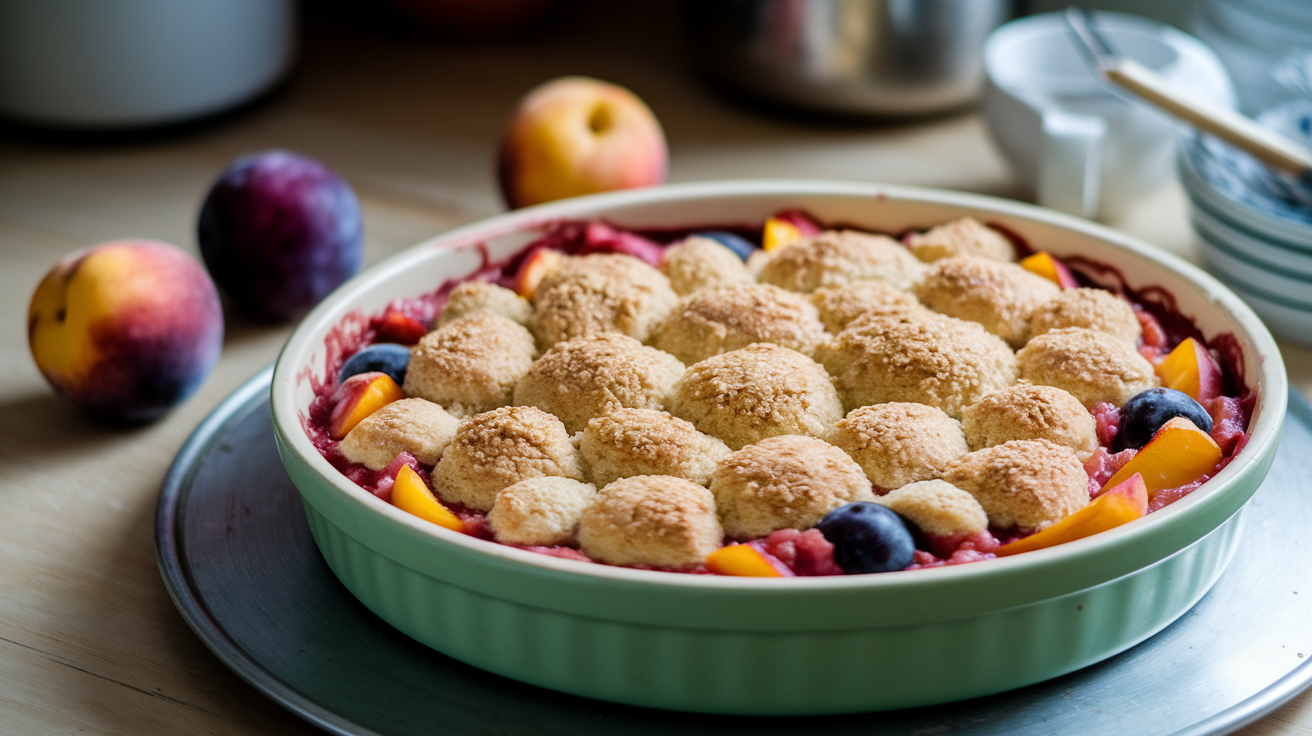
Controversial: the best summer dessert isn’t ice cream—it’s a bubbling cobbler.
This peach-and-plum cobbler is fast, forgiving, and tastes like peak summer in every spoonful.
Peaches melt into jammy sweetness while plums add bright, tart notes that keep it from being cloying.
A simple drop-biscuit topping turns golden and buttery while the fruit bubbles underneath.
Pre-bake the fruit, drop on the topping, bake until golden and bubbling, and you’ve got a warm dessert that’s hard to mess up.
Serve with vanilla ice cream or whipped cream and watch everyone dig in.
Quick-Start Recipe for a Summer Stone Fruit Cobbler Using Peaches and Plums
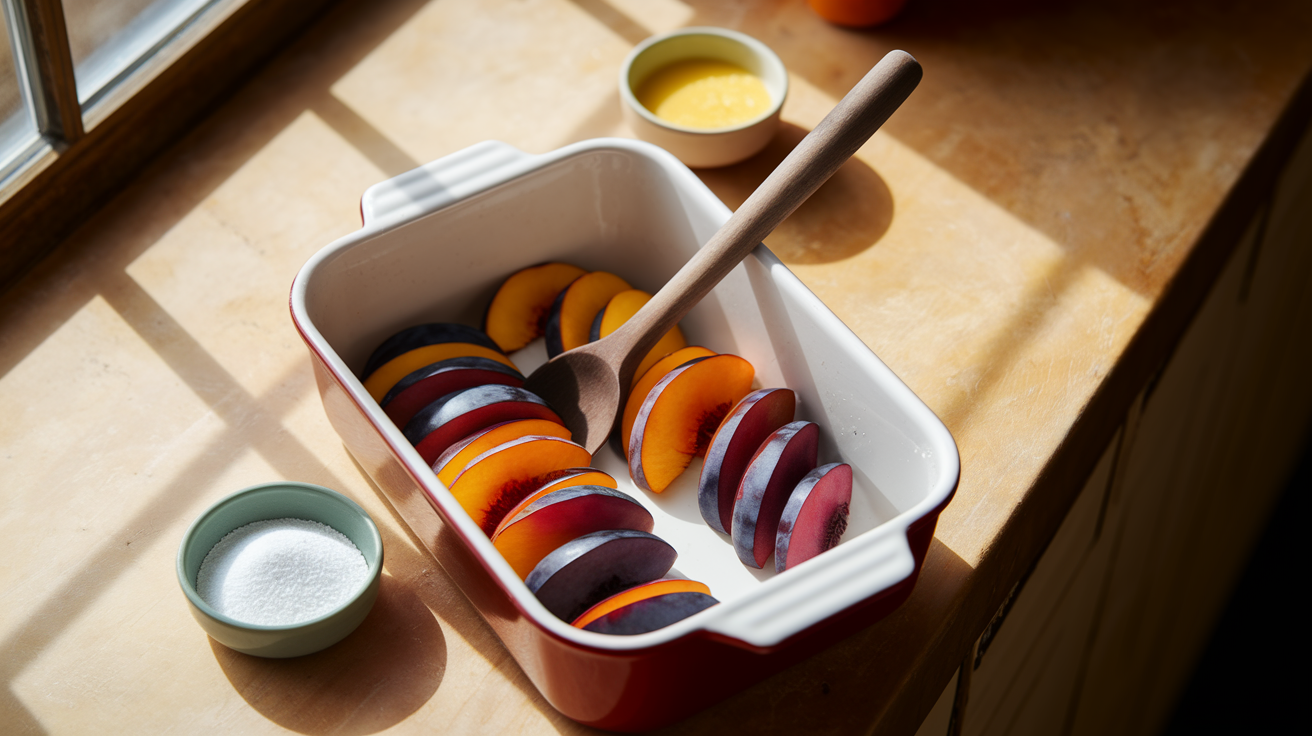
- Preheat your oven to 350°F and butter a 9×13 baking dish or a 10-inch cast iron skillet.
- Toss 6 peeled and diced peaches with 4 pitted and diced plums, ½ cup sugar, 2 tablespoons lemon juice, and 1 teaspoon cornstarch in the prepared dish.
- Pre-bake the fruit for 10 minutes to get the syrup started.
- While that’s happening, combine 1 cup flour, ½ cup sugar, 1 teaspoon baking powder, ½ teaspoon cinnamon, and ½ teaspoon salt, then cut in ⅓ cup cold cubed butter until it looks crumbly and stir in ¼ cup boiling water.
- Drop spoonfuls of topping over the hot fruit and bake 20–25 minutes until golden and bubbling in the center.
- Cool for 10 minutes and serve warm with vanilla ice cream or whipped cream.
Any oven-safe baking dish between 2 and 3 quarts works fine. A 9×13 ceramic pan, a deep cast iron skillet, or a stoneware oval all do the job as long as your fruit layer stays about 1 to 1½ inches deep. Preheat to 350°F and stick a rimmed baking sheet on the rack below to catch bubbles. If you’re working with a smaller dish, pour off some of the fruit juice before you add topping so it doesn’t flood.
Rinse peaches and plums, pat dry. Cut peaches in half, twist out the pit, and slice each half into six to eight wedges about the size of a thick apple slice. Halve plums around the pit, twist apart, slice each half into four or five pieces. You want everything roughly the same thickness so it all softens together. Peeling the peaches is your call. The skin softens when it bakes, but if you want smoother filling, blanch them 30 seconds in boiling water and the skins slip right off.
When the cobbler’s done, you’ll see golden brown patches on top and hear the fruit bubbling around the edges and through the center. Your kitchen will smell like warm cinnamon, caramelized sugar, and bright lemon. Tap the topping gently with a spoon. It should feel firm on top but tender underneath, not hard or dried out.
Ingredient Functions in a Peach-and-Plum Summer Stone Fruit Cobbler

Peaches and plums are what make this dessert work. Peaches give you juicy sweetness and break down into something soft and jammy. Plums add a tart edge and firmer flesh that holds its shape longer. Together they create filling that’s sweet enough to satisfy but bright enough to keep you coming back. The ratio of 6 peaches to 4 plums balances those flavors without either one taking over.
Cornstarch thickens the syrup that forms when fruit heats up and releases juice. Without it, you’ve got fruit soup instead of something scoopable. Lemon juice brightens everything and cuts through the sugar so the cobbler doesn’t taste flat. Cold butter worked into the flour gives you little pockets of fat that melt during baking and create a tender, slightly flaky topping. Baking powder makes the topping puff up instead of sinking into the fruit. Cinnamon adds warmth and depth, especially as the edges toast and the spice blooms in the heat.
Peaches provide natural sweetness and a soft, melting texture that forms the base of the filling.
Plums add tartness and firmer structure that balances the peaches and keeps the filling from getting too loose.
Cornstarch thickens fruit juices into a glossy, scoopable syrup instead of a watery puddle.
Cold butter creates pockets of steam as it melts, giving the topping tender layers and a golden, crisp surface.
Cinnamon rounds out the fruit flavors and adds warm, toasty aroma as everything bakes.
Preparing the Fruit Filling for a Peach and Plum Stone Fruit Cobbler
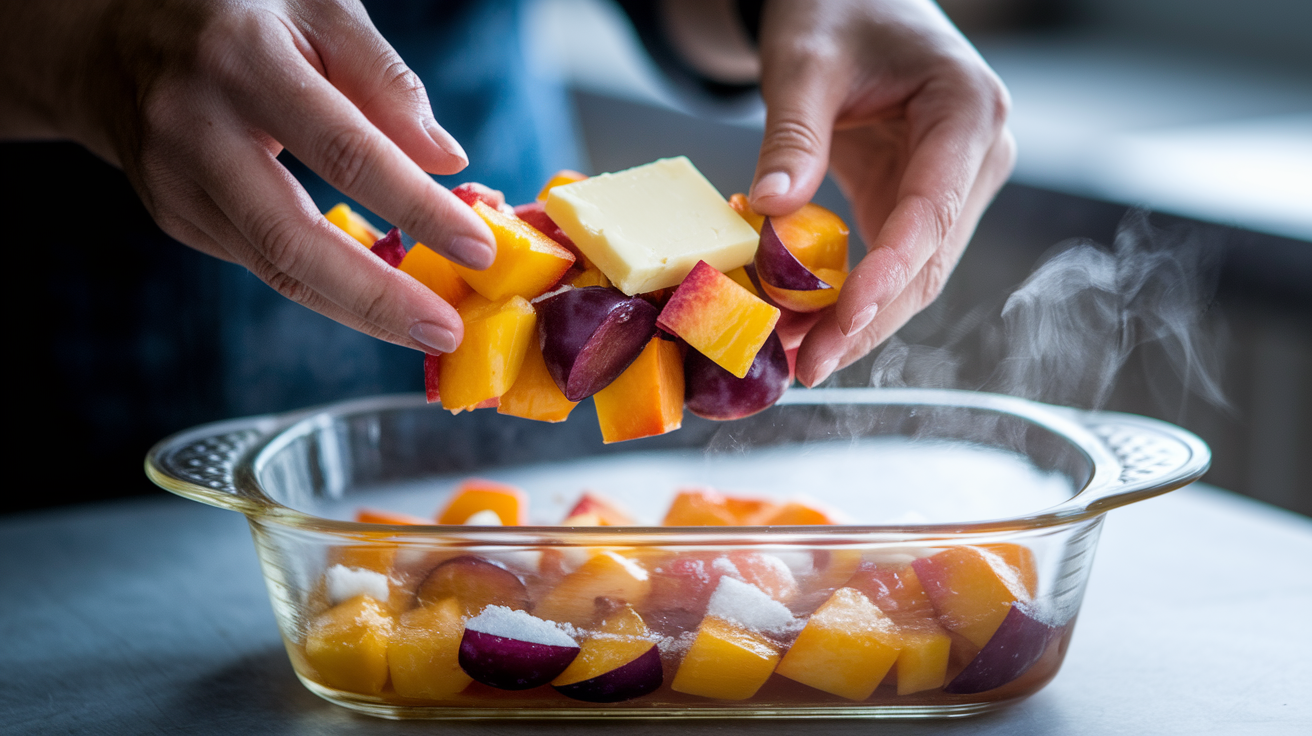
Toss your diced peaches and plums right in the buttered baking dish, then sprinkle the sugar, lemon juice, and cornstarch over the top. Toss gently with your hands or a big spoon until every piece is coated and the cornstarch disappears. You’re looking for a light, even coating, not a thick paste. Slide the dish into the preheated oven and bake for 10 minutes without the topping. This head start softens the fruit just enough to release some juice, which mixes with the sugar and cornstarch to form the beginnings of syrup. When you pull it out, the fruit will look wet and steamy but not completely collapsed.
The pre-bake step keeps your filling from being soupy or undercooked by the time the topping is golden. Ripe but firm fruit works best. If the peaches or plums are too soft, they’ll turn to mush before the topping is done. Too hard and they’ll stay crunchy while the syrup won’t thicken right. Give each piece a gentle squeeze at the market. It should yield slightly but not leave a dent. Frozen fruit works if you’re out of season, just don’t thaw it first. Add 3 to 5 extra minutes to the pre-bake and expect more liquid.
| Fruit Type | Preparation Notes |
|---|---|
| Fresh ripe peaches | Peel optional; cut into uniform wedges; pre-bake releases natural syrup quickly |
| Fresh firm plums | Leave skin on; halve and slice evenly; adds tartness and structure to filling |
| Frozen stone fruit | Do not thaw; add 3–5 extra minutes to pre-bake; expect slightly more liquid |
| Canned fruit | Not recommended; lacks flavor and releases too much water, making filling watery |
Biscuit-Style Topping Options for a Summer Cobbler with Peaches and Plums

The classic drop-biscuit topping is flour, sugar, baking powder, cinnamon, salt, cold butter, and boiling water. You cut the cold butter into the dry stuff until it looks like coarse crumbs, then stir in just enough boiling water to bring it together into thick, shaggy dough. Drop spoonfuls over the hot fruit and bake. What you get is a topping that crisps on the edges where it meets heat and stays tender and biscuit-like underneath where the fruit juices steam it. Handle the dough gently. Overmixing makes it dense instead of light.
A cake-style topping uses beaten eggs and more liquid to create a batter that spreads and bakes into a golden, spongy layer. It’s sweeter and more uniform than a drop biscuit, and it covers the fruit completely instead of leaving rustic gaps. A crumble topping swaps baking powder for oats and uses only cold butter worked into the dry ingredients by hand, creating something like streusel that’s sandy and crisp all over. A johnnycake topping adds cornmeal to the biscuit mix for extra crunch and a subtle corn flavor that feels old-fashioned. Some recipes fold heavy cream into the biscuit dough instead of water, which makes the topping richer and more tender, almost like a scone.
Classic drop biscuit gives you crumbly dough dropped in mounds with crisp edges, tender center, and rustic gaps that let fruit peek through.
Cake-style batter is smooth and pourable, spreads into an even layer, and bakes up spongy, sweet, and uniformly golden.
Crumble streusel has no leavening. Cold butter, flour, sugar, and oats rubbed together create a sandy, crisp texture all over.
Johnnycake cornmeal is biscuit dough with cornmeal added for crunchy, slightly gritty texture with a colonial-era feel.
Cream-enriched biscuit uses heavy cream instead of water for richer, more tender topping with a scone-like crumb.
Each topping style changes the final texture and look. Biscuit and johnnycake toppings feel homey and rustic. Cake-style is neater, more dessert-like. Crumble is the crunchiest and quickest to pull together.
Baking the Peach and Plum Stone Fruit Cobbler to Perfect Doneness

After you drop the topping over the pre-baked fruit, slide the dish back into the 350°F oven and bake for 20 to 25 minutes. You’re watching for three things. The topping should turn golden brown with a few deeper brown spots, the fruit filling should be bubbling steadily not just at the edges but through the center where you can see it between the biscuit mounds, and the topping should feel firm when you tap it lightly with a spoon. If the topping browns too fast before the fruit bubbles, tent the dish loosely with foil and add 5 more minutes. Thicker cake-style batter usually needs closer to 30 minutes total.
Place a rimmed baking sheet on the rack below the cobbler to catch any syrup that bubbles over. Cobblers are messy by nature, especially when the fruit is extra juicy. Let the finished cobbler rest on the counter for at least 10 minutes before serving. This cooling time lets the syrup thicken and settle so it doesn’t run all over the plate when you scoop.
Golden brown topping. Look for patches of deeper color on the peaks where the biscuit rises. Pale spots are fine in the valleys.
Center bubbling. Fruit juices should be visibly boiling in the middle gaps between topping mounds, not just simmering at the edges.
Firm structure. Tap the topping gently. It should feel set and bounce back slightly, not sink or feel wet.
Crisp edges. The parts of the topping that touch the sides of the dish will be the crispiest and darkest. That’s exactly what you want.
Seasonal Fruit Selection for a Summer Stone Fruit Cobbler (Peaches + Plums)

The best cobbler starts with ripe but firm stone fruit picked at the peak of summer. Look for peaches that smell sweet when you hold them near your nose and give slightly when you press the flesh near the stem end. The skin should have a warm yellow or rosy blush, not a greenish tinge. Plums should feel heavy for their size and yield just a little under gentle thumb pressure. Skip fruit with bruises, soft spots, or wrinkled skin. That means it’s past its prime and will cook down into mush.
Farmers market fruit is almost always better than supermarket bins in late July and August. The growers pick it closer to ripe, so the flavor is deeper and the texture is firmer. You can mix peach varieties. Yellow peaches tend to be sweeter and juicier, while white peaches are more floral and delicate. Red or black plums bring more tartness than yellow plums, which lean sweeter and milder. Adjusting the mix changes the balance of sweet to tart in your filling. If you like a tangier cobbler, use more red plums.
Fragrant aroma. Ripe peaches and plums smell sweet and fruity even before you cut them. No smell means they were picked too early.
Slight give under pressure. Press gently near the stem. The fruit should yield but not feel mushy or leave a dent.
Heavy weight. Fruit that feels heavy for its size is full of juice. Light fruit is dry and won’t make enough syrup.
Warm color. Peaches should show yellow or red tones, plums should be deep red, purple, or black. Green tinges mean underripe fruit.
Serving a Warm Summer Stone Fruit Cobbler with Toppings and Pairings
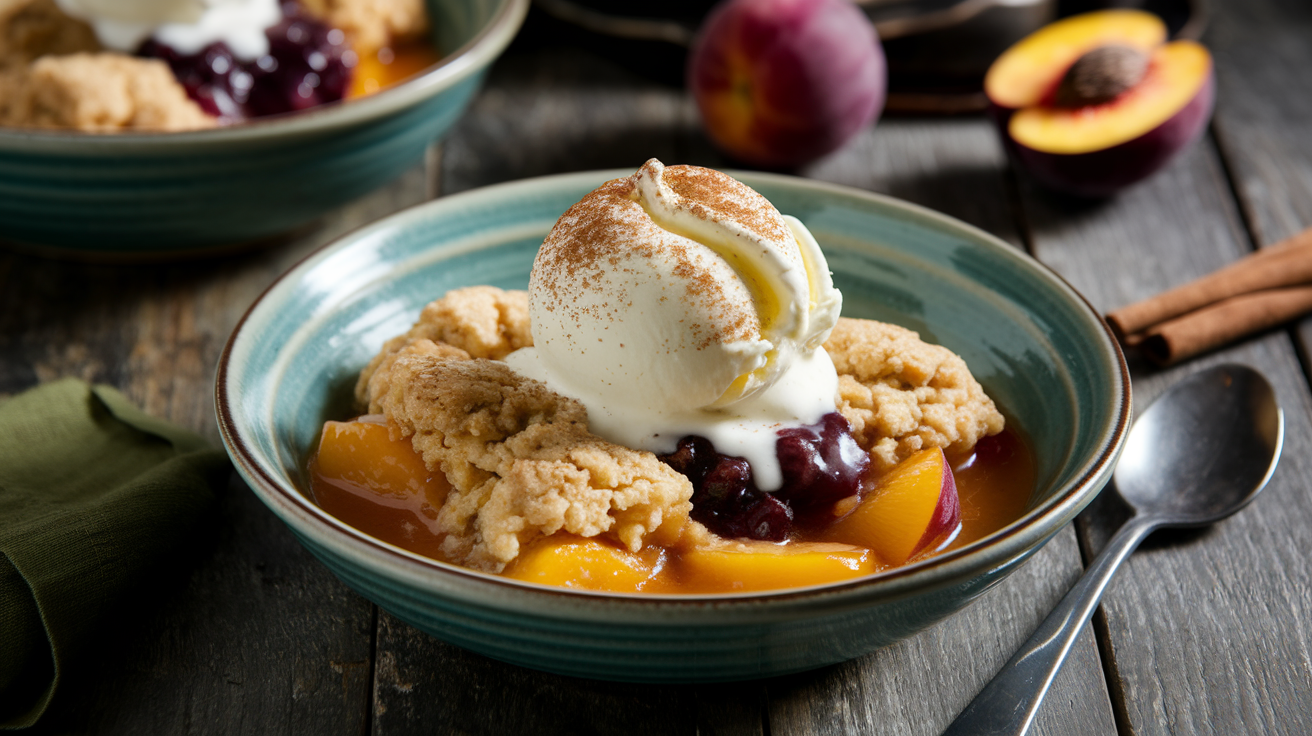
Scoop the cobbler onto plates or into bowls while it’s still warm. Not piping hot, but warm enough that the topping is tender and the fruit is steaming. A generous scoop of vanilla ice cream melts into the syrup and creates a creamy contrast to the warm fruit. Whipped cream works just as well, especially if you fold a pinch of cinnamon or a teaspoon of vanilla into it before dolloping. Some people like to sprinkle chopped toasted pecans or sliced almonds over the top for crunch.
If you baked individual portions in ramekins or oven-safe soup bowls, serve them straight from the dish with a spoon. The single-serving approach is great for dinner parties because everyone gets their own perfect ratio of topping to fruit. Let the cobbler cool for about 10 minutes after it comes out of the oven so the filling thickens and the topping firms up just enough to hold its shape when you scoop.
| Topping | Flavor Benefit |
|---|---|
| Vanilla ice cream | Cold, creamy contrast melts into warm syrup and balances tartness |
| Cinnamon whipped cream | Light and airy with spice that echoes the topping and adds richness |
| Toasted nuts | Crunchy texture and nutty flavor that complements the soft fruit and biscuit |
Variations and Substitutions for a Peach and Plum Stone Fruit Cobbler
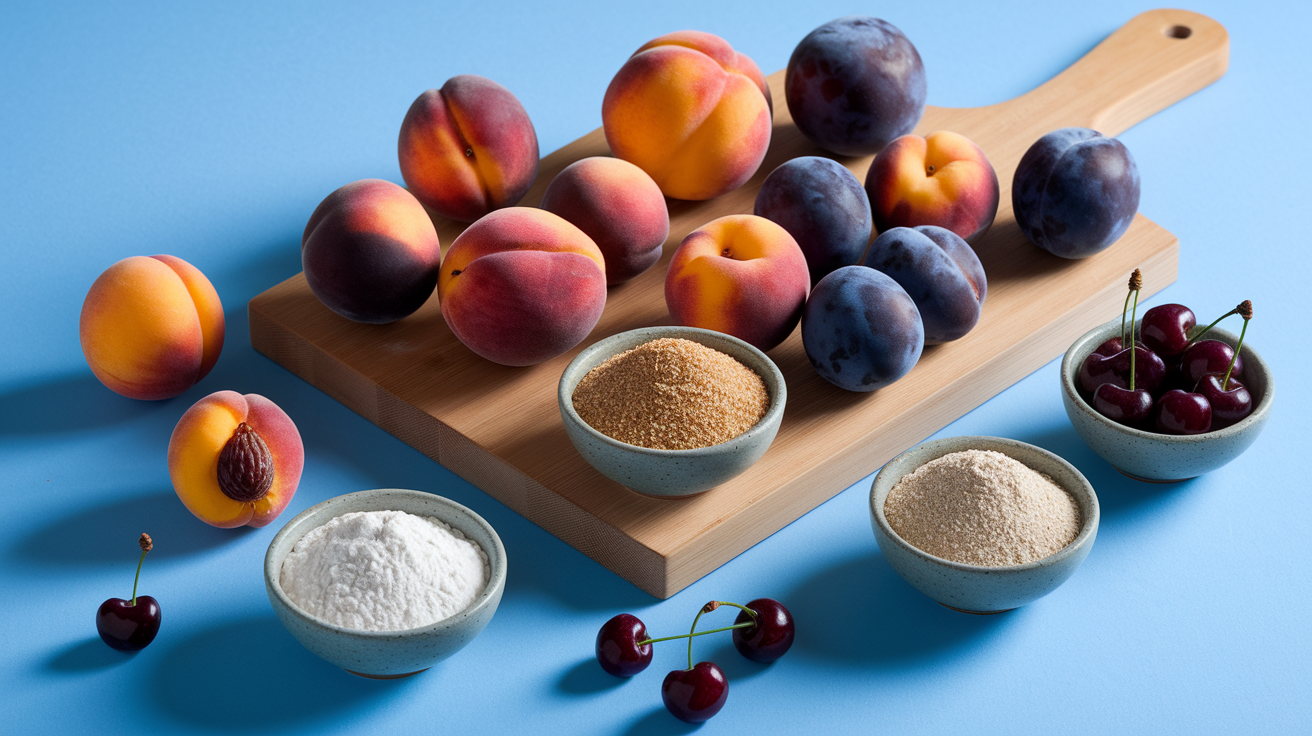
Swap the plums for an equal weight of nectarines, apricots, or pitted cherries to change the flavor profile while keeping the same fruit-to-topping ratio. Nectarines are sweeter and juicier than plums, so you might want to cut back the sugar by a tablespoon or two. Cherries add a bold, tart punch and a darker, richer syrup. You can also mix all three: peaches, plums, and cherries for a more complex fruit layer.
Brown sugar in the topping instead of white gives a deeper, almost caramel-like flavor that works especially well if you’re using tart plums. For a gluten-free version, use a 1:1 gluten-free all-purpose flour blend in place of regular flour. The topping will be slightly more tender and a bit less crisp, but it still tastes great. If you want to go vegan, swap the butter for coconut oil and use a non-dairy milk with a tablespoon of vinegar stirred in to replace the boiling water. The texture will be different, more crumbly and less biscuit-like, but it works.
Nectarines instead of plums are sweeter and juicier. Reduce sugar slightly to keep the filling from being too sweet.
Cherries in the mix add bold tartness and deep red color. Pit them first and expect a thicker, jewel-toned syrup.
Brown sugar topping gives deeper, molasses-like flavor that complements tart fruit and adds richness.
Gluten-free flour blend works in a 1:1 ratio. Topping will be tender and slightly less crisp but still delicious.
Vegan substitutions mean coconut oil for butter, non-dairy milk with vinegar for water. Texture will be crumbly rather than fluffy.
Vanilla paste or maple syrup can be stirred into the fruit filling for extra flavor. Maple adds subtle sweetness and warmth.
Storage, Leftovers, and Reheating Guidance for a Stone Fruit Cobbler
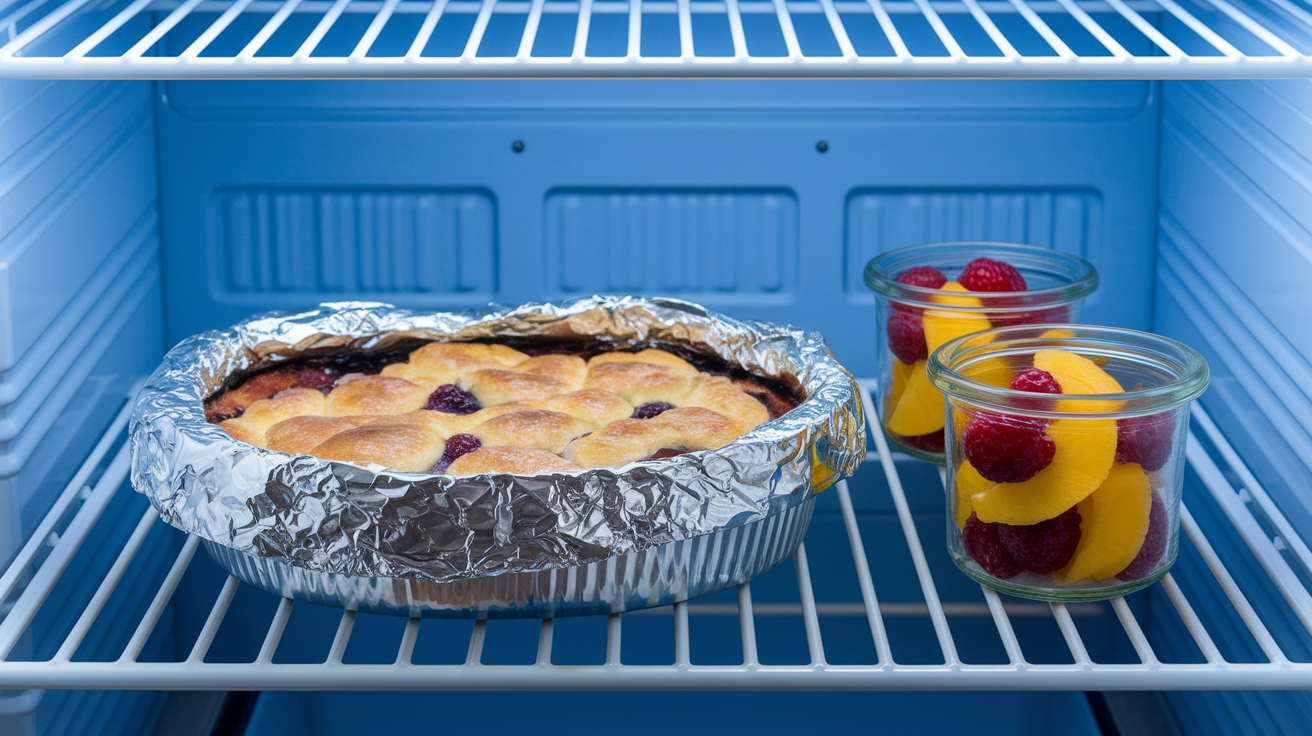
Cover leftover cobbler with foil or plastic wrap and store it in the refrigerator for up to three days. The topping will soften a bit in the cold, but the flavor stays good. When you’re ready to eat it again, reheat individual portions in a 350°F oven for 10 to 15 minutes to crisp the topping back up. You can also microwave a single serving for about 45 seconds, but the topping will stay soft instead of regaining any crunch.
Freezing isn’t recommended. The fruit breaks down and releases too much water when it thaws, and the topping turns soggy and dense. If you want to make cobbler ahead, prep the fruit filling and store it in the fridge for up to a day, then make the topping fresh and bake everything right before serving. That way you get the warm-from-the-oven texture without the last-minute stress.
Expert Tips and Troubleshooting for Perfect Peach and Plum Cobblers
Cut your fruit into uniform pieces so everything cooks at the same rate. If some slices are thick and others are thin, you’ll end up with mushy bits and crunchy bits in the same bite. Use ripe but firm fruit. Not rock-hard and not overly soft. Test your baking powder before you start by dropping a spoonful into very hot water. If it doesn’t bubble vigorously, it’s dead and your topping won’t rise. Always place a baking sheet under the cobbler dish to catch drips and save yourself from scrubbing the oven floor.
If you’re making individual ramekin cobblers, use a thinner layer of topping and watch the bake time closely. Small portions bake faster, usually 12 to 14 minutes, and if you pile on too much topping it can overflow and make a mess. Keep the biscuit dough rustic and shaggy. Overmixing makes it tough and dense instead of tender and light.
Overbaking. Watch for golden brown topping and bubbling fruit, then pull it out. Baking too long makes the topping hard and the fruit dry.
Batter or dough too thick. If the topping doesn’t spread or drop easily, add a tablespoon more liquid. Too thick and it won’t cook through evenly.
Fruit overflow. Pour off excess juice before adding topping if the fruit is very juicy, or use a deeper dish to give the syrup room to bubble.
Uneven slices. Inconsistent fruit size means some pieces turn to mush while others stay firm. Take an extra minute to cut everything the same thickness.
Inactive baking powder. Old or expired baking powder won’t lift the topping. Test it in hot water first and replace if it doesn’t foam.
Final Words
in the action you’ve got a quick-start recipe, ingredient why-it-matters notes, fruit prep tips, biscuit-style topping options, baking doneness cues, serving ideas, sensible swaps, storage advice, and troubleshooting.
Follow the simple cues: preheat to 350°F, pre-bake the fruit 10 minutes, drop the biscuit topping, and bake until the filling is bubbling and the top is golden with a few deeper brown spots.
Serve warm with ice cream. Your summer stone fruit cobbler with peaches and plums will be steamy, jammy, and ready to share. Enjoy.
FAQ
Q: How do I make a quick summer stone fruit cobbler with peaches and plums?
A: A quick summer stone fruit cobbler with peaches and plums starts with preheating to 350°F, tossing 6 peaches and 4 plums with sugar, lemon, and cornstarch, pre-baking 10 minutes, then topping and baking 20–25 minutes.
Q: What equipment and oven temperature do I need to bake this cobbler?
A: You need a 9×13 pan, cast iron, or ceramic dish, a mixing bowl, knife, measuring cups, and a sheet pan to catch spills, with the oven preheated to 350°F.
Q: How should I prepare peaches and plums for the cobbler, and should I peel them?
A: To prepare peaches and plums, wash, pit, and slice them uniformly; peeling is optional—peel for a smoother filling, leave skins on for extra texture and color.
Q: How will I know when the cobbler is done?
A: The cobbler is done when the fruit is bubbling in the center, the topping is golden with a few darker spots, the edges are set, and the filling looks syrupy, not watery.
Q: What do cornstarch, butter, and sugar do in this cobbler?
A: Cornstarch thickens the fruit juices into a syrup, butter makes the topping tender and flaky, and sugar sweetens the filling and helps the topping brown and caramelize.
Q: Can I use frozen or canned peaches and plums instead of fresh?
A: You can use frozen peaches and plums (no need to thaw; add a few extra minutes), but avoid canned fruit because it’s often too soft and watery for proper texture.
Q: What topping options work for a peach-and-plum cobbler and how do they differ?
A: Biscuit topping gives tender pockets, cake-style is softer and thicker, crumble is crisp and sweet, johnnycake adds corn flavor, and cream-enriched yields a richer, denser top.
Q: How should I store leftovers and reheat the cobbler?
A: Store leftovers covered in the refrigerator up to 3 days. Reheat in a 350°F oven for 10–15 minutes to refresh the topping and warm the syrupy filling.
Q: What easy variations and substitutions can I make for this cobbler?
A: Swap plums for nectarines, cherries, or apricots; use brown sugar for depth; try gluten-free 1:1 flour; make it vegan with plant butter and milk; add vanilla or maple for flavor.
Q: What common mistakes should I avoid when making a peach-and-plum cobbler?
A: Avoid uneven fruit slices, skipping cornstarch, overmixing the topping, using overly soft fruit, and not placing a sheet pan underneath to catch overflow and prevent burning.