

Think burnt cobbler edges are just part of baking?
They don’t have to be.
With small moves like lowering the oven temp a touch, moving the pan, shielding the rim, or choosing a lighter pan, you can keep the edges golden while the filling finishes bubbling and thickening.
This post walks you through fast fixes to stop dark rims in their tracks and smarter baking choices so you get a jammy center, a golden topping, and no scorched edges.
Ready to save tonight’s cobbler?
Immediate Methods to Stop Cobbler Edges From Burning

The second you see those edges heading toward dark brown, you can stop things from getting worse.
Drop your oven temp by 10 to 25 degrees. Move the pan to a lower rack if the top’s catching too much direct heat. Grab some foil and loosely cover just the rim, or tent the whole thing if you need to. Rotate the pan 180 degrees so any hot spots get evened out, then check whether the filling’s bubbling near the center and edges. If it’s bubbling, you’re almost there. The edges just need protection for the home stretch.
Set a timer for 5 to 10 minutes and look again. Pull the cobbler when the filling’s thick and bubbling and the topping’s golden, not deep brown.
- Lower the heat slightly
- Move the pan to a cooler spot
- Add a quick edge cover
- Rotate the pan
- Check for active bubbling
- Resume baking with brief checks
Understanding Cobbler Edge Burning and Heat Behavior
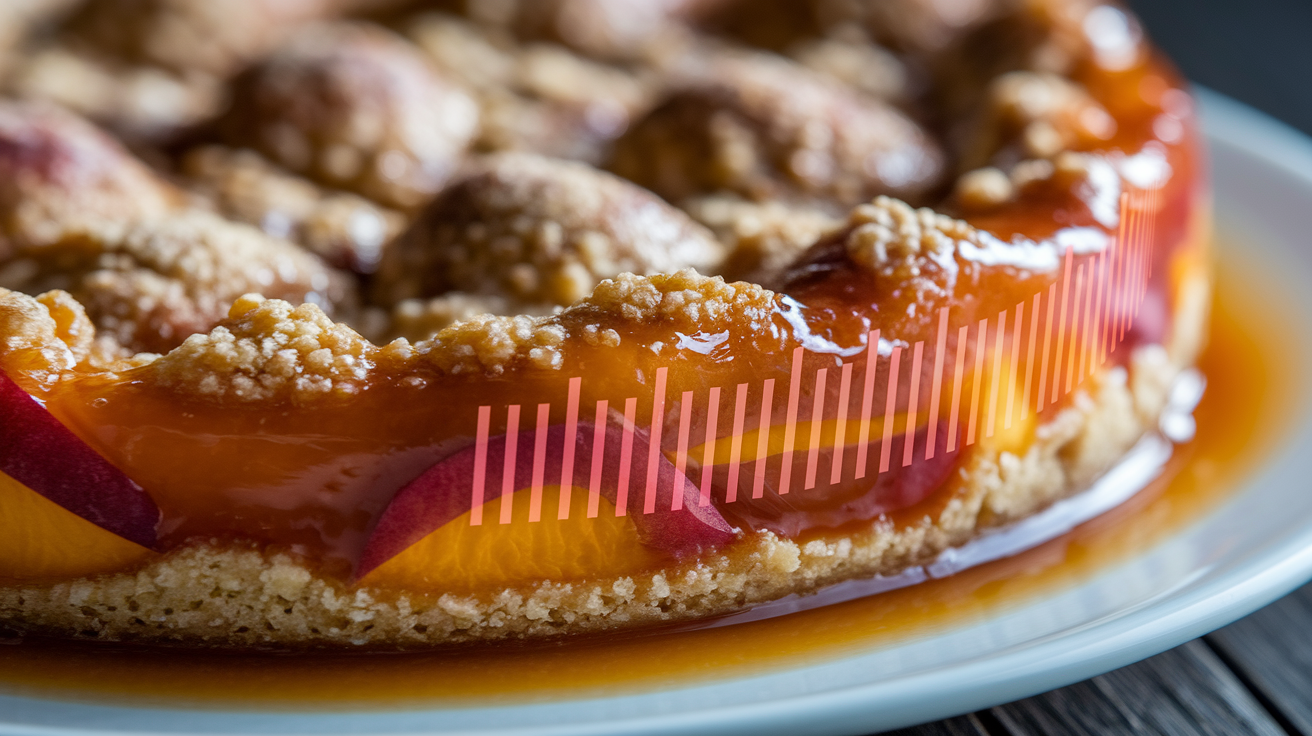
Cobbler edges burn because fruit fillings need long bake times to heat through, bubble, and thicken. Meanwhile, the exposed dough or topping at the rim browns way faster. The edges sit closer to hot pan walls and get more concentrated radiant heat from the oven’s heating elements. Sugar in the topping caramelizes quickly. So does any fruit juice that bubbles up and clings to the rim. If left unprotected, it scorches.
Glass and dark-finish pans absorb and hold more heat at the edges, creating hot zones that speed up browning. Oven hot spots, uneven element cycling, and direct top heat from a broiler coil all push the edges toward dark brown or black before the center of the filling reaches a full bubble. Steam escaping from the filling carries sugar and fruit acids to the surface, where they dry out and burn on contact with the hot pan rim.
Understanding these patterns lets you step in early. Watch the edges during the first 20 to 30 minutes, cover them when they reach light golden, and tweak the oven temperature or rack position to slow the browning while the filling finishes cooking.
Best Oven Temperatures and Rack Placement for Even Cobbler Browning
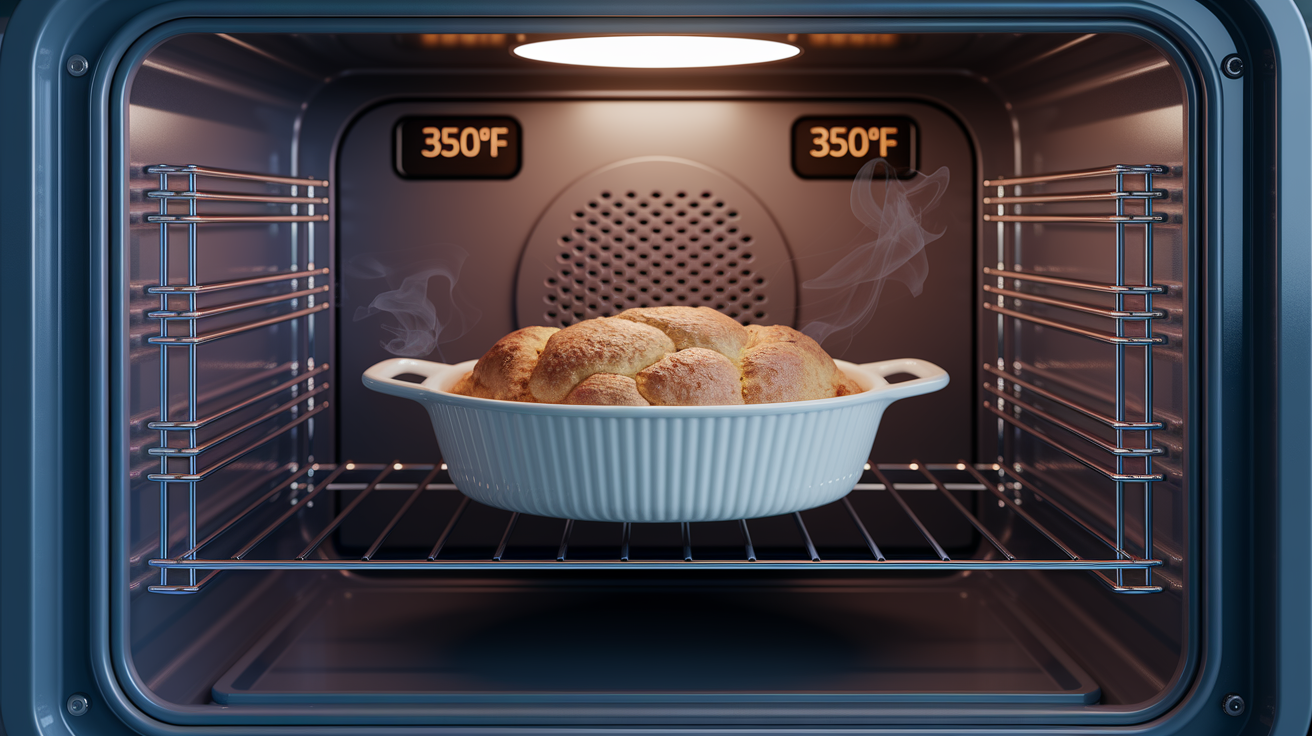
Most fruit cobblers bake best at 350 to 375°F. That range lets the filling heat through and bubble without racing the topping to dark brown. If you’re using convection, reduce the temperature by 20 to 25 degrees. The fan accelerates browning on all exposed surfaces, including edges.
Start your cobbler on the center or lower-middle rack. The center rack distributes heat evenly from top and bottom. The lower-middle position shields the top and edges from intense radiant heat. If the edges brown too quickly even at 350°F, drop the temperature to 325 to 340°F and extend the baking time by 10 to 20 minutes. Check for bubbling in the filling as your doneness cue.
- Preheat the oven to 350 to 375°F (or 325 to 350°F for convection).
- Place the cobbler on the center rack for balanced heat, or lower-middle if your oven runs hot on top.
- If edges begin to darken before 20 minutes, immediately lower the temperature by 10 to 25 degrees.
- Rotate the pan 180 degrees halfway through the bake to compensate for any hot spots.
- Move the cobbler to a lower rack if the top’s browning faster than the edges, or up one position if the bottom’s underbaking and the top remains pale.
Shielding Techniques to Protect Cobbler Edges

Covering the edges once they reach light golden is the single best way to prevent burning while the filling finishes cooking.
How to Make a Proper Foil Collar
Cut a strip of aluminum foil 2 to 3 inches wide and long enough to wrap around the entire rim of your pan. Fold the strip lengthwise into 2 or 3 layers to add stiffness, then shape it into a ring that matches the diameter of your cobbler. Gently press the foil collar onto the rim, covering the outer inch or two of the topping but leaving the center exposed. Place the collar as soon as the edges turn light golden, usually around 15 to 25 minutes into the bake. Or from the very start if you know your oven browns edges quickly. If the topping’s browning all over but the filling’s not yet bubbling, loosely tent the entire pan with a sheet of foil. Form a peak in the center so it doesn’t touch the topping.
| Shield Type | Pros | Cons | Best Use |
|---|---|---|---|
| Adjustable silicone pie shield (8–10″) | Flexible, hugs crimped edges, dishwasher-safe, stays in place | Single-size range, requires storage space | Frequent bakers, pies and cobblers with decorative edges |
| Foil collar (DIY) | Free, adjustable to any pan size, disposable | Can slip off, exposes gaps, tears easily | One-off bakes, emergency fixes, irregular pan shapes |
| Full foil tent | Covers entire top, slows all browning | Can touch and stick to topping, may need removal for final browning | When topping is set but entire surface is browning too fast |
| Rigid metal pie ring | Reusable, sturdy | Fixed diameter, does not flex for crimped edges, limited size fit | Standard round pies, less effective for rustic cobbler edges |
A silicone shield that fits pans between 8 and 10 inches outperforms foil in almost every test because it stays put, rinses clean of sticky fruit syrup, and conforms to uneven edges. You can read more about how silicone shields compare to foil in Say Goodbye to Burnt Pie Crust Edges, where testers confirm that flexible shields hold better and clean faster than homemade foil rings.
Choosing the Right Pan to Prevent Edge Scorching

Pan material and color control how fast heat reaches the edges. Light-colored aluminum or stainless-steel pans reflect heat and bake more slowly, giving you extra time to cover the edges before they darken. Dark nonstick pans and glass baking dishes absorb and concentrate heat at the rim, often causing edges to brown 5 to 10 minutes earlier than they would in a light pan.
If you only have a glass or dark pan, reduce your oven temperature by 20 to 25 degrees and plan to shield the edges from the start or within the first 15 minutes. Ceramic pans bake more slowly overall but still concentrate heat at the exposed rim, so watch closely during the final third of the bake. Undersized pans crowd the filling, causing fruit juices to bubble over and burn on contact with the hot pan edge. Choose a pan with at least half an inch of clearance above the filling line.
- Light aluminum or stainless pans slow edge browning and heat evenly.
- Dark pans and glass dishes speed up browning. Lower your oven temperature by 20 to 25°F.
- Ceramic pans bake slowly but still concentrate edge heat. Shield edges once they reach light golden.
- Don’t use pans smaller than the recipe calls for. Crowded fillings spill and burn at the rim.
Testing Cobbler Doneness Without Overbaking the Edges

Your cobbler’s done when the filling bubbles actively at the edges and center, the juices look thick instead of watery, and the topping’s golden brown, not deep brown or black. If you see bubbling only at the outer rim but the center looks loose, give it another 5 to 10 minutes with the edges covered. An instant-read thermometer inserted into the filling should read 200 to 212°F. That’s the range where fruit starches fully thicken and the filling sets.
If the topping reaches golden but the filling hasn’t yet bubbled, cover the entire top loosely with foil and continue baking at the current temperature until you see active bubbles breaking the surface. Uncover the cobbler for the last 2 to 5 minutes only if the topping needs a final touch of color. But watch it closely to avoid tipping the edges into burnt territory.
- Filling should bubble visibly at edges and center, with thickened juices.
- Topping color should be golden, not deep brown or charred at the rim.
- Internal temperature of 200 to 212°F confirms the filling’s fully cooked and set.
Troubleshooting Common Causes of Burnt Cobbler Edges

If your cobbler edges burn every time, the most common culprit’s an oven that runs hotter than the dial says or uneven heat distribution. Place an oven thermometer on the center rack and preheat as usual. If the thermometer reads 25 degrees higher than your setting, adjust your dial down by that amount for every future bake. Rotate the pan 180 degrees halfway through baking to move the side that was near the back heating element to the cooler front zone.
Hot spots near the broiler coil or along one wall will brown edges unevenly. Move the cobbler to a lower rack and place a bare baking sheet on the rack below to shield the bottom from direct heat. If one side consistently darkens faster, rotate the pan every 10 to 15 minutes instead of just once at the halfway point. Lowering the oven temperature by 20 to 25 degrees and extending the bake time by 10 to 20 minutes slows all browning and gives you a wider window to catch the edges before they burn.
If you accidentally left the oven on convection, the fan blows hot air directly onto the topping and edges, speeding up browning by 20 to 30 percent. Turn off convection for cobblers, or reduce the temperature by 20 to 25 degrees if your oven always runs in convection mode.
- Use an oven thermometer to confirm your true baking temperature and adjust the dial accordingly.
- Rotate the pan 180 degrees halfway through, or every 10 to 15 minutes if hot spots persist.
- Lower the temperature by 20 to 25°F and extend bake time if edges darken too quickly.
- Move the cobbler to a lower rack and add a baking sheet below to diffuse bottom heat.
- Turn off convection or reduce temperature by 20 to 25°F to slow fan-accelerated browning.
Quick Fixes for Slightly Burnt Cobbler Edges

If you catch the burn early and only the outer quarter-inch of the rim is dark brown, you can trim the burnt edge with a sharp knife once the cobbler cools. Spoon a light dusting of powdered sugar over the trimmed area to blend the cut edge into the rest of the topping. For very light scorching that’s more visual than taste, brush a thin glaze of warmed apricot jam or honey over the topping after baking to mask the darkened spots and add a glossy finish.
Tent the hot cobbler loosely with foil as soon as you pull it from the oven to slow carryover browning. The residual heat in the pan and filling can continue to darken exposed edges for another 5 to 10 minutes, so covering immediately prevents that final shade of brown from becoming black.
- Trim superficial burnt edges with a sharp knife after cooling.
- Dust trimmed areas with powdered sugar to hide the cut line.
- Brush a light glaze of warmed jam or honey over mildly scorched topping for camouflage.
- Tent the cobbler with foil immediately after removing from the oven to stop carryover browning.
Final Checklist: Your No-Burn Cobbler Edge Strategy
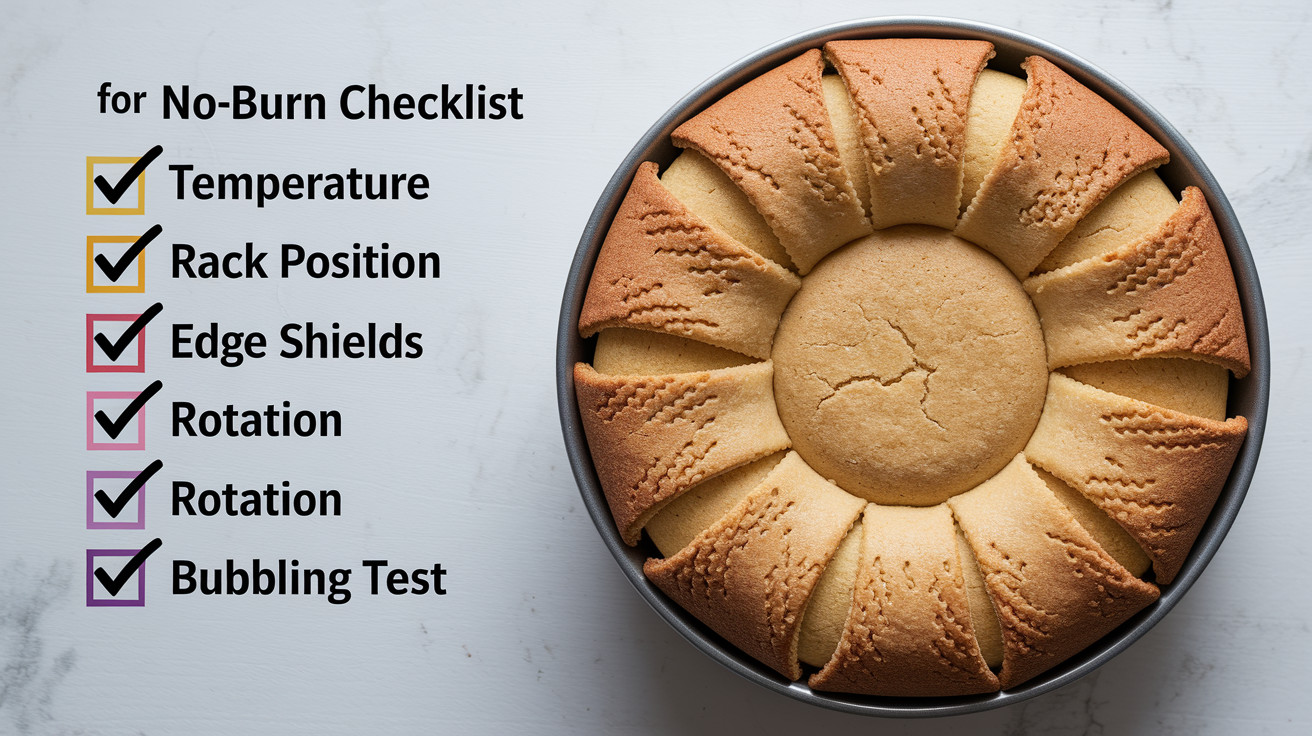
- Bake at 350 to 375°F. Reduce by 20 to 25°F for convection or dark/glass pans.
- Start on the center or lower-middle rack. Move down if the top browns too fast.
- Use a light-colored aluminum or stainless pan. Avoid dark finishes and undersized pans.
- Cover edges with a silicone shield or foil collar once they reach light golden, usually around 15 to 25 minutes.
- Rotate the pan 180 degrees halfway through baking to counter hot spots.
- Check for active bubbling in the filling and a topping color of golden brown, not deep brown.
- Test filling temperature with an instant-read thermometer. Aim for 200 to 212°F.
- Lower oven temperature by 10 to 25°F immediately if edges darken before the filling bubbles.
Final Words
When edges start to brown too fast, act: lower the heat, move the rack, tent the rim, or rotate the pan.
We covered quick fixes, why edges burn, oven temps and racks, shields, pan choices, doneness checks, and troubleshooting.
Use the checklist and change one thing at a time. You now know how to prevent burnt edges on cobbler. A steamy scoop of ice cream makes it even better. Now go bake something warm to share.
FAQ
Q: How to stop pastry burning around edges?
A: To stop pastry burning around the edges, lower the oven a touch, move the pan to a lower rack, tent or shield the rim when it browns, rotate mid-bake, and check until the filling bubbles.
Q: How to make a pie crust edge protector? / How to keep pie crust edges from burning without foil?
A: To make a pie crust edge protector and avoid burning without foil, use a silicone pie shield or a folded parchment collar sized to the rim, and fit it once edges turn light-golden or from the start for delicate crusts.
Q: How to keep baked goods from burning on the bottom?
A: To keep baked goods from burning on the bottom, use light-colored pans, bake on the middle rack, place a preheated baking sheet or insulated tray under the pan, lower oven heat slightly, and check doneness early.