
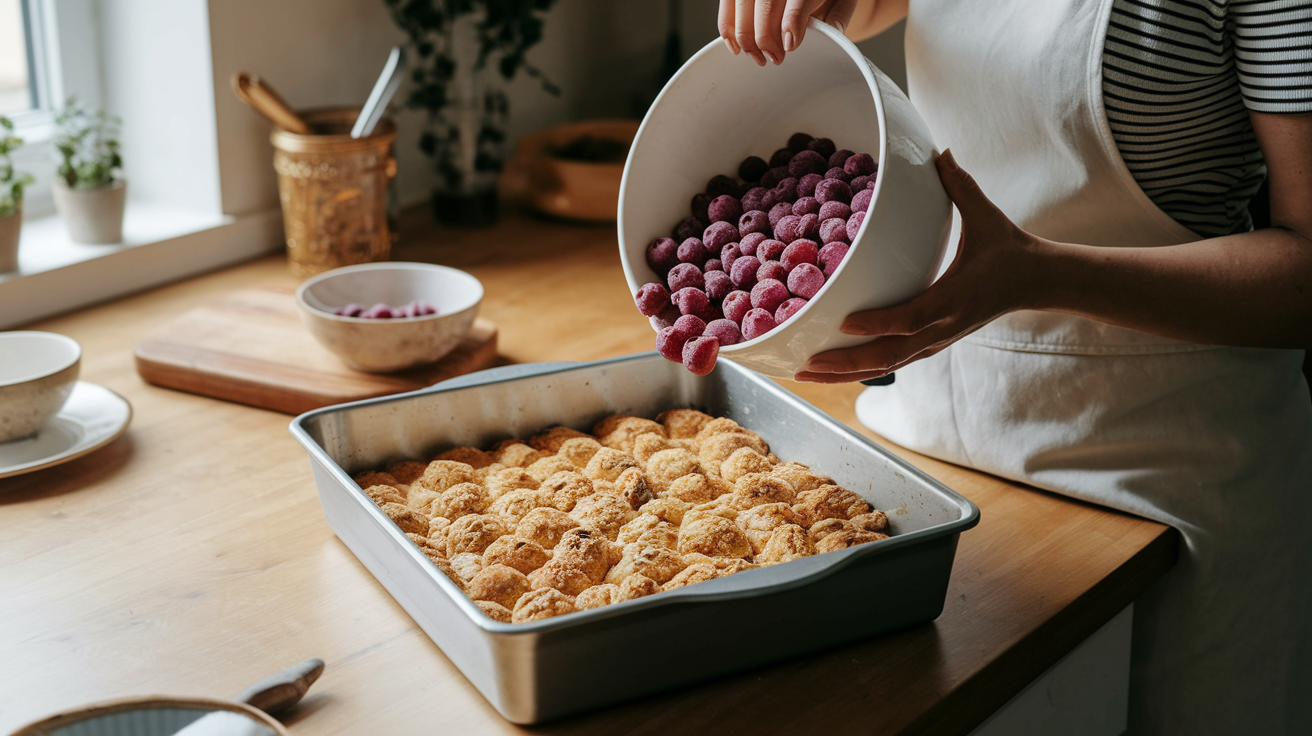
Think frozen fruit ruins cobbler?
Actually, frozen fruit works straight from the freezer, so you don’t need to thaw, you save time, and there’s one less bowl to wash.
Follow this quick, no-fuss guide and you’ll get exact cup amounts, the right thickener, and simple topping tweaks so the cobbler bakes with a golden top and jammy filling every time.
I’ll show how to toss fruit with flour and sugar, when to use cornstarch, and how to adjust store-bought mix—no fancy skills, just pantry staples and oven time.
Quick Step‑By‑Step Method for Using Cobbler Mix With Frozen Fruit

Frozen fruit works straight from the freezer when you’re using a cobbler mix. No need to thaw, which saves you time and one less bowl to wash. You’ll want about 8 cups of frozen fruit for an 8×8 inch pan, closer to 10 cups if you’re working with a 9×13.
Before you add the cobbler mix, toss your frozen fruit with 1/4 cup all-purpose flour, 1/4 cup granulated sugar or maple syrup, and a tablespoon of fresh lemon juice. This coating stops excess liquid from turning your topping into a soggy mess. It also brightens the fruit flavor without any thawing required.
Most cobbler mixes need liquid like milk, melted butter, or water. If your mix feels too thick or the topping bakes up dry, add an extra tablespoon or two of liquid before pouring. When the fruit looks very juicy during prep, stir in 1 to 2 teaspoons of cornstarch directly with the fruit. That’ll help everything thicken as it bakes.
- Preheat your oven to 375°F if you’re using a standard cobbler mix, or check the package temperature.
- Place frozen fruit directly into your greased baking dish. Don’t thaw.
- Toss the fruit with 1/4 cup flour, 1/4 cup sugar, and 1 tablespoon lemon juice until coated.
- Prepare your cobbler mix according to package directions, adding 1 to 2 tablespoons extra liquid if it looks really thick.
- Pour or drop the cobbler topping evenly over the frozen fruit.
- Bake for 40 to 55 minutes until the fruit’s bubbling hard at the edges and center, and the topping’s golden brown.
Let the cobbler rest for at least 5 minutes after you pull it from the oven. The juices settle and thicken a bit before serving.
Best Frozen Fruits to Use With Cobbler Mix and How They Behave When Baked
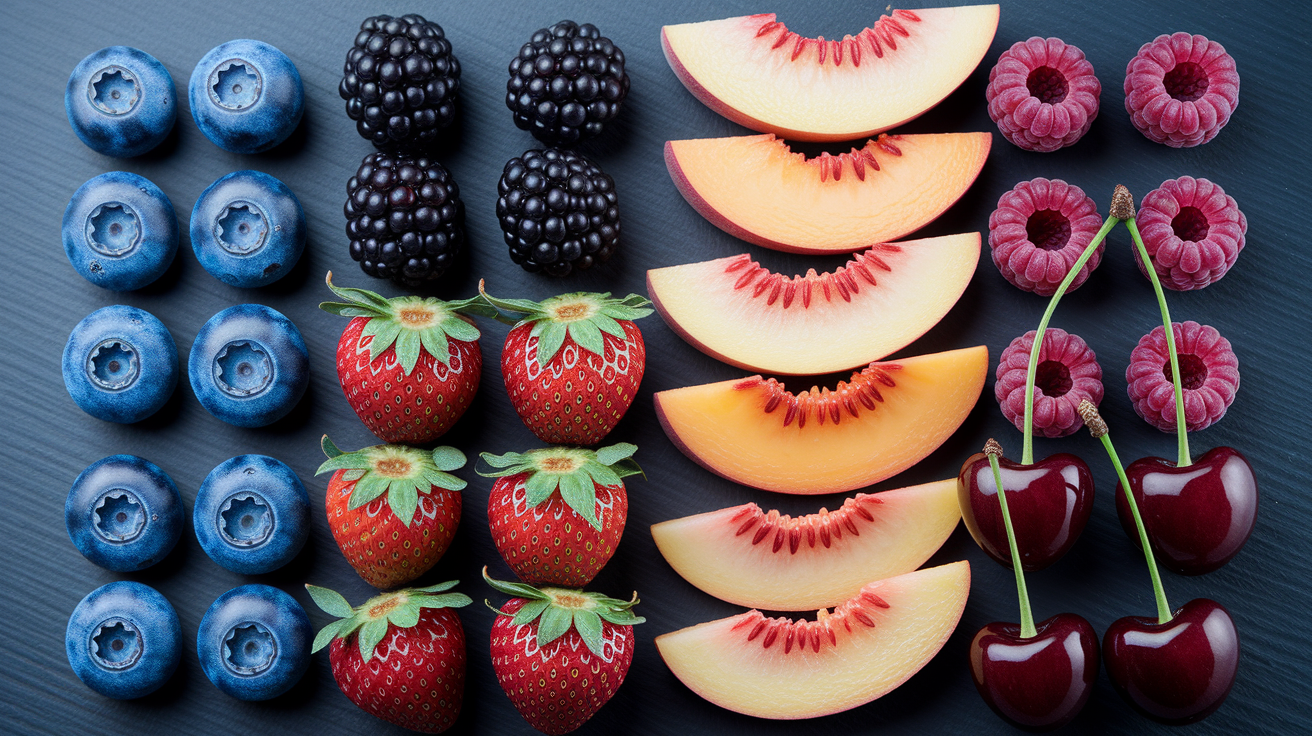
Berries, peaches, and cherries are your best bets for frozen cobbler. Frozen berries release juice quickly as they heat, so you get early bubbling and a sweet, jammy liquid filling the pan. Peaches and cherries hold their shape longer and release juice more slowly. That creates a firmer filling with visible fruit pieces.
Don’t use frozen bananas. They turn mushy and watery when baked and won’t give you the thick, syrupy base that makes cobbler worth eating.
Blueberries and blackberries release moderate juice. Their natural pectin helps thicken the filling as it bakes, and that dark purple color looks rich when it’s bubbling.
Strawberries and raspberries release juice fast. Lighter color, more delicate texture. They benefit from a bit more cornstarch or flour for thickening.
Frozen peaches hold their structure well and release juice slowly. Large pieces create hearty filling pockets.
Frozen cherries, sweet or tart, break down minimally during baking. Bold color. They pair well with a touch of almond extract in the topping.
Mixed berry blends combine different juice release rates. You get balanced filling texture, but less predictable thickening, so adjust cornstarch as needed.
Natural pectin in berries and stone fruits helps the filling set as it cools. You get a spoonable cobbler instead of fruit soup.
Understanding Thickeners and Moisture Control When Using Frozen Fruit
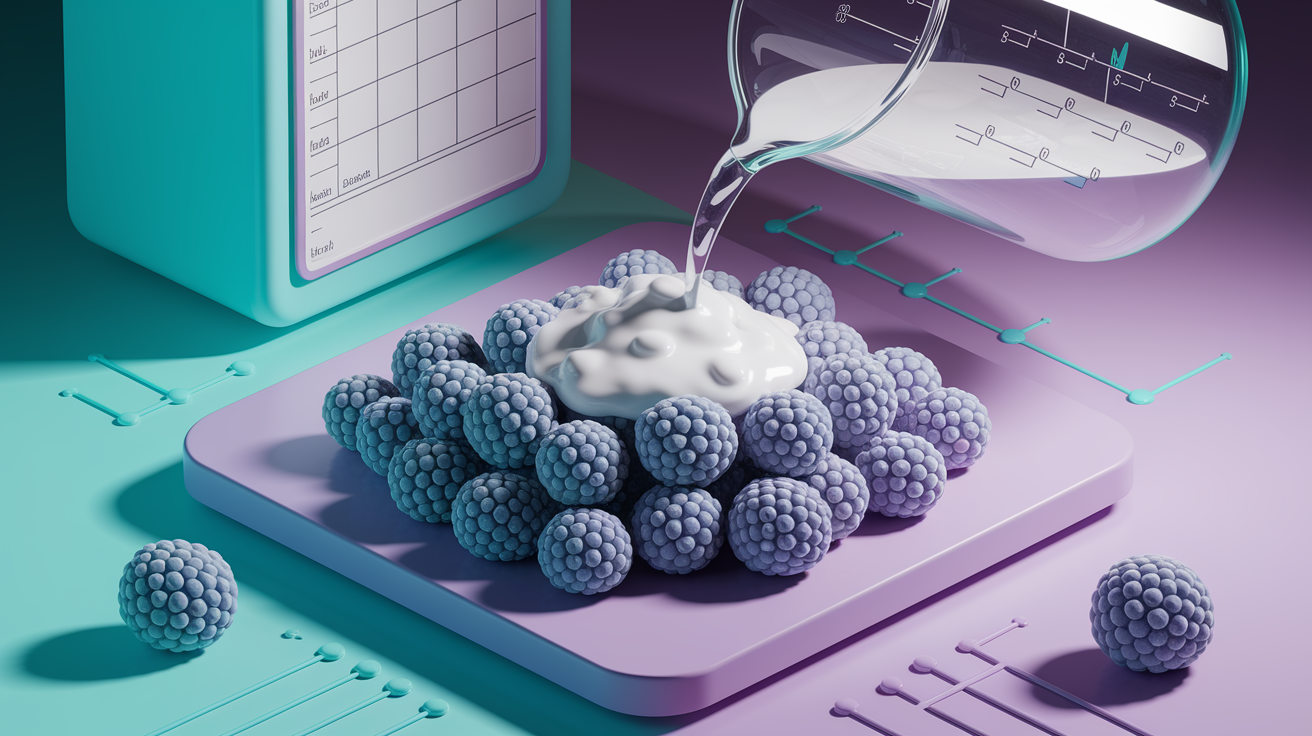
Frozen fruit releases more liquid during baking than fresh fruit. That’s because ice crystals inside each piece melt as the oven heats. The extra moisture can make your cobbler filling runny and your topping soggy if you skip the thickener.
All-purpose flour is the most common thickener for frozen fruit cobbler. Use about 1/4 cup of flour for every 8 cups of frozen fruit. Flour thickens slowly and creates a cloudy, soft filling. It works best when you toss it directly with the frozen fruit before baking, so every piece gets a light coating.
Cornstarch thickens faster. Creates a clearer, glossier filling. If your fruit is very juicy, like raspberries or thawed strawberries, swap 1 to 2 teaspoons of cornstarch for part of the flour or add it on top of the flour.
Lemon juice and grated lemon peel don’t thicken the filling, but they brighten the fruit flavor and balance sweetness. Especially useful when you’re working with sweeter frozen blends.
You can adjust sugar based on your fruit. Frozen peaches and sweet cherries need less added sugar than tart berries. Start with 1/4 cup and taste a small spoonful of the raw fruit mixture if you want to add more before baking.
| Thickener Type | Best Use | Amount for 8 Cups Fruit |
|---|---|---|
| All-purpose flour | General use, soft cloudy filling, toss with fruit before baking | 1/4 cup (4 tablespoons) |
| Cornstarch | Very juicy fruit, clear glossy filling, fast thickening | 1 to 2 teaspoons (or replace 1–2 tbsp of the flour) |
| Tapioca starch | Neutral flavor, holds up to freezing and reheating well | 2 tablespoons |
How to Mix and Adjust Store‑Bought Cobbler Mix for Frozen Fruit
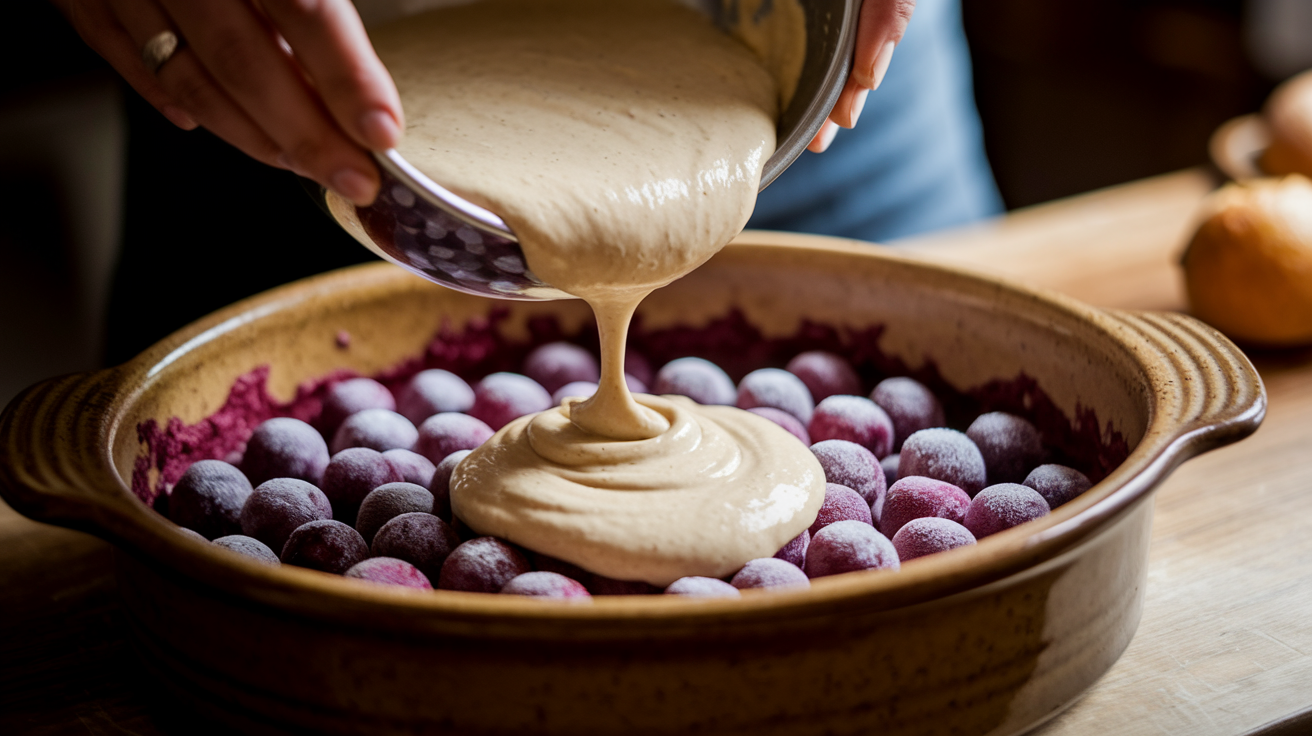
Most store bought cobbler mixes are designed for fresh or canned fruit. They expect less moisture than frozen fruit provides. If you follow the package directions exactly, the topping might turn out dry or the batter might sink into the juicy fruit and bake unevenly.
When using frozen fruit, prepare your cobbler mix batter slightly thicker than the package suggests. If the mix calls for 1/2 cup milk, start with 1/3 cup. Add more only if the batter looks crumbly and won’t pour. A thicker batter sits on top of the fruit instead of sinking into the juices. It bakes into a fluffy, biscuit like topping with golden edges.
If your topping comes out dry after baking, add 1 to 2 tablespoons extra milk or melted butter the next time you make it. Some mixes include butter or shortening in the dry blend, which creates a crunchier topping. If your mix doesn’t list butter and you want more texture, brush the top with 1 tablespoon melted butter before baking.
Keep the batter thick so it floats on the fruit juices instead of absorbing them.
Add extra liquid in small amounts, 1 tablespoon at a time, to avoid making the topping too wet.
If the mix includes butter, use cold butter and cut it in for a crumbly streusel style topping.
For a softer, cake like topping, use the full amount of liquid and pour the batter evenly over the fruit.
Correct Baking Temperatures, Times, and Pan Sizes for Frozen Fruit Cobblers
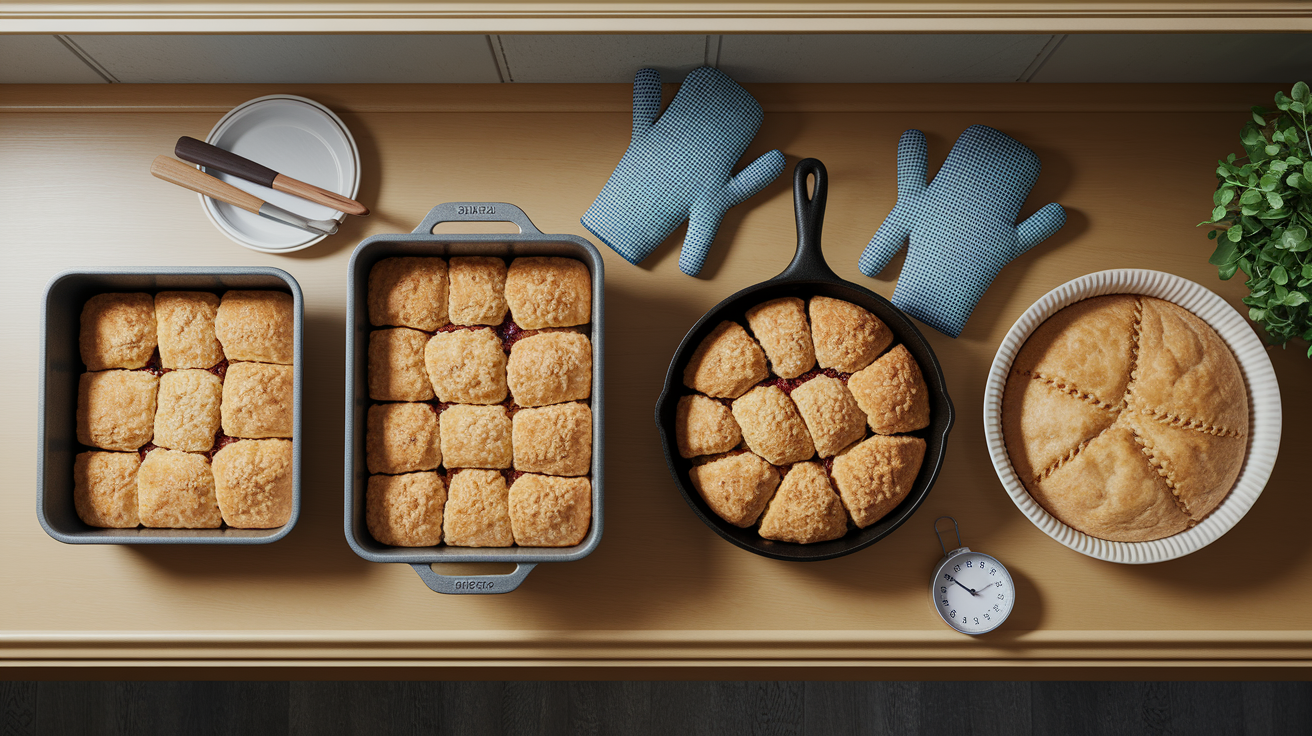
Most cobbler mixes bake well at 375°F to 425°F. Frozen fruit usually needs the higher end of that range to cook through. At 375°F, expect to bake for 50 to 55 minutes. At 425°F, start checking at 40 minutes. The fruit should be bubbling hard at the edges and in the center. The topping should be golden brown with a few darker spots.
An 8×8 inch square pan holds about 8 cups of frozen fruit. Perfect for a family size cobbler. A 9×13 inch pan fits around 10 cups of fruit and serves a larger crowd.
Cast iron skillets heat faster and hold heat longer. If you use a 10 inch skillet, reduce your bake time by about 5 minutes and watch the edges carefully to prevent burning. When scaling a recipe up, you might need to add a bit more liquid to the topping or reduce the flour slightly to keep the topping from drying out in the larger pan.
8×8 inch pan: 8 cups frozen fruit, bake 45 to 55 minutes at 375°F.
9×13 inch pan: 10 cups frozen fruit, bake 50 to 60 minutes at 375°F or 40 to 50 minutes at 425°F.
10 inch cast iron skillet: 8 to 9 cups frozen fruit, bake 40 to 45 minutes at 400°F, check edges after 30 minutes.
Deep dish pie pan: 6 to 7 cups frozen fruit, bake 40 to 45 minutes at 375°F, cover edges with foil if browning too fast.
Scaling tips: if you’re doubling the recipe, use two pans instead of one very deep pan. That ensures even baking and proper topping texture.
Measure frozen fruit by cups rather than weight if your recipe lists cups. Fruit pieces vary in size and weight depending on the type.
Fixing Common Problems: Runny Filling, Dry Topping, Uneven Baking
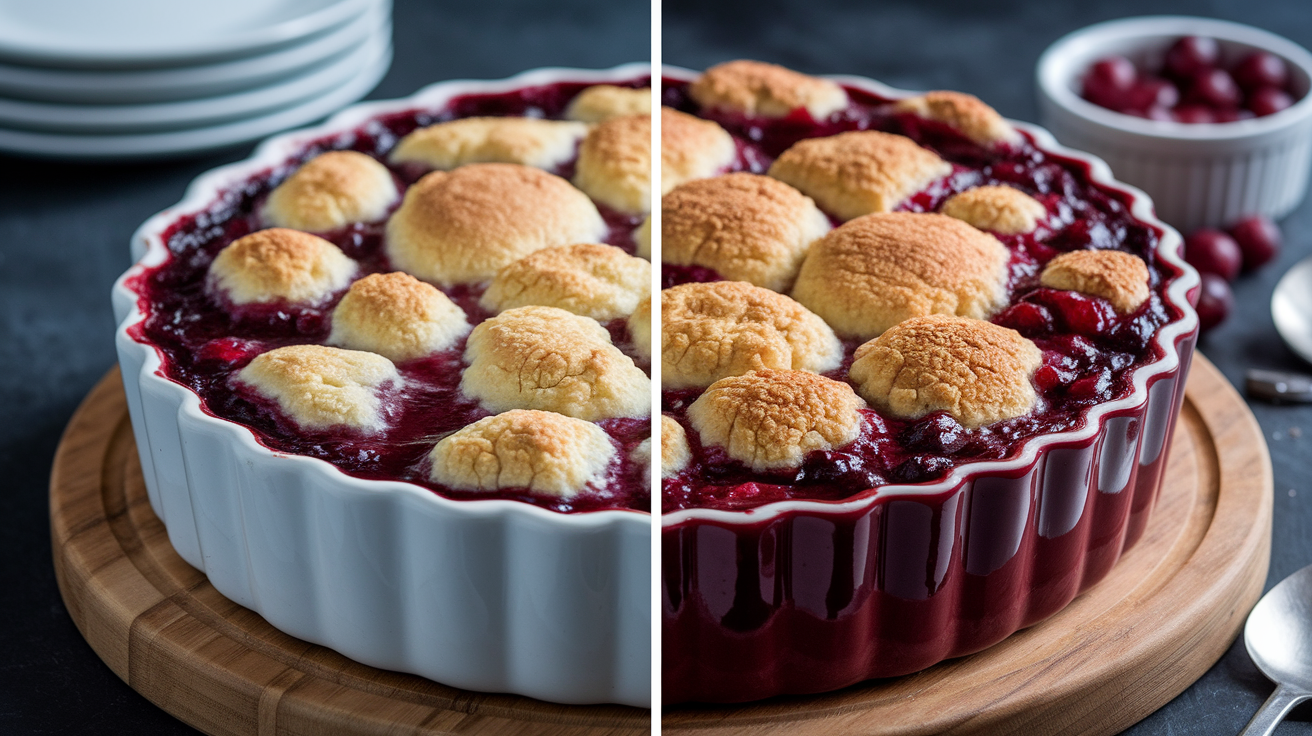
If your cobbler filling’s still runny after the recommended baking time, put it back in the oven and bake for another 5 to 10 minutes. The fruit needs to bubble hard enough that the thickener activates. If the topping’s already golden and you need more time for the fruit, cover the pan loosely with foil and continue baking until the juices are thick and syrupy.
Dry, crumbly topping usually means the cobbler mix didn’t have enough liquid. Next time, add 1 to 2 tablespoons more milk or melted butter to the mix before you pour it over the fruit. If the topping’s dry right now, serve the cobbler with extra ice cream or whipped cream to add moisture on the plate.
For very juicy fruit like raspberries or thawed strawberries, toss the fruit with an extra 1 to 2 teaspoons of cornstarch before baking. This small amount makes a big difference in how thick the filling gets.
If your topping’s browning too fast but the fruit isn’t bubbling yet, tent the pan with foil for the first 20 minutes of baking. Then remove the foil and let the topping finish browning. You can also start the cobbler covered and uncover it halfway through.
Runny filling after baking: transfer the pan juices to a small saucepan, bring to a simmer, whisk in 1 teaspoon cornstarch mixed with 1 tablespoon cold water, simmer 1 minute until thickened, pour back over the cobbler.
Dry topping: add 1 to 2 tablespoons milk or melted butter to the cobbler mix next time, or brush the top with butter before baking.
Pale topping: increase oven temperature by 25°F or switch to broil for the last 2 minutes, watching closely.
Soggy topping: use less liquid in the mix, bake until the fruit’s actively bubbling, let the cobbler rest 10 to 15 minutes before serving so the topping firms up.
Topping sinking into fruit: make the batter thicker, or freeze the topping for 10 minutes before dropping it onto the fruit so it holds its shape better during baking.
Diet-Friendly Alternatives and Variations Using Frozen Fruit and Cobbler Mix
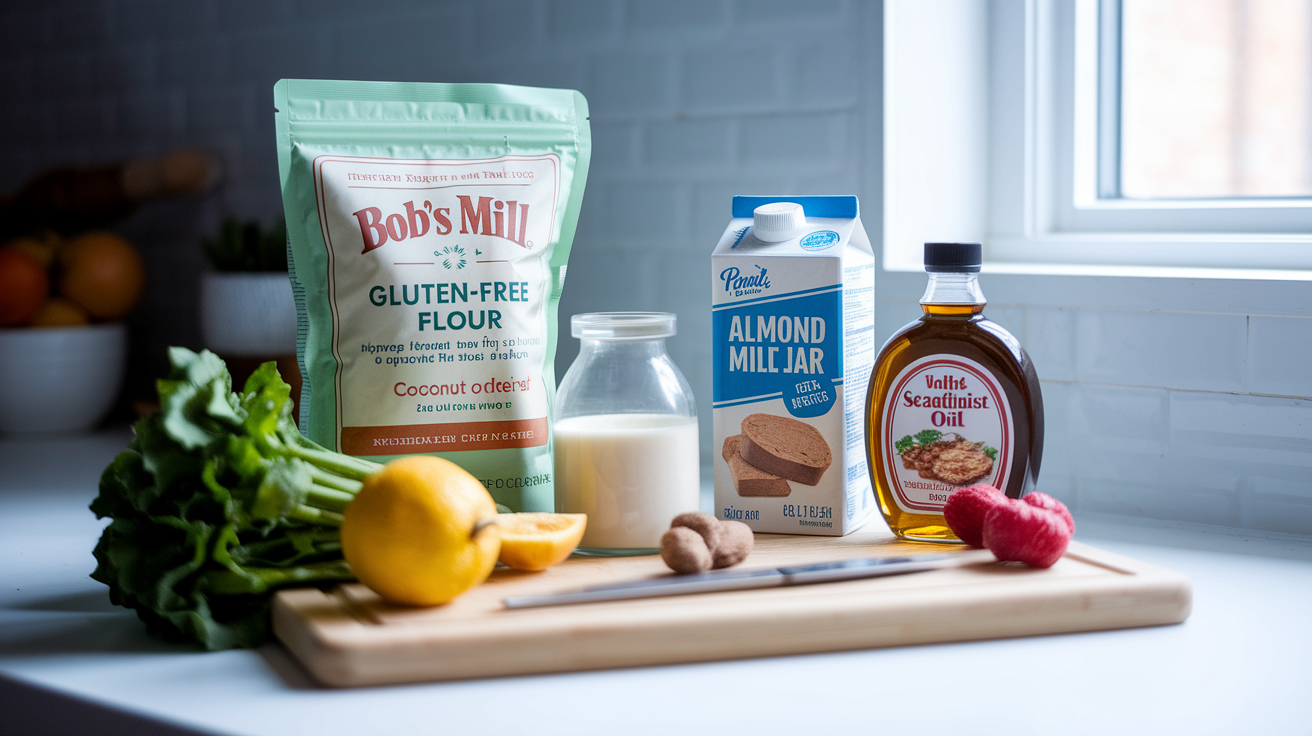
Gluten free all purpose flour blends work well in cobbler toppings and for coating the fruit. Use a blend like Bob’s Red Mill 1 to 1 and follow the same measurements as regular flour. The topping might be slightly more tender and a bit less crisp on the edges, but the flavor stays the same.
For dairy free cobbler, replace milk with unsweetened almond milk, oat milk, or coconut milk. Use vegan butter or coconut oil in place of regular butter. A flax egg works if your cobbler mix calls for eggs. Mix 1 tablespoon ground flaxseed with 3 tablespoons water, let it sit for 5 minutes until it thickens, then stir it into the mix.
Lower sugar cobblers are easy with frozen fruit because the fruit provides natural sweetness. Reduce the added sugar to 2 tablespoons or use maple syrup instead of granulated sugar for a deeper, less sharp sweetness.
Gluten free: swap all purpose flour for a gluten free blend in both the fruit mixture and the topping.
Dairy free: use plant based milk and vegan butter, check that your cobbler mix doesn’t contain milk powder.
Egg free: replace one egg with a flax egg or use a packaged egg replacer.
Low sugar: reduce sugar to 2 tablespoons and rely on naturally sweet fruit like peaches or sweet cherries.
Creative Flavor Add‑Ins and Topping Upgrades for Cobbler Mix
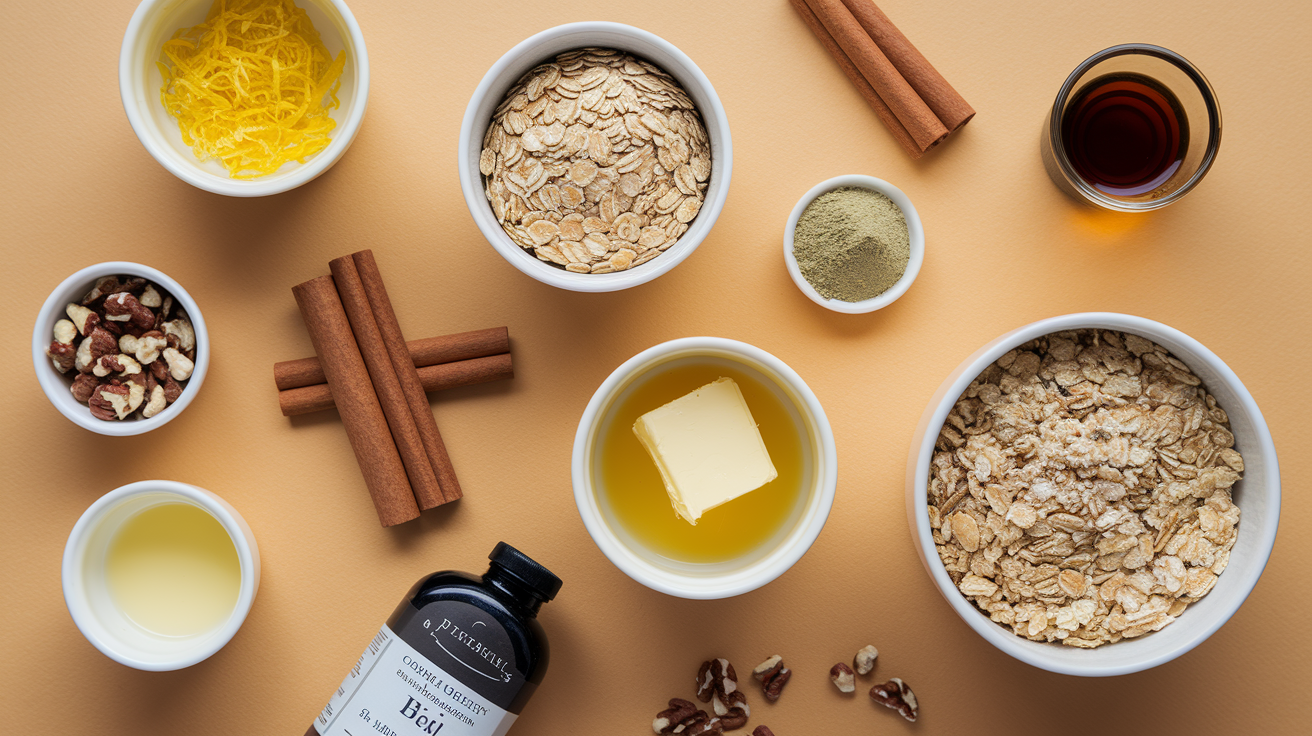
Lemon zest brightens any frozen fruit cobbler. Add 1 teaspoon grated lemon peel to the fruit mixture or stir it into the cobbler topping batter for a fresh, citrusy note that cuts through the sweetness.
Spices like cinnamon, nutmeg, and ginger add warmth and depth. Especially with peaches, apples, or mixed berries. Start with 1/2 teaspoon cinnamon or 1/4 teaspoon nutmeg and adjust to taste.
Oat streusel topping: mix 1/2 cup rolled oats, 2 tablespoons brown sugar, and 2 tablespoons melted butter, sprinkle over the cobbler mix before baking for extra crunch.
Chopped nuts: fold 1/4 cup chopped pecans or almonds into the cobbler mix batter or scatter them on top before baking.
Vanilla or almond extract: add 1/2 teaspoon to the topping batter to deepen the flavor without adding sugar.
Brown sugar swap: replace granulated sugar with brown sugar for a caramel like sweetness.
Cardamom or ginger: add 1/4 teaspoon ground cardamom or ginger to the fruit for a warm, slightly spicy kick.
Orange zest: use orange zest instead of lemon with blueberries or cranberries for a different citrus flavor.
Serving, Storing, Reheating, and Freezing Cobbler Made With Frozen Fruit
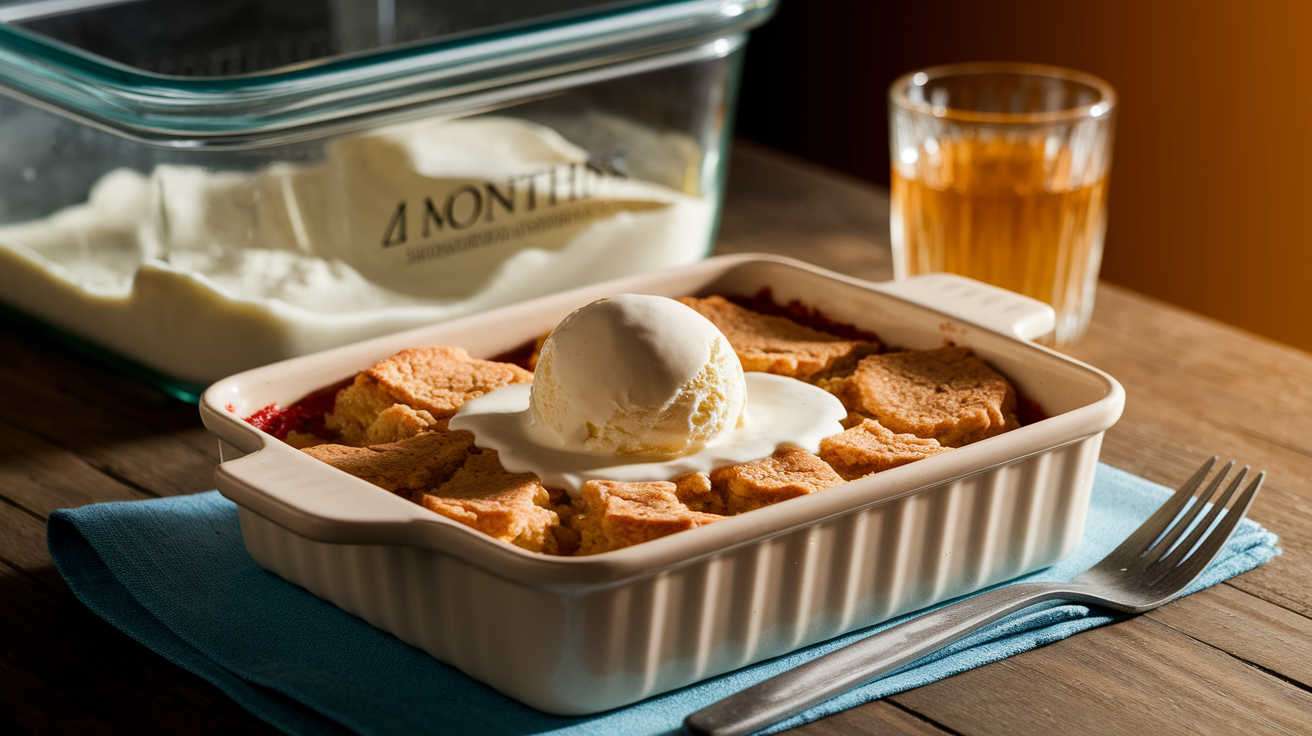
Let your cobbler rest for 5 to 15 minutes after you pull it from the oven. This short wait lets the fruit juices thicken so you get spoonfuls that hold together instead of running all over the plate.
Serve warm with a scoop of vanilla ice cream, a dollop of whipped cream, or a spoonful of plain Greek yogurt if you want something tangy.
Store leftover cobbler in the refrigerator, covered with plastic wrap or foil, for up to 3 days. Reheat individual portions in the microwave for 30 to 45 seconds, or warm the whole pan in a 300°F to 350°F oven for 15 to 20 minutes until heated through.
You can freeze baked cobbler for up to 2 months. Wrap it tightly in plastic wrap and then in foil, or portion it into freezer safe containers. Thaw in the refrigerator overnight and reheat in the oven.
Serving cold: cobbler tastes good cold the next morning with yogurt or as a quick snack straight from the fridge.
Reheating tip: add a splash of water or a pat of butter before reheating to keep the topping moist.
Freezing portions: freeze individual servings in small containers for grab and go desserts.
Pairing ideas: serve with caramel sauce, strawberry sauce, or a drizzle of heavy cream for extra richness.
Final Words
Preheat the oven, toss frozen fruit with a little flour, sugar, and lemon, and spoon the adjusted cobbler mix over it.
This guide walked you through quick steps, fruit choices, thickeners, mix tweaks, bake temps, troubleshooting, diet swaps, flavor add-ins, and storing so every step feels simple and reliable.
Now you know how to use cobbler mix with frozen fruit so it bakes bubbly with a golden top. You’re set for a cozy, crowd-pleasing dessert night.
FAQ
Q: Can you use frozen fruit in a cobbler?
A: You can use frozen fruit in a cobbler. Use it straight from the freezer, toss 8 cups with 1/4 cup flour, 1/4 cup sugar and 1 tablespoon lemon, then bake until bubbling and golden.
Q: Do you need to thaw frozen fruit before baking?
A: You don’t need to thaw frozen fruit before baking. Keeping it frozen prevents a soggy topping; toss with 1/4 cup flour or 1-2 teaspoons cornstarch per 8 cups, then bake until bubbling.
Q: Can you add frozen fruit to boxed cake mix or muffin mix?
A: You can add frozen fruit to boxed cake or muffin mix. Keep fruit frozen, toss with a little flour, fold in gently, add a few minutes to baking time and expect a slightly moister crumb.