
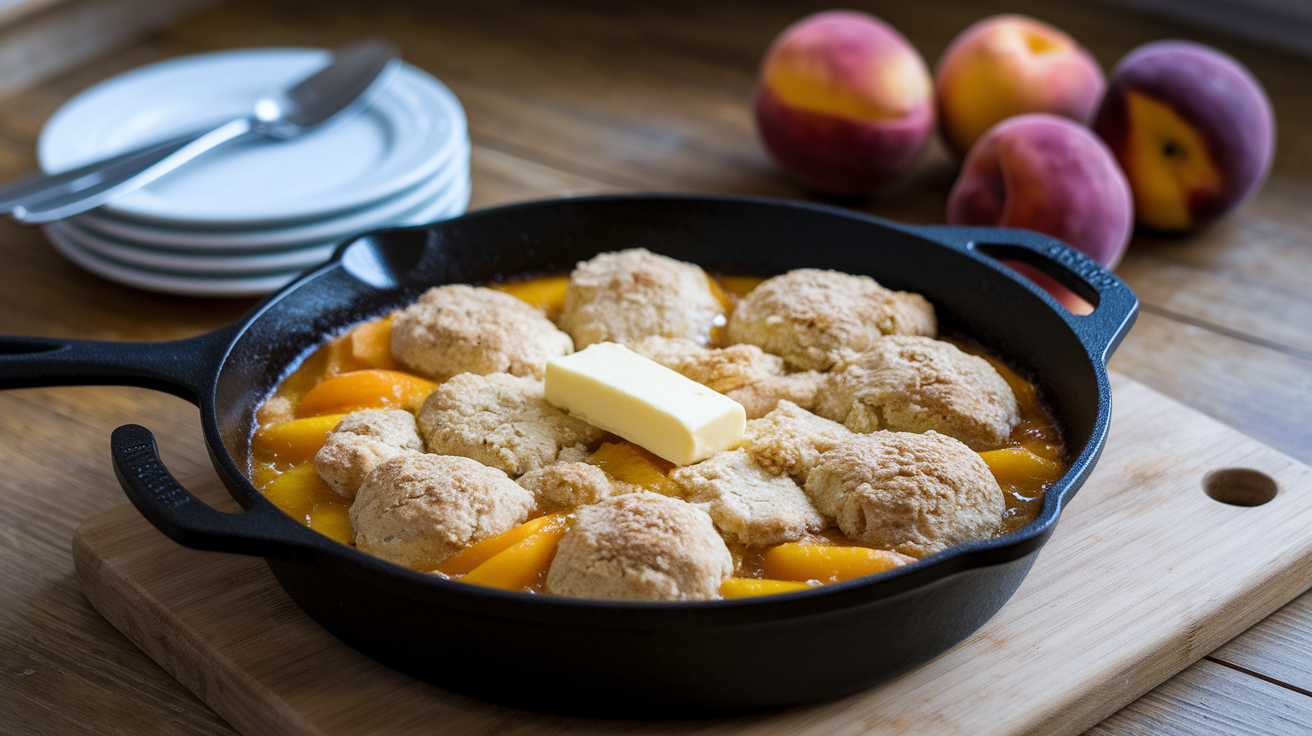
Skip the pie. This skillet peach cobbler will win hearts faster and with less fuss.
A preheated cast iron pan, a stick of butter, and a quick batter give you jammy peaches tucked beneath a golden, buttery biscuit topping in under an hour.
No rolling crusts, no specialty tools, just one skillet that makes crisp, caramelized edges and fluffy biscuit pockets.
Follow these simple steps and you’ll have warm cobbler ready to scoop with vanilla ice cream.
Complete Cast Iron Peach Cobbler Recipe (Ingredients + Steps)
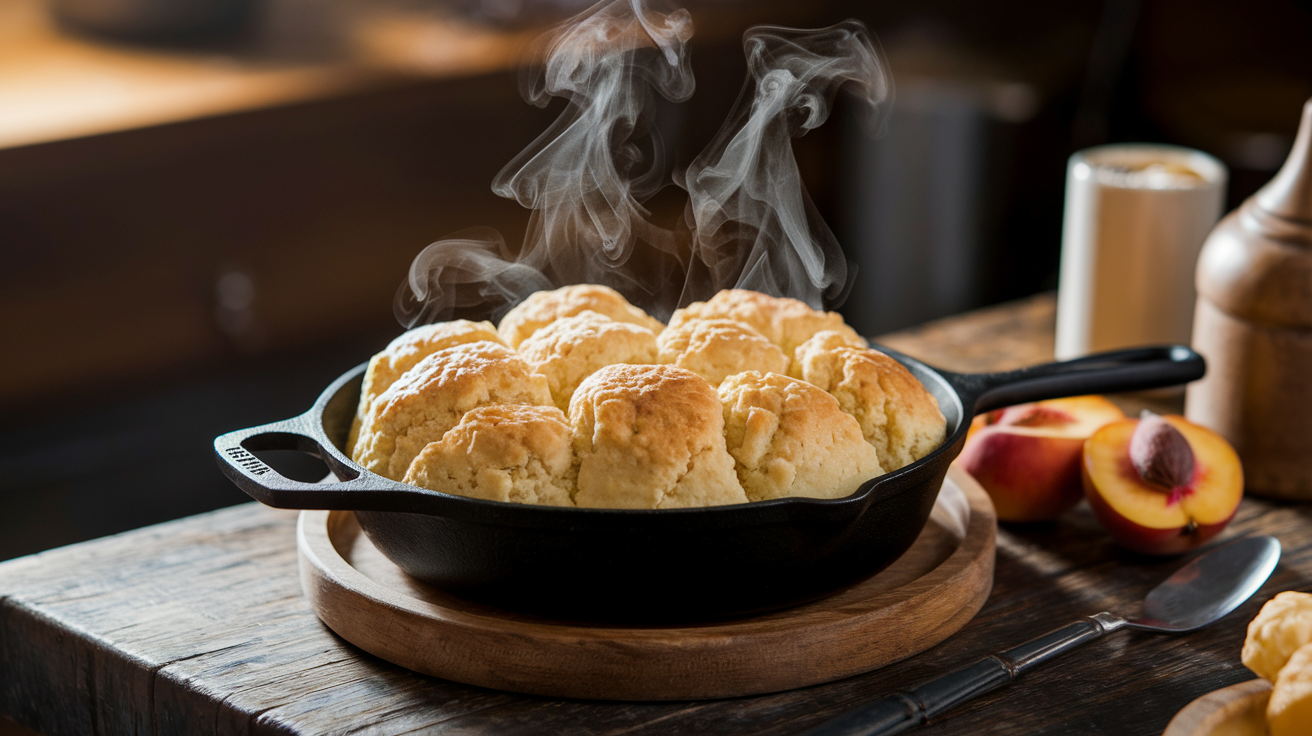
This cast iron skillet peach cobbler gets you warm, juicy peaches under a golden, buttery biscuit topping in under an hour. The skillet melts butter while your oven preheats, then you pour batter over that melted butter and layer peaches on top without stirring. The topping rises and browns while fruit bubbles underneath.
Ingredients:
- 8 tablespoons (1 stick) unsalted butter, cut into pieces
- 6 cups fresh peach slices, peeled and pitted (6–8 medium peaches) or two 15-oz cans, drained
- 1/2 cup granulated sugar (for filling)
- 2 tablespoons cornstarch
- 1 teaspoon lemon juice
- 1/2 teaspoon ground cinnamon
- 1 teaspoon vanilla extract (optional)
- 1 1/2 cups all-purpose flour
- 1/2 cup granulated sugar (for topping)
- 2 1/2 teaspoons baking powder
- 1/2 teaspoon salt
- 2/3 cup whole milk or buttermilk
Instructions:
- Preheat your oven to 375°F and place the butter pieces in a 10 to 12 inch cast iron skillet, then slide the skillet into the oven while it heats so the butter melts.
- Toss the peach slices with 1/2 cup sugar, cornstarch, lemon juice, cinnamon, and vanilla in a medium bowl until the peaches are evenly coated.
- In a separate bowl, whisk together the flour, 1/2 cup sugar, baking powder, and salt.
- Pour the milk into the dry ingredients and stir just until a thick, shaggy batter forms with no dry streaks.
- Carefully remove the hot skillet from the oven using oven mitts, then pour the batter evenly over the melted butter without stirring.
- Spoon the peach mixture (including any juices) over the batter, concentrating the fruit toward the center, and don’t mix the layers.
- Bake for 35–45 minutes, until the topping is deep golden brown with a few darker spots and the filling is bubbling visibly at the edges.
- Let the cobbler rest in the skillet for 5–10 minutes before serving so the juices thicken slightly.
- Serve warm, scooped into bowls, with vanilla ice cream or whipped cream on top.
The method relies on cast iron’s even heat to create a crisp, caramelized bottom crust while the batter rises into fluffy biscuit pockets. Layering matters here. Butter on the bottom, batter in the middle, fruit on top. Each component cooks in the right order and you end up with a self-crusting cobbler that looks golden and tastes rich.
Ingredient Insights and How Each Component Shapes Your Cobbler
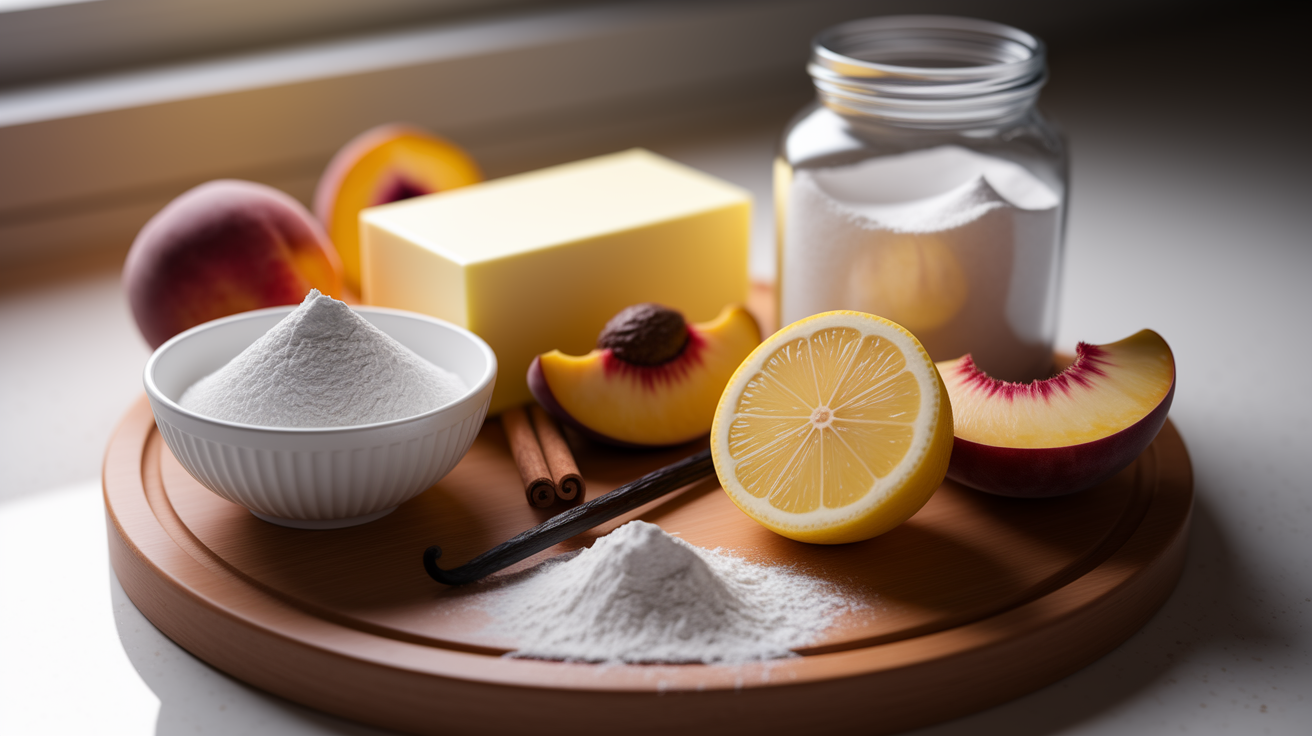
The butter melts first and forms the foundation of the crust, so using a full stick (8 tablespoons) isn’t optional if you want crisp, golden edges. Granulated sugar sweetens both the filling and the topping. You can reduce the topping sugar to 1/3 cup if your peaches are very ripe and sweet, or swap in brown sugar for a hint of molasses warmth. Cornstarch thickens the peach juices as they heat, turning syrupy liquid into a jammy filling that holds together when you scoop. Without it, you risk runny “peach soup” pooling under a floating crust.
Baking powder gives the topping its lift and fluffy texture, so make sure yours is fresh. Test it by dropping 1/2 teaspoon into hot water. It should fizz immediately. Milk adds moisture and richness to the batter. Whole milk produces the tenderest crumb, though buttermilk will add a slight tang and help the biscuit rise even higher. Cinnamon and vanilla are optional flavor boosters, but a pinch of nutmeg or a squeeze of lemon juice can brighten the peach filling if your fruit tastes flat.
Ingredient role breakdown:
- Butter: Creates the crisp bottom crust and adds richness throughout.
- Sugar in filling: Sweetens and draws juice from peaches for syrupy consistency.
- Cornstarch: Binds peach liquid into thick, scoopable filling instead of watery juice.
- Baking powder: Leavens the topping so it puffs and rises above the fruit.
- Milk: Hydrates the batter and keeps the topping tender, not dry or crumbly.
- Cinnamon and vanilla: Round out peach flavor and add warmth without overpowering.
Understanding the Cast Iron Skillet Advantage for Cobbler Baking
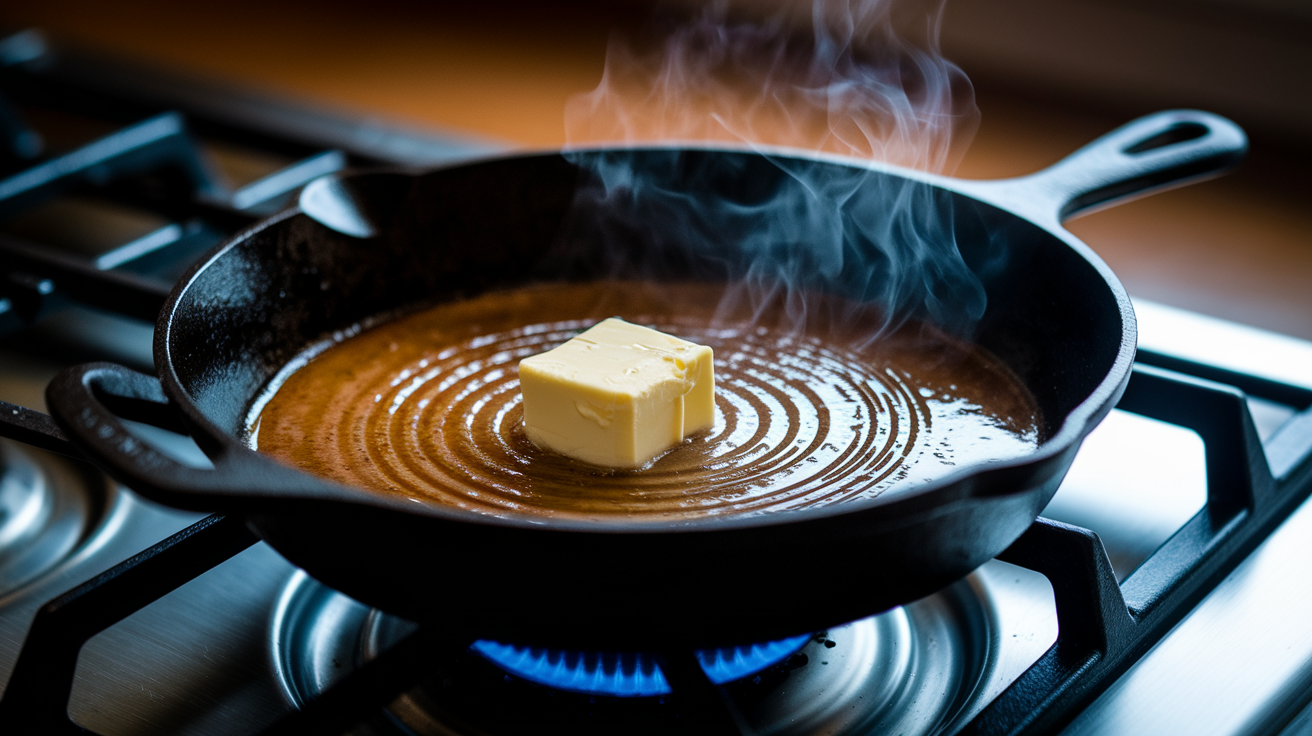
A seasoned cast iron skillet holds and distributes heat more evenly than thin metal or glass pans. Your cobbler bakes with consistent browning on the bottom and sides instead of hot spots or pale patches. The heavy bottom radiates steady heat upward, caramelizing the butter and sugar into a golden crust while the top bakes to a biscuit finish. Cast iron also transitions from stovetop to oven without issue, which makes melting the butter directly in the skillet before adding the batter a one-pan shortcut that saves a bowl and keeps every bit of that buttery richness in the cobbler.
Seasoning on the skillet prevents sticking and adds a subtle, almost nutty flavor layer that glass or disposable pans can’t match. If your skillet is well seasoned, the cobbler will release cleanly when you scoop, and the edges will come out crisp and dark gold instead of soft and pale. You can use an 8×8 glass baking dish or a foil pan if you don’t own cast iron, but expect a lighter crust and slightly longer bake time because those materials don’t hold heat as efficiently.
Preparing Peaches: Fresh, Canned, or Frozen Options for Cobbler
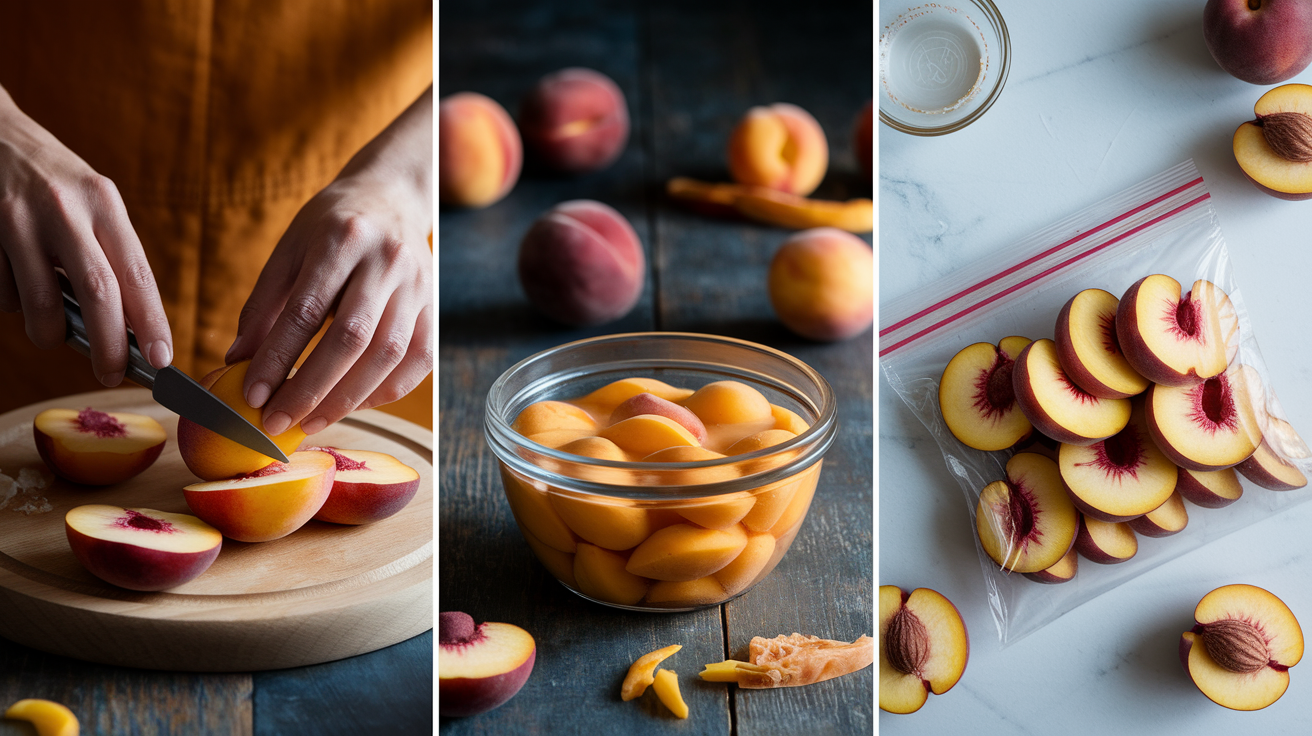
Fresh peaches deliver the best flavor and texture when they’re ripe but still firm, with skins that peel away easily after a quick dip in boiling water for 30 seconds, then an ice bath. Slice each peach into 1/4 to 1/2 inch wedges, removing the pit, and aim for 6 cups of sliced fruit. Usually 6 to 8 medium peaches depending on size. If your peaches are very juicy, toss them with the sugar and cornstarch about 10 minutes before assembling the cobbler so some juice releases early and you can see how thick the mixture is. Add an extra tablespoon of cornstarch if it looks soupy.
Canned peaches are a reliable year-round option and work perfectly as long as you drain them thoroughly and pat the slices dry with paper towels to remove syrup. Two 15 ounce cans yield about 3 cups of drained peach slices, so you’ll need to double that quantity to match the 6 cup fresh peach measurement, or use one 29 ounce can and adjust sugar down slightly since canned peaches are already sweetened. Don’t pour the canning syrup into the cobbler unless you want a very sweet, runny filling. Drain it off and save it for cocktails or iced tea instead.
Frozen peaches should be thawed completely, then drained and patted dry just like canned fruit, because they release a lot of water as they defrost. You can use frozen peach slices straight from the bag without thawing if you increase the cornstarch to 3 tablespoons and add 5 to 10 extra minutes to the bake time. But the texture will be softer and the filling may take longer to thicken. For the cleanest, most consistent results, always measure your prepared peaches by volume (cups) rather than counting individual fruits, because peach sizes vary widely.
Peach prep tips by type:
- Fresh: Boil 30 seconds, ice bath, peel, pit, slice. Measure 6 cups. Toss with sugar and cornstarch.
- Canned: Drain thoroughly, pat dry, measure 6 cups (two to three 15 oz cans). Reduce added sugar by 2 tablespoons.
- Frozen: Thaw and drain, or use frozen with +1 tablespoon cornstarch and +5–10 minutes bake time.
- Overripe or bruised: Cut away soft spots. These peaches release more juice, so add extra cornstarch.
- Underripe: Slice thin and macerate with sugar for 15–20 minutes to soften and draw out sweetness.
Mastering Cobbler Toppings: Biscuit Style vs. Cake Style
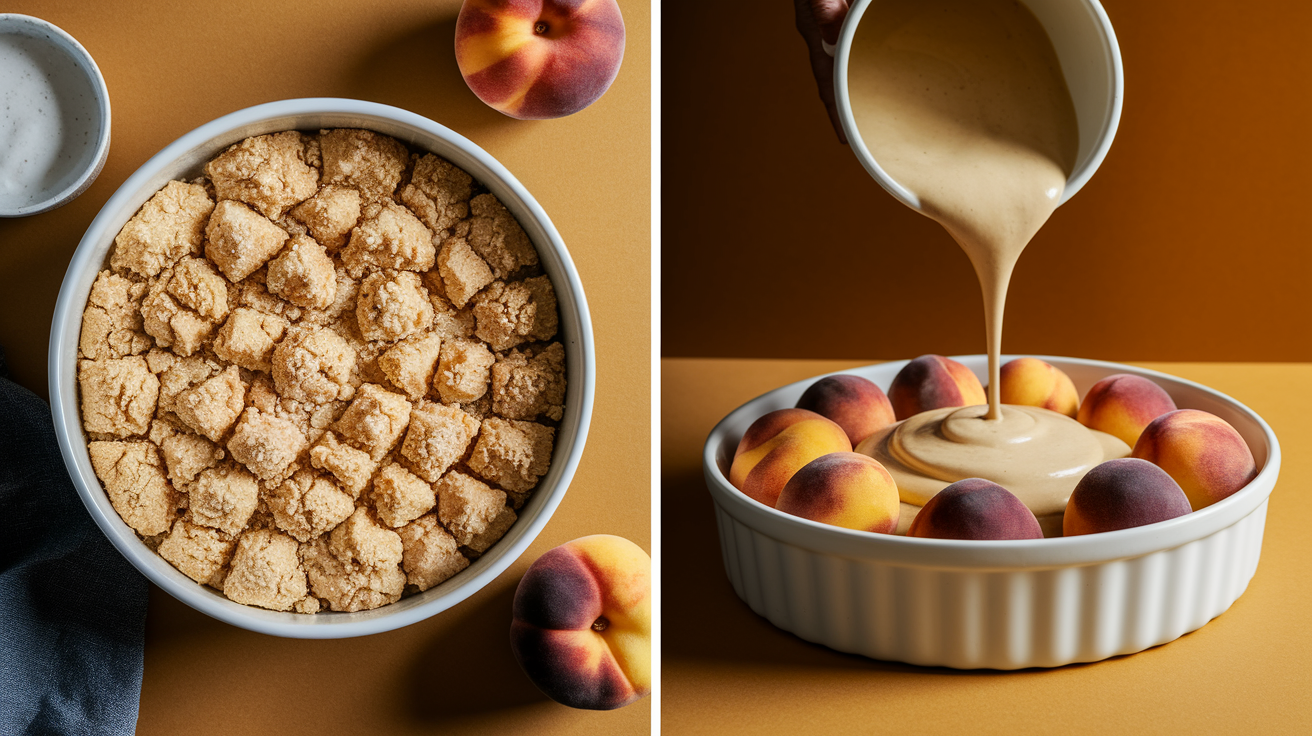
Biscuit style toppings use cold butter cut into dry ingredients, then mixed with milk or buttermilk to form a thick, shaggy dough that you drop in spoonfuls over the fruit. This creates distinct, fluffy biscuit pockets with crisp tops and soft, tender centers. It works best when you handle the dough gently and don’t overmix. Stop stirring as soon as the flour disappears. The dough will look rough and lumpy, but those lumps turn into light, airy biscuits as they bake, and the irregular surface browns beautifully with golden peaks and valleys.
Cake style toppings start with a pourable batter made from flour, sugar, baking powder, milk, melted butter, and sometimes an egg for extra richness and structure. This batter spreads into a smooth, even layer when you pour it over the melted butter in the skillet, then the peaches go on top and the batter rises around and through the fruit as it bakes. You get a self-crusting effect with a soft, cake-like crumb. The cake style method is faster because you don’t need to cut in cold butter, and it produces a more uniform, cohesive topping that slices cleanly, though it won’t have the rustic, biscuit-y texture some people prefer.
| Topping Type | Key Ingredients | Texture Outcome |
|---|---|---|
| Biscuit Style | Flour, sugar, baking powder, cold butter (cubed), buttermilk | Fluffy, distinct biscuit pockets with crisp tops and tender centers |
| Cake Style | Flour, sugar, baking powder, milk, melted butter, egg, vanilla | Smooth, even cake-like layer that rises around fruit; soft, cohesive crumb |
Temperature, Timing, and Doneness Cues for Cast Iron Cobbler
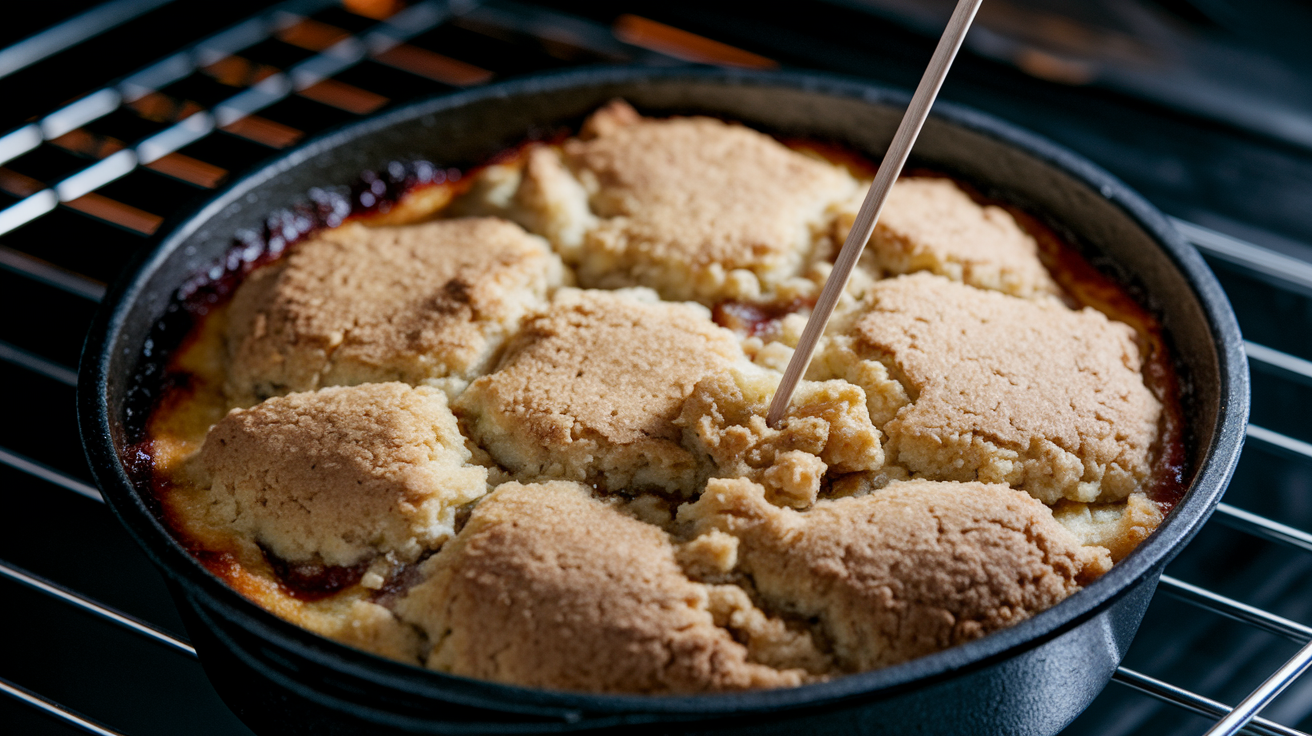
Preheat your oven to 375°F. Hot enough to puff the topping and caramelize the butter without scorching the sugars or drying out the biscuit layer. At this temperature, most cast iron cobblers bake in 35 to 45 minutes, though a deeper skillet or a very full batch may need the longer end of that range. Start checking at 35 minutes by looking for a deep golden brown color on the topping. Not pale tan, but rich gold with a few darker brown spots where the biscuit peaks have crisped.
The filling should be visibly bubbling at the edges and around any gaps in the topping, not just steaming quietly. Active bubbling means the cornstarch has fully activated and thickened the juices into syrup instead of leaving them thin and watery. If you insert a toothpick or cake tester into the topping (not down into the fruit), it should come out with moist crumbs clinging to it, not wet batter, which tells you the biscuit or cake layer is cooked through.
Doneness checklist:
- Topping is deep golden brown with darker crisp spots, not pale or doughy looking.
- Filling is bubbling actively at the edges, not just around the sides.
- Toothpick inserted into topping shows moist crumbs, not wet batter.
- Cobbler smells rich and buttery, with caramelized sugar notes, not raw flour.
Skillet Care Before and After Baking Peach Cobbler
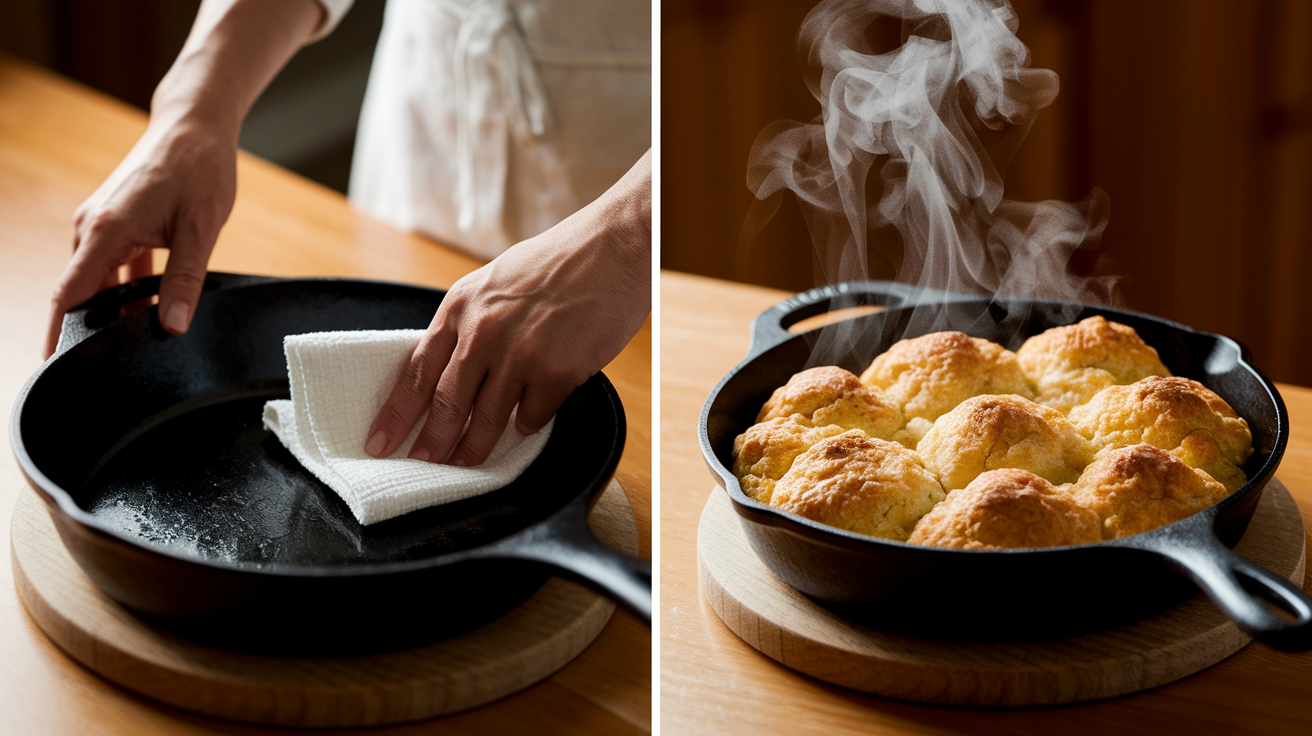
Before you start, make sure your cast iron skillet is clean, dry, and well seasoned. If it looks dull or has rust spots, scrub it with coarse salt and a little oil, rinse, dry thoroughly, and heat it on the stovetop with a thin layer of neutral oil until it smokes lightly, then wipe out the excess. A properly seasoned skillet will have a smooth, almost glossy black surface that repels sticking and adds flavor to everything you bake in it.
After baking, let the skillet cool for at least 10 to 15 minutes before you try to clean it. Plunging hot cast iron into cold water can cause thermal shock that warps or cracks the pan. Scrape out any stuck-on cobbler bits with a wooden spoon or silicone spatula while the skillet is still warm, then rinse with hot water and scrub gently with a stiff brush or a handful of coarse salt if you need abrasion. Dry the skillet completely with a towel, then place it on a burner over low heat for a minute or two to evaporate any remaining moisture, and finish by rubbing a very thin coat of neutral oil (vegetable, canola, or flaxseed) over the entire interior surface. For burnt sugar or caramelized bits that won’t budge, simmer 1/2 inch of water in the skillet for 2 to 3 minutes to loosen the residue, then scrub and re-season as usual.
Serving Ideas for Cast Iron Peach Cobbler
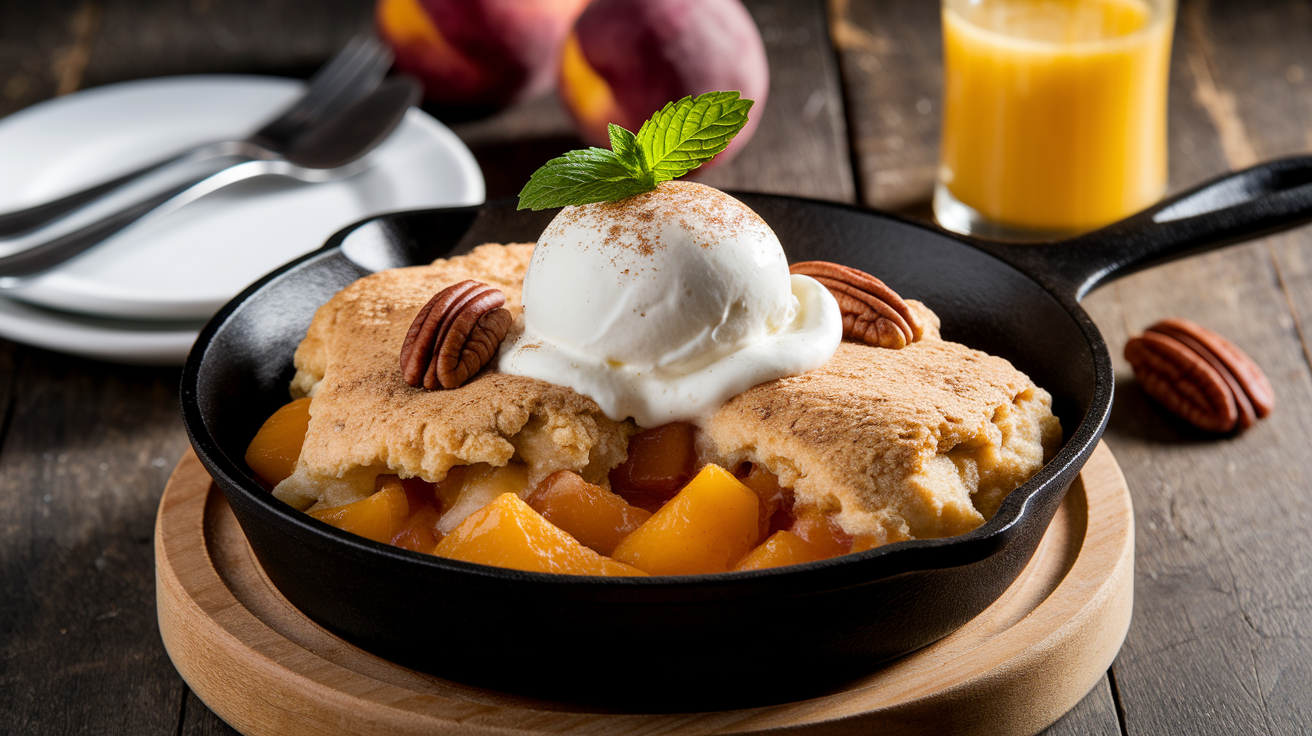
Serve this cobbler warm, ideally within an hour or two of pulling it from the oven, when the topping is still crisp and the filling is hot and syrupy. Scoop portions into shallow bowls and top each serving with a generous scoop of vanilla ice cream or a dollop of lightly sweetened whipped cream. It melts into the warm fruit and creates a creamy, sweet contrast to the buttery biscuit. You can bring the whole skillet to the table for a rustic presentation, though be sure to set it on a trivet or wooden board and warn guests that the handle stays hot for a long time.
Serving enhancements:
- Vanilla ice cream or whipped cream (essential for balancing the warm, sweet filling).
- Sprinkle of ground cinnamon or cinnamon sugar over each portion.
- Toasted chopped pecans or sliced almonds for crunch.
- Drizzle of honey or a spoonful of Greek yogurt for tangy contrast.
- Fresh mint leaves as a garnish for color and a hint of brightness.
Make Ahead, Storage, and Reheating Guidance for Skillet Cobbler
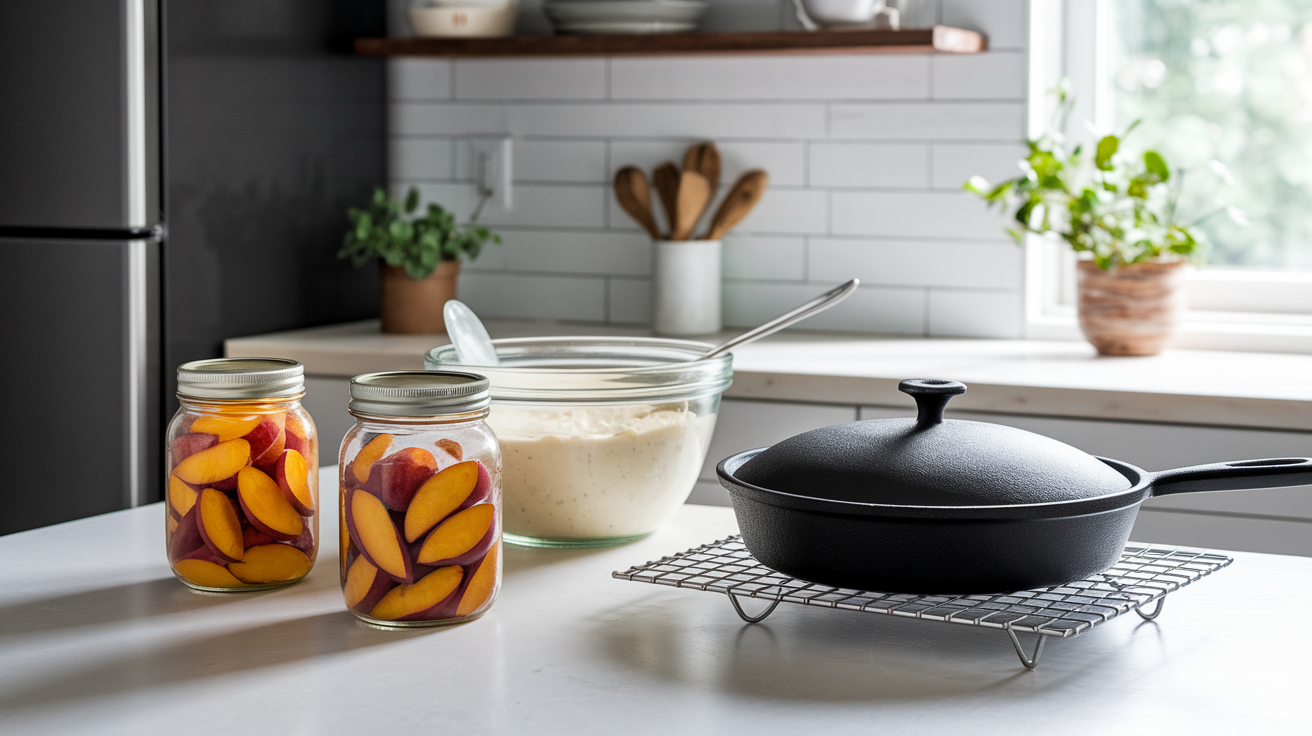
You can peel and slice your peaches up to 4 hours ahead of time and store them in the refrigerator tossed with a little lemon juice to prevent browning, then bring them to room temperature before assembling the cobbler. The batter or biscuit dough can be mixed and refrigerated for up to 2 hours, covered tightly, though you may need to stir it briefly before pouring or dropping it over the butter. Don’t assemble the entire cobbler more than 30 minutes before baking. The peach juices will soak into the raw batter and create a gummy layer instead of a light, fluffy topping.
Once baked, cobbler keeps in the refrigerator for 3 to 4 days in a covered container or wrapped tightly with foil. The topping will soften as it sits, but you can restore some of the crispness by reheating individual portions in a 350°F oven for 10 to 15 minutes, or by warming them in the cast iron skillet over low heat on the stovetop for 3 to 5 minutes. Cobbler doesn’t freeze well because the fruit becomes mushy and the topping turns soggy when thawed, so plan to bake only what you’ll eat within a few days, or halve the recipe and use a smaller 8 inch skillet.
Storage and reheating steps:
- Cool the cobbler completely before covering it with foil or transferring it to an airtight container.
- Refrigerate for up to 3 to 4 days. Don’t leave at room temperature longer than 2 hours.
- Reheat single servings in a 350°F oven for 10 to 15 minutes, or warm the whole skillet on the stovetop over low heat, covered loosely with foil, for 5 to 8 minutes.
- Add fresh ice cream or whipped cream after reheating for the best texture contrast.
Troubleshooting Common Cast Iron Cobbler Problems
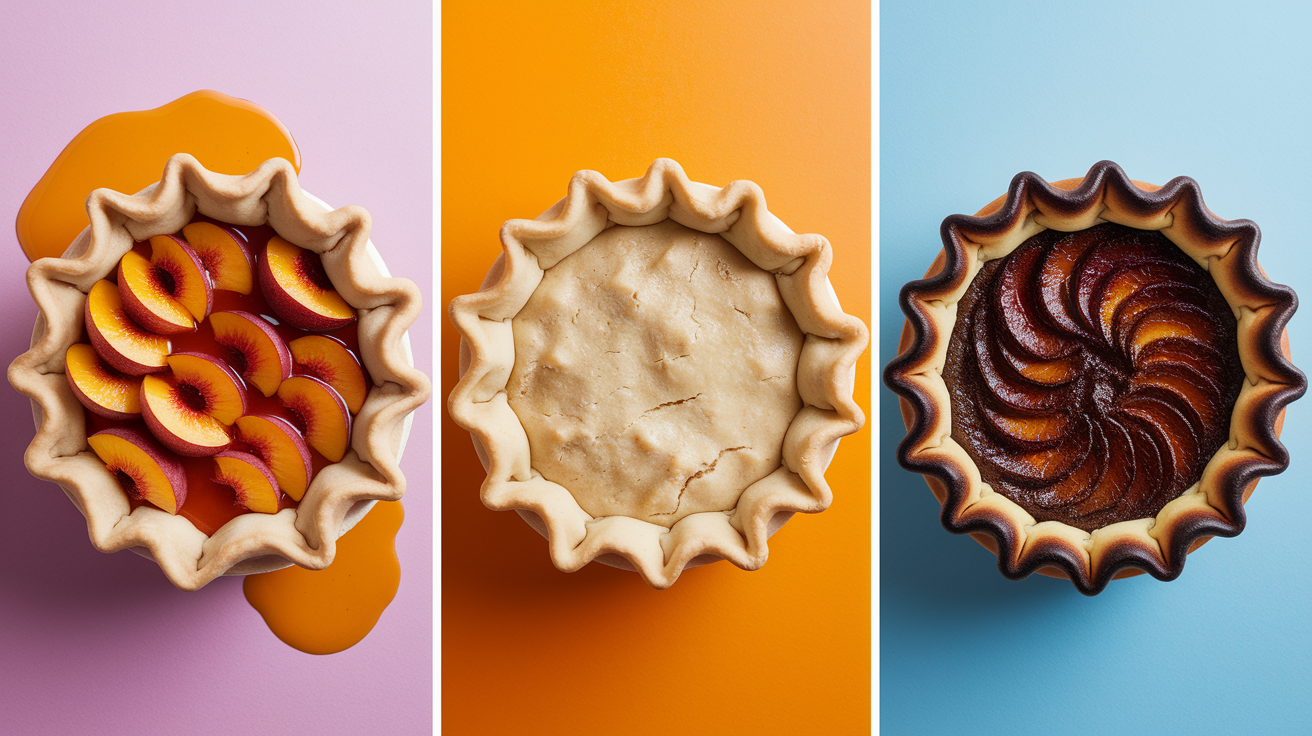
Runny, soupy filling happens when the peaches release more juice than the cornstarch can absorb. Often because the fruit was very ripe, canned peaches weren’t drained thoroughly, or you skipped the cornstarch entirely. Fix this by adding an extra tablespoon of cornstarch to the peach mixture before baking, or by sprinkling 2 to 3 tablespoons of quick oats over the fruit before adding the topping. The oats soak up excess liquid and thicken the filling as it bakes. If your cobbler is already baked and soupy, there’s no fix, but next time reduce the added sugar by 2 tablespoons and make sure to drain canned or thawed frozen peaches very well.
Undercooked centers occur when the oven temperature is too low, the skillet is too deep, or the cobbler is pulled out before the topping is fully set. If you cut into the cobbler and find wet batter underneath a golden top, return it to the oven and bake in 5 minute increments until a toothpick inserted into the center comes out with moist crumbs, not wet batter. Tent the top loosely with foil if it’s already dark brown to prevent burning while the center finishes cooking.
Burnt edges or over-browned topping usually mean your oven runs hot or the cobbler was placed too close to the top heating element. Move the rack to the center or lower middle position and tent the cobbler with foil after 25 to 30 minutes if the top is browning too fast. Overflow and spillage happen when the skillet is too small or too full. A 10 inch skillet is the minimum size for this recipe, and you should leave at least 1/2 inch of space between the batter and the rim to allow for bubbling and rising.
Common problems and quick fixes:
- Runny filling: Add 1 extra tablespoon cornstarch or 2–3 tablespoons quick oats. Drain canned peaches completely.
- Undercooked topping: Bake 5–10 minutes longer. Tent with foil if top is already brown.
- Burnt edges: Lower oven rack. Tent with foil after 25–30 minutes. Check oven temperature with thermometer.
- Overflow: Use a 12 inch skillet or reduce filling quantity by 1 cup. Place a baking sheet under skillet to catch drips.
- Soggy bottom: Make sure butter is fully melted and hot before adding batter. Bake on lower middle rack for direct bottom heat.
- Pale, doughy topping: Increase oven temperature to 385°F or bake 5–10 minutes longer until deep golden brown.
Final Words
In the action, you’ve got the full, ready-to-bake cast iron skillet peach cobbler recipe up top, with quick prep, ingredient list, and step-by-step skillet melting and layering.
Then we walk through ingredient insights, fresh vs canned peaches, biscuit vs cake toppings, oven timing cues, skillet care, and simple troubleshooting and storage tips.
Use the cast iron skillet peach cobbler recipe as written for bubbling fruit and a golden, buttery top. Serve warm with vanilla ice cream and enjoy. Easy, cozy dessert night.
FAQ
Q: What oven temperature and baking time should I use for a cast iron peach cobbler?
A: The oven temperature and baking time for a cast iron peach cobbler are 375°F for 35–45 minutes, baking until the topping is golden and the filling is bubbling in the center.
Q: How many fresh peaches do I need and what’s the canned conversion?
A: The fresh peach amount is 6–8 peaches (about 6 cups sliced); canned conversion is roughly two 15‑oz cans (about 3 cups drained) per recipe.
Q: Can I use frozen peaches, and do they need to be thawed?
A: You can use frozen peaches; thaw and pat dry to remove excess liquid. If still watery, add 1–2 tablespoons cornstarch or extra oats to prevent a runny filling.
Q: Should I stir the batter and peaches together in the skillet?
A: You shouldn’t stir the batter and peaches; melt butter in the skillet, pour batter, then spoon peaches on top without stirring so the topping bakes into a golden, cake-like layer.
Q: What’s the difference between biscuit-style and cake-style cobbler toppings?
A: Biscuit-style topping uses cold butter for pillowy biscuit pockets, while cake-style is a pourable batter with egg and melted butter for a uniform, cake-like crumb.
Q: How can I stop the filling from being runny or soupy?
A: To prevent a runny filling, use 1–2 tablespoons cornstarch with about 1/2 cup sugar, drain canned peaches well, or sprinkle quick oats to absorb extra juice before baking.
Q: How do I know when the cobbler is done?
A: The cobbler is done when the topping is golden-brown, fruit is bubbling in the center, and a toothpick in the topping comes out with moist crumbs, not raw batter.
Q: Can I make this cobbler ahead and how should I store leftovers?
A: You can prep peaches ahead; store baked cobbler in the fridge for 3–4 days in an airtight container. Reheat 10–15 minutes at 350°F, or warm in the skillet over low heat.
Q: How should I care for my cast iron skillet before and after baking?
A: Treat a seasoned skillet gently: melt butter in it as directed, cool slightly before cleaning, scrub with hot water or salt, dry fully, and rub with a thin oil layer to protect seasoning.
Q: What are the best serving suggestions for warm peach cobbler?
A: Serve warm peach cobbler with a scoop of vanilla ice cream, whipped cream, a sprinkle of cinnamon, or toasted nuts. Enjoy within 1–2 hours for the best texture contrast.