

Timers lie: pan size changes everything.
Pan depth, shape, and what the pan’s made of change bake time and temperature more than the recipe usually tells you.
A shallow 10-inch skillet can finish at 375°F in 25-35 minutes, while a deep dish often needs 325-350°F and 50-70 minutes so the center can bubble without burning the top.
This post lays out clear temps and times by pan size, with simple visual cues and quick swaps so your cobbler is golden on top and jammy in the middle.
Comprehensive Cobbler Bake Times by Common Pan Sizes

Most cobblers bake at 350°F to 375°F. You’ll start at 350°F for standard pans holding about 1.5 to 2 inches of fruit. Want a faster bake and browner top? Use a shallow skillet and bump the temp to 375°F. Bake time shifts with pan size, depth, and what it’s made of. Wider, shallow pans finish quickly because heat moves through thin filling fast. Deeper pans need more time so the center can bubble and thicken properly.
Pan shape matters. Square and rectangular pans heat differently than round cast iron. Surface area, wall height, whether you preheat the pan, all of it changes your final timing. Match your pan’s capacity and depth to how much fruit you’re using, then follow the chart and watch for visual cues instead of guessing.
| Pan Size | Temp (°F) | Bake Time Range | Notes |
|---|---|---|---|
| 8×8 inch | 350 | 35–45 min | Standard 2-quart depth; check at 30 minutes if metal. |
| 9×13 inch | 350 | 40–50 min | Metal pans may finish in 35–45 minutes; glass needs lower rack or temp reduction. |
| 10-inch cast iron skillet | 375 | 25–35 min | Preheat skillet 10 minutes for crisp bottom; shallow fill shortens time. |
| Deep dish (≥3″) | 325–350 | 50–70+ min | Lower temp prevents overbrowning thick topping; expect extended bake. |
| Individual ramekins (6 oz) | 375 | 18–25 min | Small volume bakes fast; watch for bubbling edges. |
Don’t just trust the timer. The real sign of doneness is fruit bubbling hard at both edges and center, with a golden to deep golden topping. Slow, lazy bubbles or a pale top when the buzzer goes off? Keep baking. Look through gaps in the topping or listen for active bubbling before you pull it out.
How Cobbler Pan Depth Changes Baking Time and Temperature
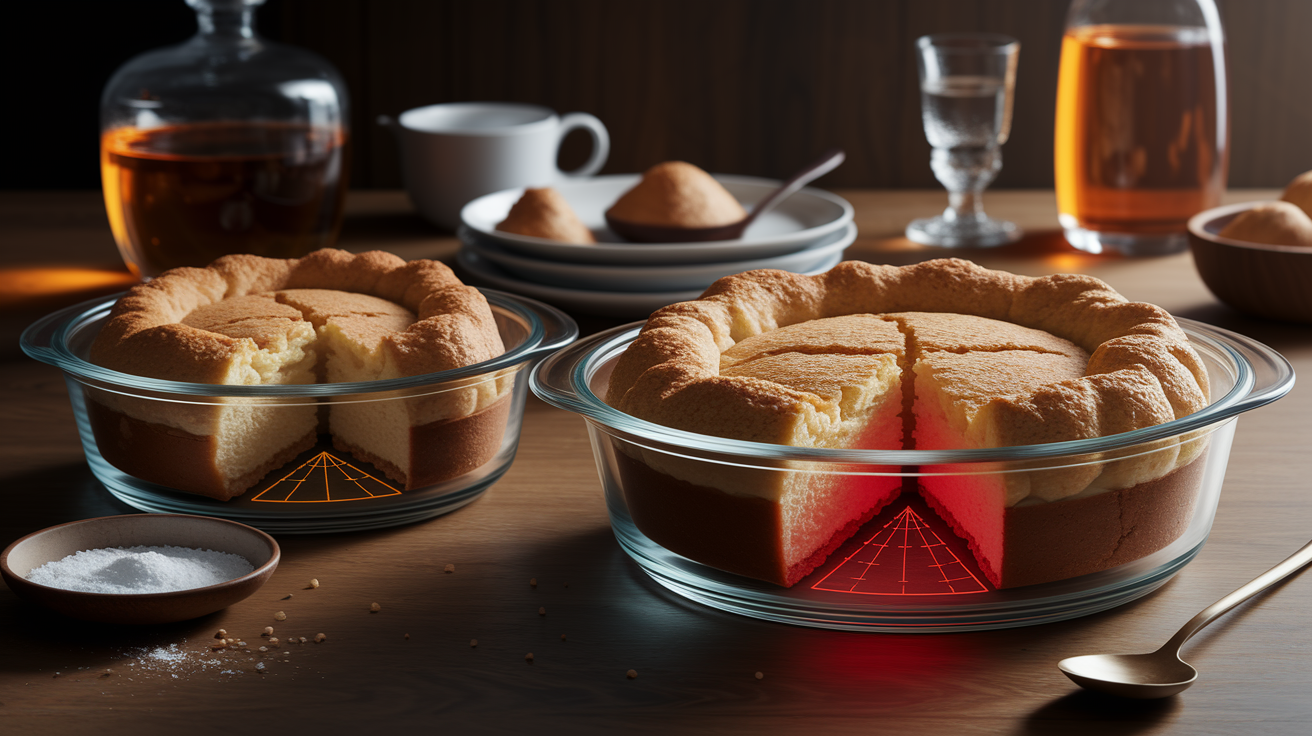
Pan depth controls how long heat takes to reach the center of your filling. A shallow layer in a 10-inch skillet, maybe just 1 inch thick, bubbles fast. A deep pan holding 3 or more inches of fruit? That needs way longer because heat has to travel farther and there’s more moisture to evaporate and thicken.
Rough rule: add 8 to 12 minutes for every extra half inch of filling depth. If your recipe calls for 1.5 inches and you go to 2.5 inches, expect roughly 16 to 24 extra minutes. Deep cobblers that are 3 inches or deeper often take 50 to 70 minutes or more at a reduced 325°F to 350°F. You’re protecting the topping from burning while the filling finishes. Fruit should hit about 200°F inside to activate thickeners and get that jammy, bubbling texture you’re after.
A few things work together with depth to change your timing:
Topping thickness. A tall biscuit layer insulates the filling below and adds minutes.
Moisture content. Juicier fruit or extra liquid slows thickening.
Fruit type. Frozen or canned fruit releases more water than drained pie filling.
Pan insulation. Ceramic and glass hold heat longer, which slows the initial temp rise.
Pan diameter. A narrow, tall pan concentrates filling and needs more time than a wide, shallow one with the same volume.
When you switch to a deeper pan than the recipe originally used, lower your oven temp by 25°F. This keeps the top from burning while the bottom and center catch up. Start checking 10 minutes before you think it’s done and look for bubbling right in the middle, not just around the edges.
Pan Material Effects: Glass, Metal, Ceramic, and Cast Iron Bake Differently

Metal pans, aluminum and steel, conduct heat fast. They brown bottoms and edges quickly and usually finish 5 to 10 minutes faster than glass or ceramic at the same temp. If your recipe was written for glass and you swap to metal, start checking 5 to 10 minutes earlier so you don’t overbake. Metal’s great when you want a crisp, golden bottom and fast turnaround.
Glass and ceramic absorb and hold heat, which can create hotter bottoms and slower initial heating. Drop your oven temp by 25°F if you’re using glass or ceramic, or keep the temp the same and check 5 to 10 minutes early. These work well for even, gentle baking, but watch for darker edges if you’re on a lower rack without adjusting temp.
Cast iron’s the champion for heat retention and even browning. Preheat your skillet in the oven about 10 minutes before adding fruit and topping. The hot metal gives you a crisp bottom and cuts total time by 5 to 10 minutes versus a cold start. Cast iron holds steady heat, so once it’s up to temp, the cobbler bakes evenly without hot spots.
Adjustments by material:
Metal: cut bake time 5 to 10 minutes or watch closely after 30 minutes.
Glass: drop oven temp by 25°F or check doneness 5 to 10 minutes early.
Ceramic: similar to glass. Lower temp or start checking sooner.
Cast iron: preheat 10 minutes, use 375°F for shallow cobblers, expect faster browning and shorter overall time.
Convection vs. Conventional Ovens for Cobbler Baking
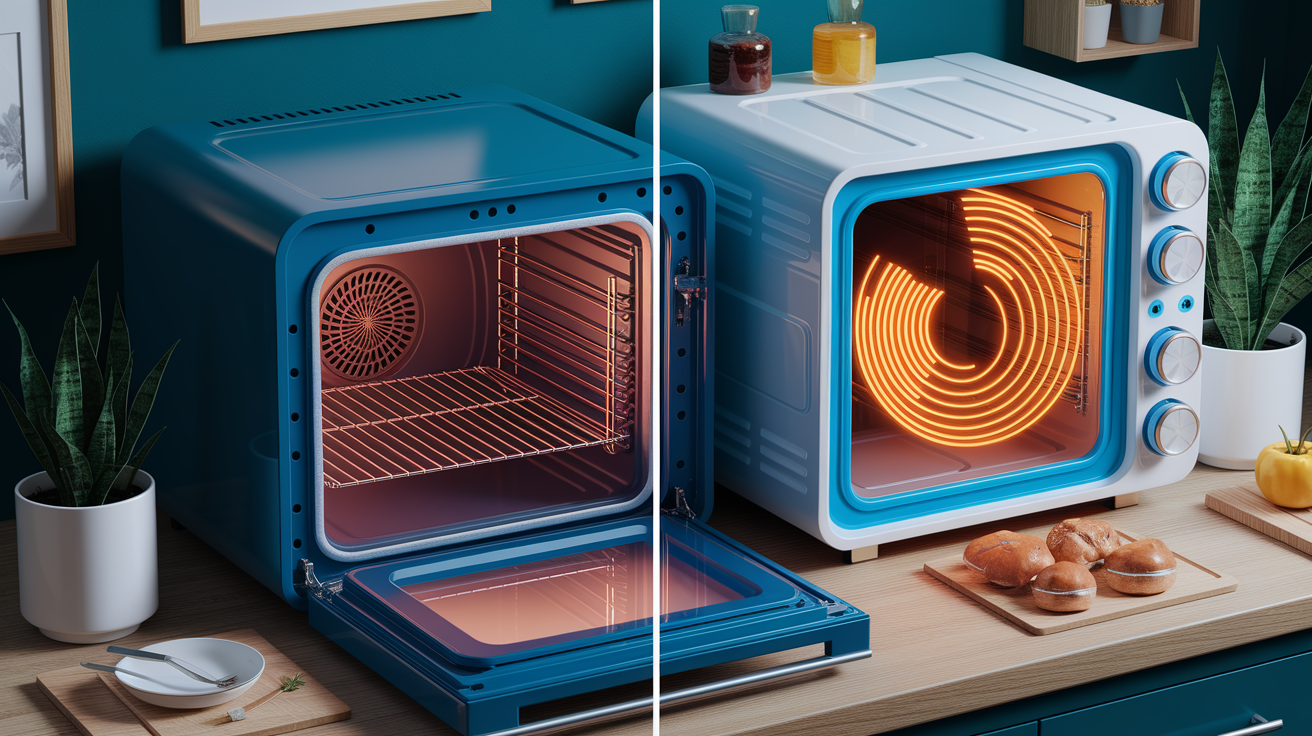
Convection ovens circulate hot air with a fan, speeding up browning and cutting bake time. When you switch from conventional to convection, drop the temp by 25°F or cut bake time by 15 to 25 percent. For a cobbler that normally bakes at 350°F for 45 minutes, try 325°F convection and start checking around 35 minutes. The moving air promotes faster, more even browning, especially helpful if you want a crisp, golden top without shifting racks.
Rack position matters no matter which fan mode you’re using. Middle rack gives balanced heat from top and bottom. If your topping browns too slowly, move the pan to the upper third for the last few minutes. Just watch closely so you don’t burn it. Preheating cast iron skillets in a convection oven works even better because the fan distributes the skillet’s heat quickly, shaving off another few minutes.
Quick convection rules:
Lower oven temp by 25°F when converting from conventional.
Cut bake time by 15 to 25 percent and check early.
Use middle rack for even browning, upper rack for final crisping.
Preheat cast iron 10 minutes in a convection oven for the fastest, crispest bottom.
Visual and Thermometer Based Doneness Checks for Cobblers

The most reliable sign of doneness is hard bubbling at the edges and in the center of the fruit. Look through any gaps in the topping or watch where fruit meets the pan. Slow, lazy bubbles mean the filling hasn’t thickened yet. Fast, rolling bubbles that steam up? That tells you the filling has reached the right temp and consistency.
Topping color is your second cue. A pale, barely tan top usually means underbaked filling underneath. Go for golden to deep golden brown with a few darker spots. The topping should look dry on the surface, not shiny or doughy. If it’s browned but the filling isn’t bubbling, tent with foil and keep baking until you see action in the center.
Exact doneness tests:
Insert a toothpick into the topping only. It should come out with moist crumbs, not wet batter.
Use an instant read thermometer in the center of the filling, look for about 200°F, which signals properly thickened fruit.
Listen for bubbling sounds when you crack the oven door slightly.
Check that edges have pulled slightly from the pan and juices look thick, not watery.
Press the topping gently with a spoon. It should feel firm, not squishy.
Adjusting Cobbler Recipes When Switching Between Pan Sizes
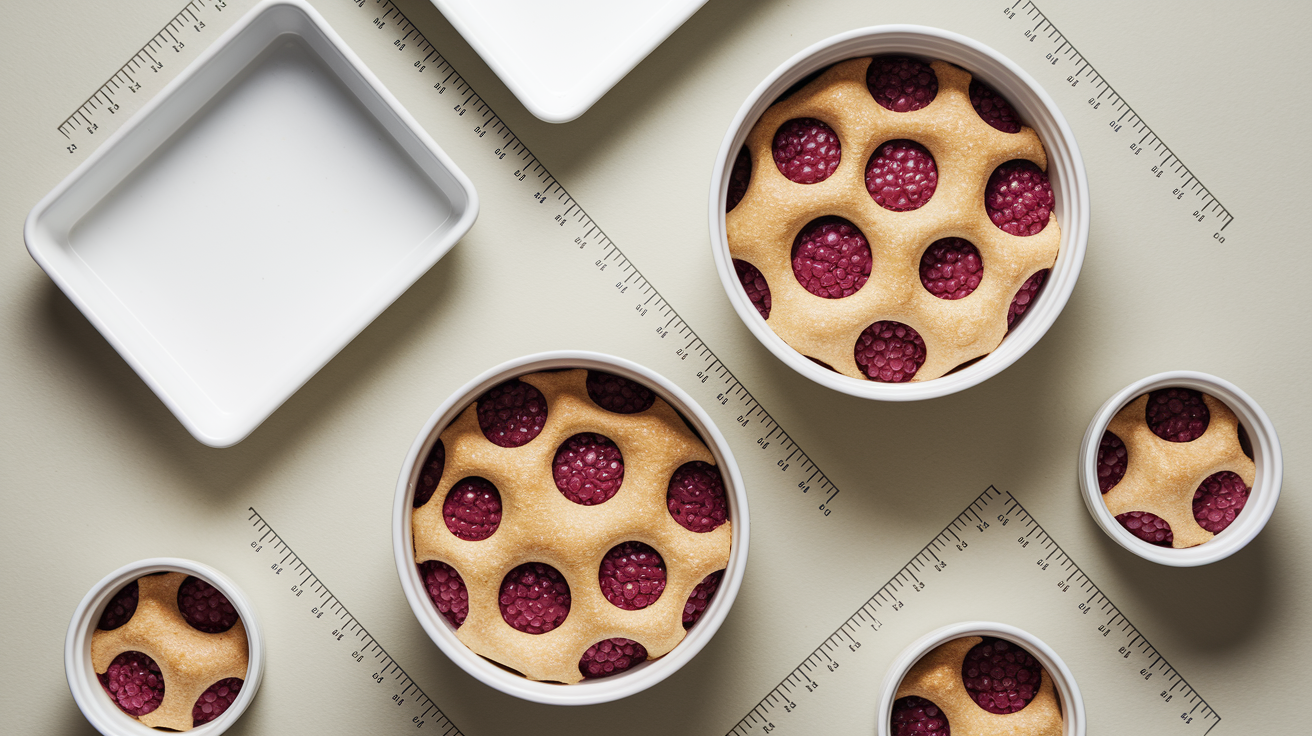
When you double a recipe from an 8×8 inch pan to a 9×13 inch pan, you’re not quite doubling the volume. An 8×8 holds about 8 cups, and a 9×13 holds roughly 14 cups. Expect to add 10 to 20 minutes to bake time because the layer’s slightly deeper and there’s more total filling to heat through. Keep the temp the same and start checking at the original time, then continue until the center bubbles.
Halving a recipe or moving from 9×13 down to 8×8 or a 10 inch skillet means less volume and often a thinner layer. Cut bake time by 10 to 20 minutes and begin checking early. If you’re switching to the same depth but different shape, say from a 9 inch round to an 8×8 square, the time change will be minimal because depth and total volume are similar.
| Starting Pan | New Pan | Temp Change | Time Adjustment |
|---|---|---|---|
| 8×8 inch | 9×13 inch | None | +10–20 minutes |
| 9×13 inch | 8×8 inch | None | −10–20 minutes |
| 8×8 inch | 10″ skillet | +25°F | −5–15 minutes |
| 9×13 inch | Deep dish (3″+) | −25°F | +15–30 minutes |
Prevent overflow by choosing a pan with sides at least 1.5 inches taller than your filling layer once it’s settled. Place a foil lined sheet pan on the rack below to catch any drips, especially when testing a new pan size for the first time or using very juicy fresh fruit.
Topping Types and Their Required Baking Times
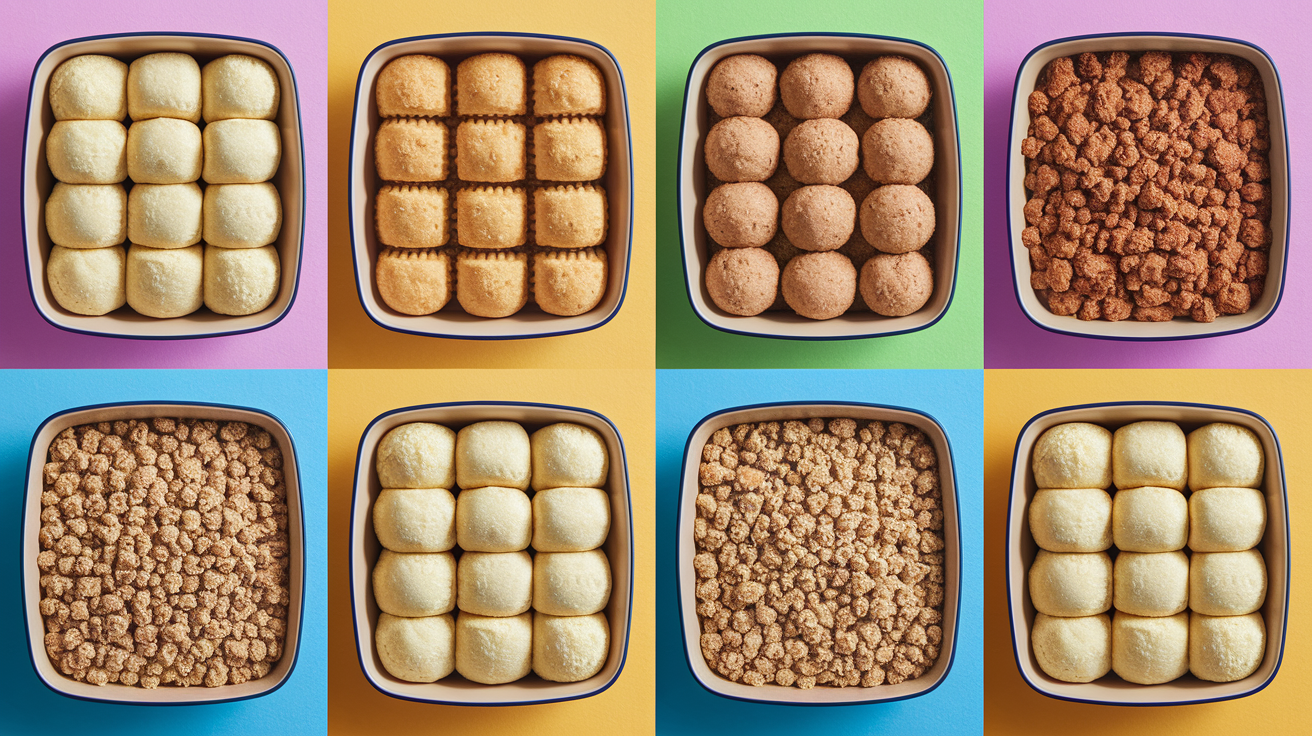
Biscuit toppings, drop style or rolled and cut, usually need 350°F to 375°F for 30 to 50 minutes, depending on pan depth. Biscuits are denser and moister than crumbles, so they take longer to bake through and develop a golden crust. Leave gaps between biscuit pieces or drop them in irregular mounds so steam can escape and the filling can bubble up through the openings. Tightly packed biscuit tops trap steam and can stay pale underneath.
Crumble or streusel toppings brown faster because they’re made of smaller, buttery pieces with more exposed surface area. These usually finish in 25 to 40 minutes at 375°F and turn deep golden quickly. If your crumble’s browning too fast while the filling’s still cold, lower the oven to 350°F and tent loosely with foil.
Topping specific timing tips:
Drop biscuit cobblers: leave half inch gaps for venting, expect 35 to 50 minutes at 350°F.
Rolled and cut biscuit tops: slightly shorter time if pieces are thin, 30 to 45 minutes. Check for golden color and firm edges.
Cake batter toppings: pour evenly and bake 30 to 45 minutes at 350°F. Topping should spring back when pressed.
Crumble or streusel: bake 25 to 40 minutes at 375°F, tent if browning too quickly.
Refrigerated biscuit dough: follow package temp, usually 375°F, check after 20 to 30 minutes.
Very thick hand formed biscuits: may need 45 to 55 minutes. Insert toothpick to test center.
Solutions for Underbaked Centers, Overbrowned Tops, and Soggy Bottoms

If your topping’s golden but the center filling’s still cold or barely bubbling, lower the oven temp by 25°F and keep baking. Tent the top loosely with foil to stop further browning while the filling catches up. This fix works for deep pans, glass or ceramic bakeware, and any time you started at too high a temp. Check every 5 minutes until you see hard bubbling in the middle.
Overbrowned edges happen when the pan’s too small, too dark, or placed too high in the oven. Move the rack down one position to cut top heat. If edges are already browning too fast, create a foil collar by folding a strip of foil and wrapping it around the rim of the pan, shiny side out, to bounce heat away from the edges. Keep the center exposed so it keeps baking.
Soggy bottoms come from too much moisture, not enough bottom heat, or baking in an insulated pan. Use a metal pan instead of ceramic or glass when you want a crisp bottom. Preheat a cast iron skillet to give the bottom a head start. Bake on the lower third of the oven to send more heat to the base, and think about bumping the temp by 10 to 25°F if the topping can handle it without burning.
Quick fixes:
Tent with foil if top browns before filling bubbles.
Lower temp 25°F and extend time for deep or glass pans.
Move to lower rack or preheat pan for crisp bottoms.
Broil 30 to 90 seconds at the end if top’s pale but filling’s done. Watch constantly.
Final Words
Get your oven ready: this guide laid out clear temps and a simple chart for common pans, and showed how depth, pan material, and convection change timing. You also got practical rules for scaling pans, topping tweaks, and quick fixes for underbaked centers or overbrowned tops.
Trust visual cues—bubbling fruit and a golden top—along with a thermometer when needed. Use the baking times and temperatures for cobblers by pan size as your kitchen shortcut. Enjoy a warm, steamy scoop when it’s ready.
FAQ
Q: How to adjust baking time for different size loaf pans?
A: To adjust baking time for different size loaf pans, change time for volume and depth—larger or deeper pans need longer, smaller shallower pans need less; add about 8–12 minutes per extra 1/2 inch of filling and check doneness.
Q: What temperature should I cook my cobbler at?
A: The temperature you should cook your cobbler at is usually 350–375°F for standard pans; use 325–350°F for deep-dish cobblers and 375°F for a preheated cast-iron skillet, adjusting for depth and material.
Q: What is the 3 2 1 rule in baking?
A: The 3-2-1 rule in baking is a simple ratio: 3 parts flour, 2 parts fat (butter or shortening), and 1 part liquid by weight, handy for making quick pastry or biscuit-style cobbler toppings.
Q: What are common cobbler baking mistakes?
A: Common cobbler baking mistakes are underbaked centers, overbrowned tops, soggy bottoms from watery fruit, wrong pan choice, and skipping preheating; fix with lower temp, foil tent, longer time, or a lower rack position.