

Controversial: a splash of bourbon is the secret that turns an ordinary peach cobbler into something you’ll actually brag about.
This Bourbon Peach Cobbler with Brown Butter Glaze pairs jammy peaches with nutty browned butter and warm bourbon for a dessert that feels special without a lot of fuss.
The batter self-layers as it bakes, creating a tender, cake-like bottom with golden, crisp edges and bubbling fruit pockets, while a quick brown butter glaze adds glossy, toasty sweetness.
It’s fast, forgiving with firm or frozen fruit, and best served warm with a steamy scoop of vanilla ice cream.
Complete Bourbon-Infused Cobbler & Brown Butter Glaze Recipe (Step-by-Step)
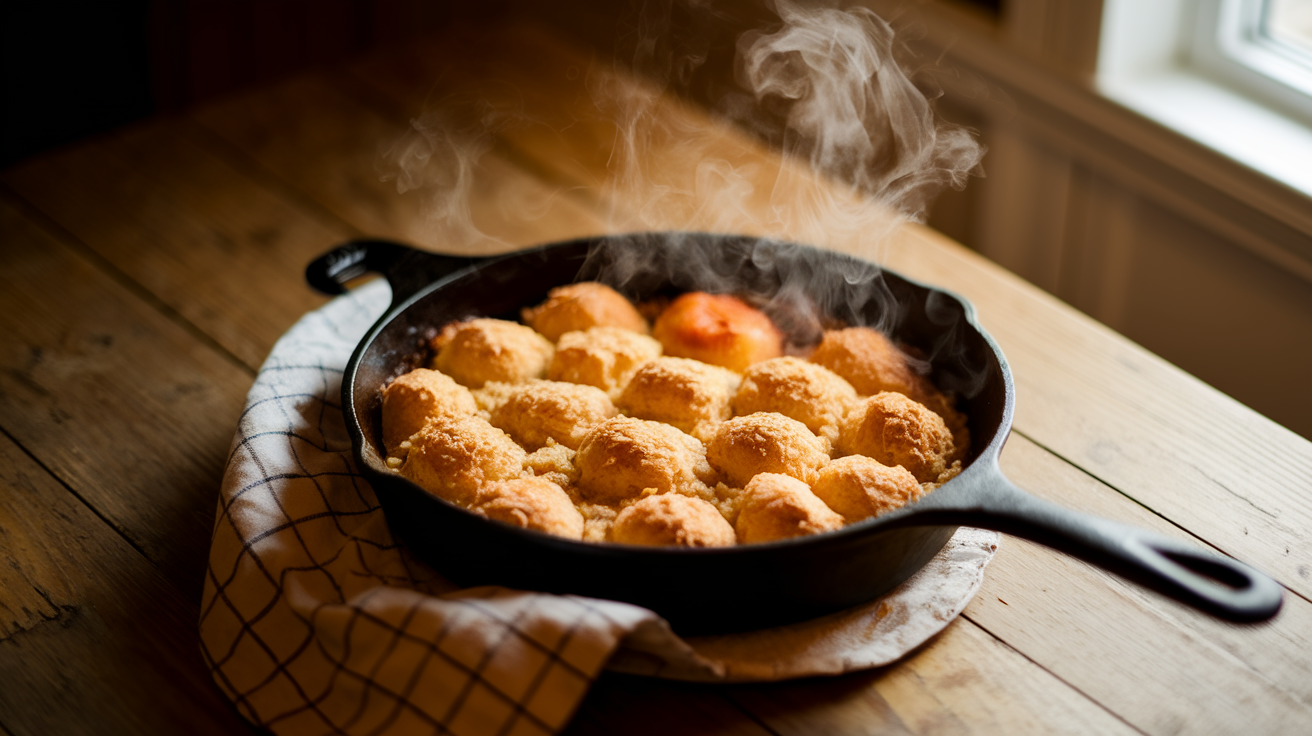
This bourbon peach cobbler pairs juicy summer peaches with nutty brown butter and warm bourbon for a dessert that feels special without the stress. The batter does something kind of magical during baking. It self-layers, creating a tender cake-like bottom and golden edges that crisp up while the peaches bubble into jammy pockets. The brown butter glaze adds a final touch of rich sweetness and shine.
Got a bag of peaches that need using tonight? This works with both perfectly ripe fruit and peaches that are still firm. The 10-minute bourbon simmer softens even hard peaches, so you don’t need to wait for them to ripen on the counter.
The brown butter step happens right in the baking dish, which saves you from washing extra pans and gives the whole cobbler a toasted, buttery base. When you pour the batter over the browned butter, don’t stir. That unstirred layer is what creates the texture as it bakes.
Serve this warm with cold vanilla ice cream or a big spoonful of whipped cream. The contrast between hot, bubbling fruit and the cold topping is why cobbler night always feels like a win.
Complete Recipe Instructions
-
Preheat your oven to 350°F and lightly grease a 4-quart baking dish or casserole dish.
-
Peel and slice 5 cups of peaches (about 5 medium peaches) and place them in a large pot with a lid. Add 1 cup granulated sugar and 1/2 cup bourbon (Jim Beam or similar works well).
-
Bring the peach mixture to a boil over medium-high heat, then reduce to a simmer. Cover and cook for 10 minutes, stirring once or twice, until the peaches soften and release their juices to form a syrup.
-
While the peaches simmer, place 8 tablespoons (1 stick) of unsalted butter in your prepared baking dish and put it in the oven. Bake for about 10 minutes, watching closely, until the butter melts and turns a rich golden brown with a nutty aroma.
-
In a medium bowl, whisk together 1 cup granulated sugar, 1 1/2 cups self-rising flour, 1 1/2 cups milk, and 2 tablespoons ground cinnamon until the batter is smooth and combined.
-
Remove the baking dish from the oven once the butter is browned. Pour the batter directly over the browned butter without stirring or mixing.
-
Spoon the warm bourbon peaches and their syrup evenly over the batter. Again, don’t stir. The layers will settle and bake together on their own.
-
Sprinkle the top with extra cinnamon sugar (about 1 tablespoon sugar mixed with 1 teaspoon cinnamon) and dot with 2 tablespoons of cold butter cut into small pieces.
-
Place the dish on a baking sheet to catch any drips, then bake for 35 to 40 minutes at 350°F. The cobbler is done when the top is golden brown with a few deeper spots and a toothpick inserted into the center comes out clean.
-
Let the cobbler rest for 15 to 20 minutes before serving. This resting time lets the filling thicken and the layers set so scoops hold together better.
-
For the brown butter glaze, melt 2 tablespoons of butter in a small skillet over medium heat until it foams and turns golden brown. Whisk in 1/4 cup powdered sugar and 1 tablespoon of milk until smooth and glossy. The glaze should ribbon slowly off the whisk.
-
Drizzle the warm brown butter glaze over individual servings or over the whole cobbler just before bringing it to the table. Serve warm with vanilla ice cream, whipped cream, and a sprig of fresh mint if you have it.
Choosing the Best Peaches for a Bourbon Peach Cobbler
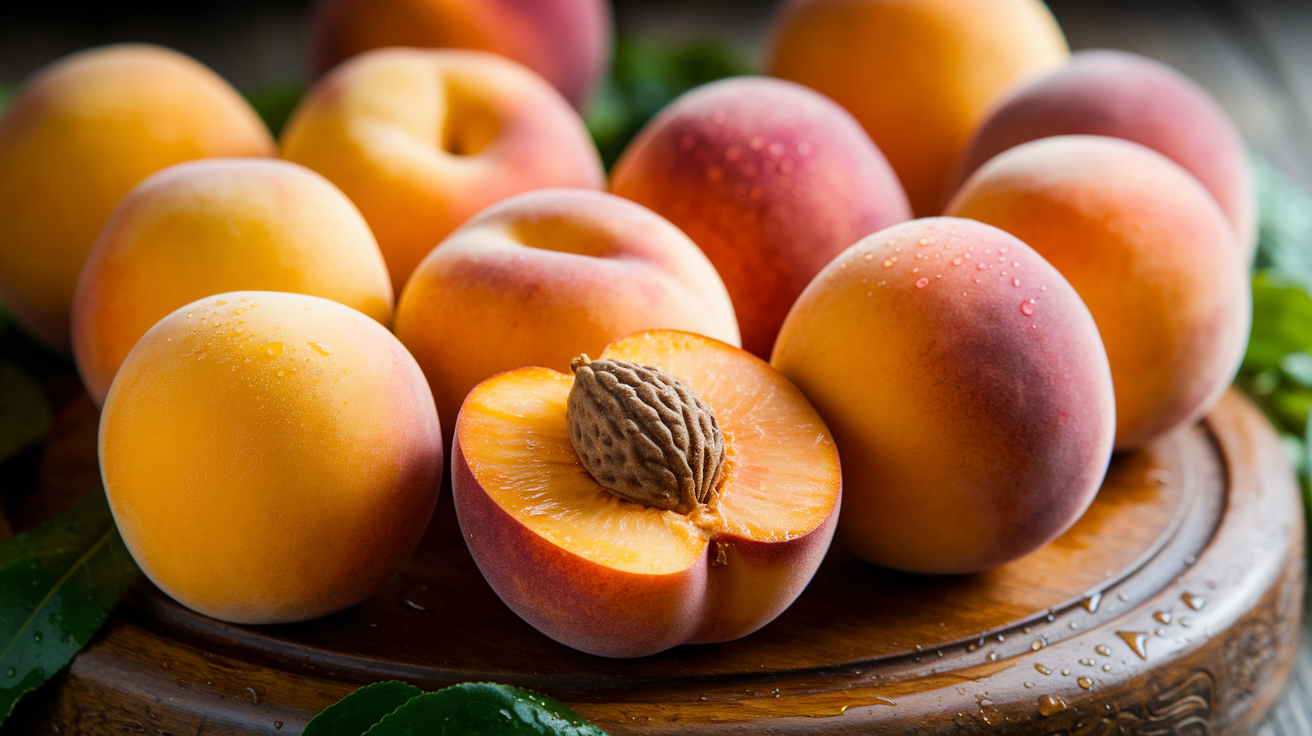
Yellow peaches are the go-to for cobbler because they hold their shape during baking and offer a robust, tangy-sweet flavor that balances the bourbon and brown butter. White peaches are sweeter and less acidic, but they can turn mushy and lose their punch when cooked. Save those for eating fresh or making quick sauces.
Freestone peaches make prep easier because the pit pulls away cleanly. Clingstone varieties are juicier but require more work to remove the pit. If your peaches are very firm or slightly underripe, the bourbon simmer will soften them, so you don’t need to wait.
Peach Prep Quick Tips
- Choose peaches that are ripe but still firm to the touch, with a little give near the stem.
- Peeling is optional. The skin adds color and a bit of texture, plus it holds nutrients, so feel free to leave it on if you like.
- To peel easily, blanch peaches in boiling water for 30 seconds, then transfer to ice water. The skins will slip right off.
- Frozen peaches work if you’re out of season, but thaw and drain them well before using, and skip the blanching step.
- Canned peaches aren’t recommended because they turn too mushy and add extra liquid that throws off the texture.
Advanced Brown Butter Science & Flavor Optimization
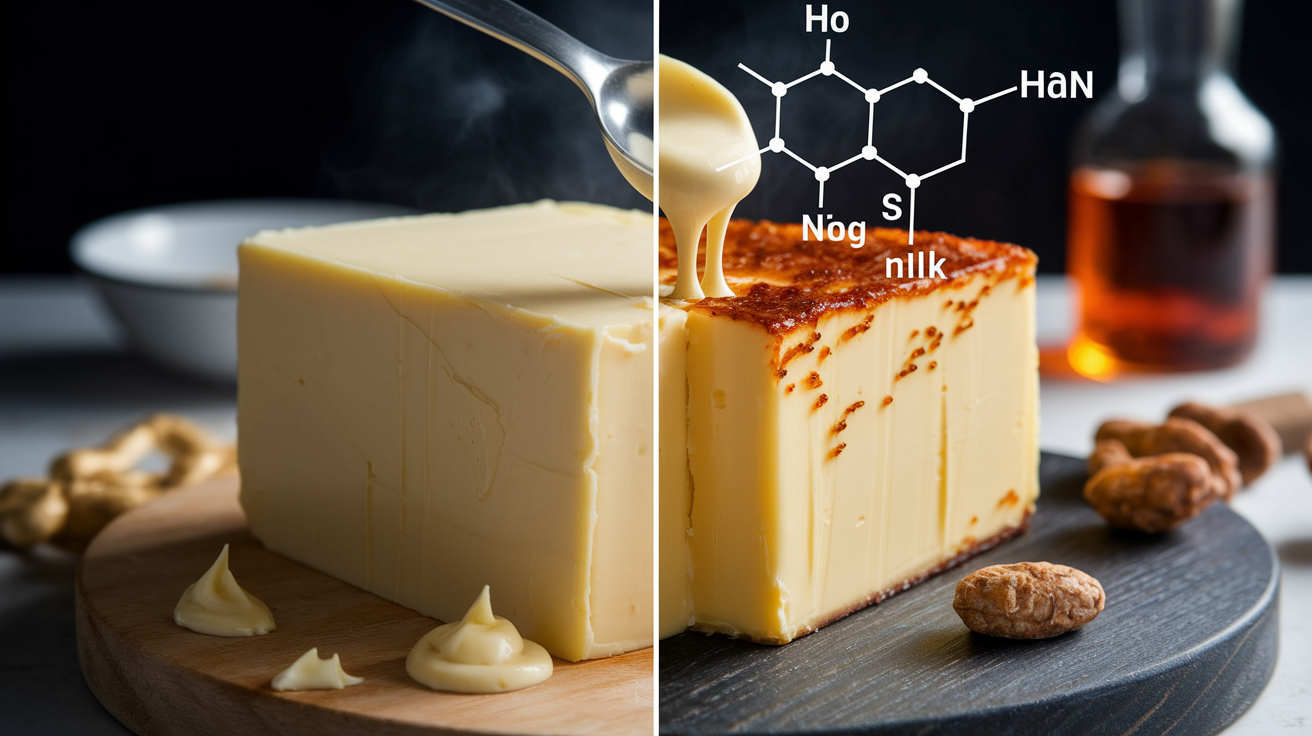
Brown butter gets its deep, nutty flavor from the Maillard reaction, which happens when milk solids in butter are heated until they caramelize and turn golden. The water in the butter evaporates first, then the milk solids begin to toast, releasing compounds that smell like toasted hazelnuts and caramel. Unsalted butter gives you full control over the final flavor because you can add salt later if you want it, and you avoid the risk of over-salting a dessert that already has sweetness and bourbon working together.
If your butter goes from golden to dark brown in seconds, your heat is too high. Medium heat is the sweet spot. You’ll see the butter foam as the water cooks off, then the foam will settle and you’ll start to see golden specks on the bottom of the pan. That’s when you watch closely. The window between perfectly browned and burnt is narrow, so pull the pan off the heat as soon as you see deep golden color and smell that toasty aroma.
Grainy specks in your browned butter are normal. Those are the toasted milk solids, and they add flavor and texture. If the butter smells acrid or looks black instead of brown, you’ve gone too far and need to start over. You can strain out the solids if you want a completely smooth glaze, but leaving them in adds a rustic, nutty bite.
Browned butter can be made ahead and stored in the fridge for up to two weeks, then gently rewarmed before using. Some bakers infuse their brown butter with a cinnamon stick or a strip of orange peel while it cools for an extra layer of warmth, which works beautifully in a bourbon peach cobbler.
Texture Engineering Through Mixing & Layering Methods

The batter in this recipe is thicker than a typical cake batter but thinner than biscuit dough. That balance is what lets it rise around the fruit and form a tender, slightly custardy base. Overmixing develops gluten in the flour, which turns the texture dense and chewy instead of light and cake-like. Mix just until the ingredients come together, even if the batter looks a little lumpy.
The layering rule is simple but critical. When you pour the batter over the browned butter, don’t stir. The butter stays on the bottom and crisps the base while the batter rises through the peaches during baking. If you stir, you lose that contrast and end up with a uniform, flat texture. The peaches should be spooned evenly over the batter so every scoop gets fruit, but gaps are fine because the batter will puff up and fill in as it bakes.
Common Mixing and Layering Mistakes
- Overmixing the batter until it becomes smooth and elastic, which leads to a tough, rubbery topping.
- Adding too much or too little milk, making the batter either soupy or stiff. It should pour slowly and coat the back of a spoon.
- Stirring the batter into the butter or fruit, which destroys the self-layering effect.
- Piling all the peaches in the center instead of spreading them out, leaving dry spots around the edges.
| Thickener | Strength | Flavor Impact |
|---|---|---|
| Cornstarch | High (creates clear, glossy sauce) | Neutral, lets peach flavor shine |
| All-purpose flour | Medium (creates opaque, softer sauce) | Slight starchy taste if undercooked |
| Tapioca starch | High (clear, stable when cooled) | Neutral, slightly chewy texture |
Bourbon Flavor Chemistry, Reduction Control & Alcohol Safety

Bourbon brings vanilla, oak, and caramel notes that deepen the natural sweetness of peaches. The alcohol helps extract flavor compounds from the fruit that water alone can’t pull out. When you simmer peaches with bourbon for 10 minutes, much of the alcohol evaporates, leaving behind concentrated flavor. The remaining alcohol continues to cook off during the 35 to 40 minute bake, so the final cobbler contains only trace amounts, though it won’t be completely alcohol-free.
If you want a more pronounced bourbon flavor, use a higher-proof bourbon or add an extra tablespoon to the fruit mixture. For a milder taste, reduce the bourbon to 1/4 cup or substitute half the bourbon with water. The longer you simmer the fruit, the more the bourbon mellows. A quick 5-minute simmer keeps more of the sharp, boozy edge, while a full 10 minutes softens it into a warm, rounded sweetness.
Choosing a bourbon with specific tasting notes lets you customize the final flavor. A wheated bourbon (like Maker’s Mark) adds soft, sweet notes, while a high-rye bourbon (like Old Forester) brings spice and pepper that contrasts nicely with the fruit. Avoid expensive sipping bourbons for baking because the subtle complexity gets lost in the heat and sugar.
Bourbon Usage and Substitution Tips
- For a non-alcoholic version, replace bourbon with water and add 1/2 teaspoon of vanilla extract or a splash of bourbon extract for depth.
- Macerate the peaches in bourbon and sugar for 15 to 30 minutes before simmering to draw out more juice and intensify the fruit flavor.
- If you’re serving to children or anyone avoiding alcohol, know that some alcohol remains even after baking, though the amount is minimal.
- Dark rum or brandy can substitute for bourbon in equal amounts, each bringing different fruit and spice notes.
Baking Dish Size, Oven Temperatures & Time Adjustments
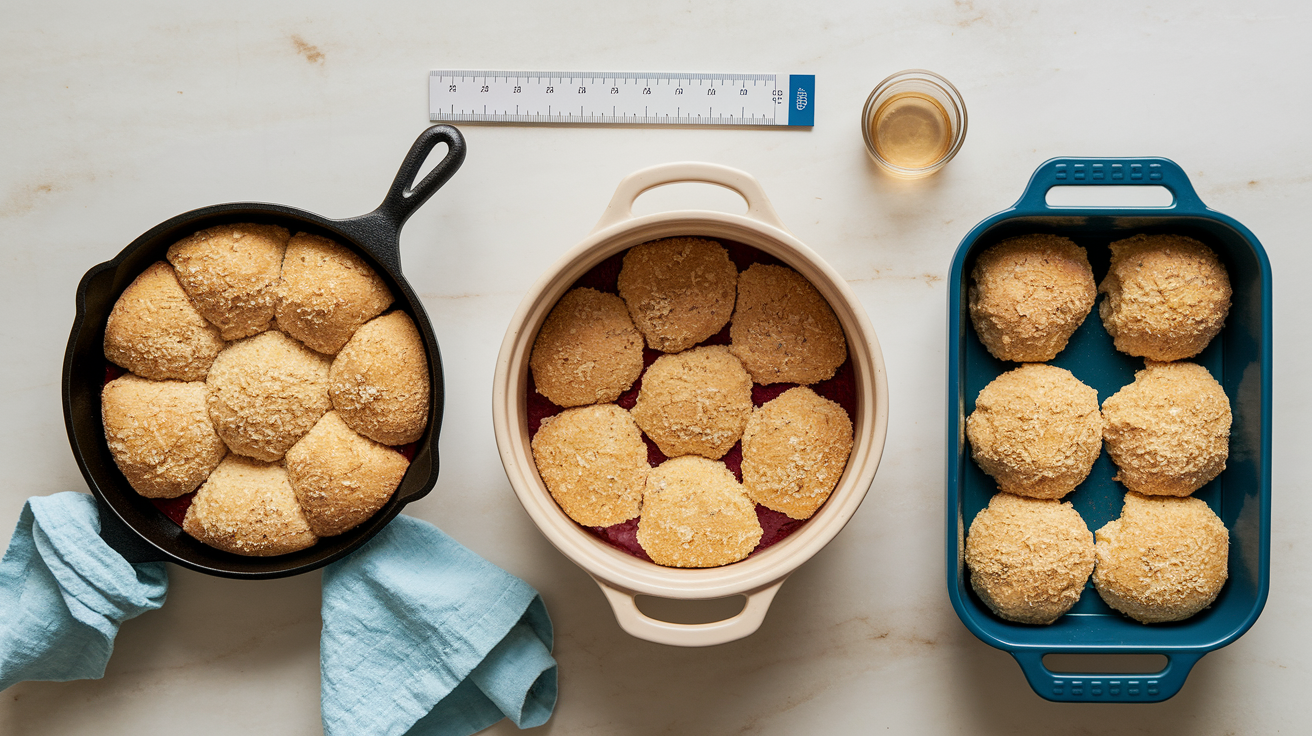
A 4-quart baking dish or Dutch oven is the standard size for this recipe and gives you a cobbler that’s about 2 inches deep with a good ratio of topping to filling. Cast iron skillets work beautifully and add extra browning on the bottom and sides, plus they hold heat well, which keeps the cobbler warm longer at the table. If you use a wider, shallower dish, the cobbler will bake faster because the batter layer is thinner, so start checking for doneness around 30 minutes.
The oven temperature range of 350°F to 375°F affects texture and browning. At 350°F, the cobbler bakes more slowly and evenly, which gives the filling time to thicken without the top browning too fast. At 375°F, you get more caramelization on the topping and faster cooking, but you need to watch closely to avoid burning the edges. If your oven runs hot, stick with 350°F and check the center with a toothpick before pulling it out.
Bake Time Adjustments by Dish
- Deep dish or 4-quart casserole: 35 to 40 minutes at 350°F.
- Cast iron skillet (10 to 12 inches): 30 to 35 minutes at 375°F, checking early for edge browning.
- Shallow 9×13 pan: 25 to 30 minutes at 375°F, as the thinner layer cooks faster.
Professional-Level Brown Butter Glaze Troubleshooting & Customization
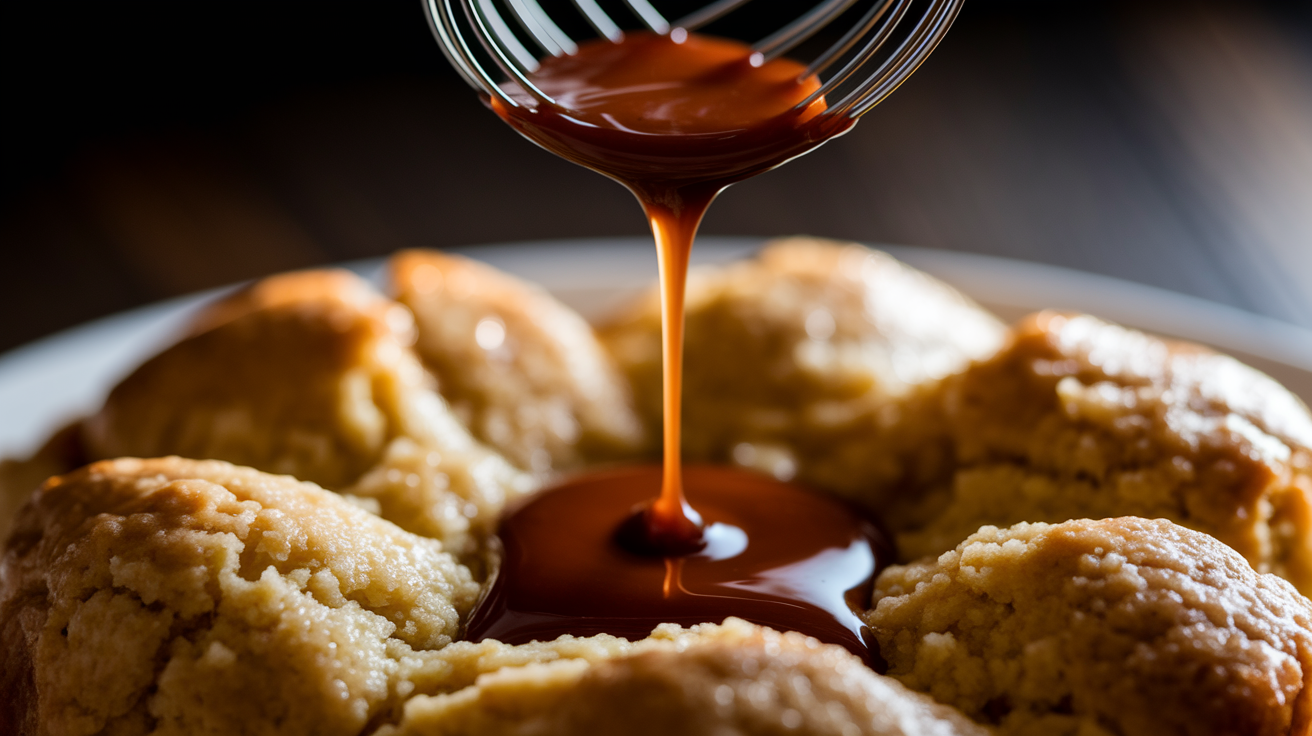
The glaze should be smooth, glossy, and thick enough to coat the back of a spoon without running off immediately. If your glaze looks separated or oily, the butter was too hot when you added the sugar, which caused the fat to break away from the sugar. Let the browned butter cool for a minute or two before whisking in the powdered sugar, and add the milk slowly while whisking constantly to bring it back together.
Graininess happens when powdered sugar doesn’t dissolve fully, usually because the glaze wasn’t whisked long enough or the butter cooled too much before mixing. Warm the glaze gently over low heat while whisking to smooth it out. If the glaze is too thick, add milk one teaspoon at a time until it loosens to a pourable consistency. If it’s too thin, whisk in more powdered sugar or let it cool slightly to thicken.
Glaze Troubleshooting List
- Separation or oily texture: Cool the butter slightly before adding sugar, then whisk in milk gradually to emulsify.
- Grainy or gritty glaze: Reheat gently while whisking, or strain the browned milk solids out for a completely smooth finish.
- Too thick to drizzle: Add milk or cream one teaspoon at a time until it ribbons off the whisk.
- Too sweet for ripe peaches: Cut the powdered sugar by half and add a pinch of salt to balance.
Serving & Pairing Ideas for Bourbon Peach Cobbler with Brown Butter Glaze
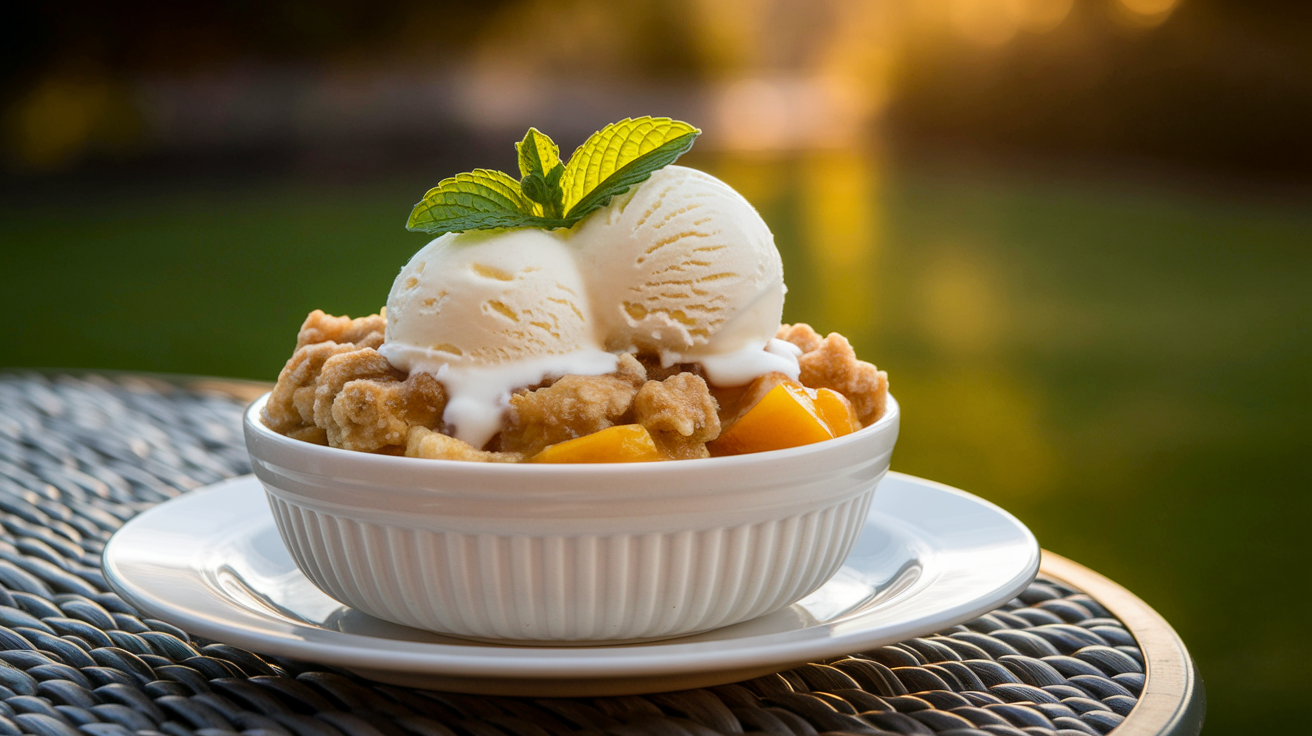
Serve this cobbler warm, about 20 minutes after it comes out of the oven, when the filling has thickened but the top is still hot enough to melt a scoop of vanilla ice cream on contact. The contrast between the steamy fruit and cold ice cream is what makes cobbler night feel like an event. If you’re not an ice cream household, sweetened whipped cream or a dollop of Greek yogurt works just as well and adds a tangy note that cuts through the sweetness.
Drizzle the brown butter glaze over individual servings for a glossy finish and an extra hit of toasted flavor. If you’re feeling fancy, sprinkle a little flaky sea salt over the glaze to bring out the caramel notes in the browned butter.
Serving and Pairing Ideas
- Serve with cold vanilla bean ice cream, letting it pool around the warm cobbler.
- Top with fresh whipped cream sweetened with a tablespoon of powdered sugar and a splash of bourbon.
- Garnish with a sprig of fresh mint or a light dusting of cinnamon sugar for color and aroma.
- Pair with a bourbon cocktail like an Old Fashioned or a bourbon lemonade for adults who want to echo the dessert’s flavors.
- Drizzle extra glaze over the whole cobbler just before serving for a bakery-style sheen and added richness.
Storage, Make-Ahead Prep & Reheating for Cobbler Success
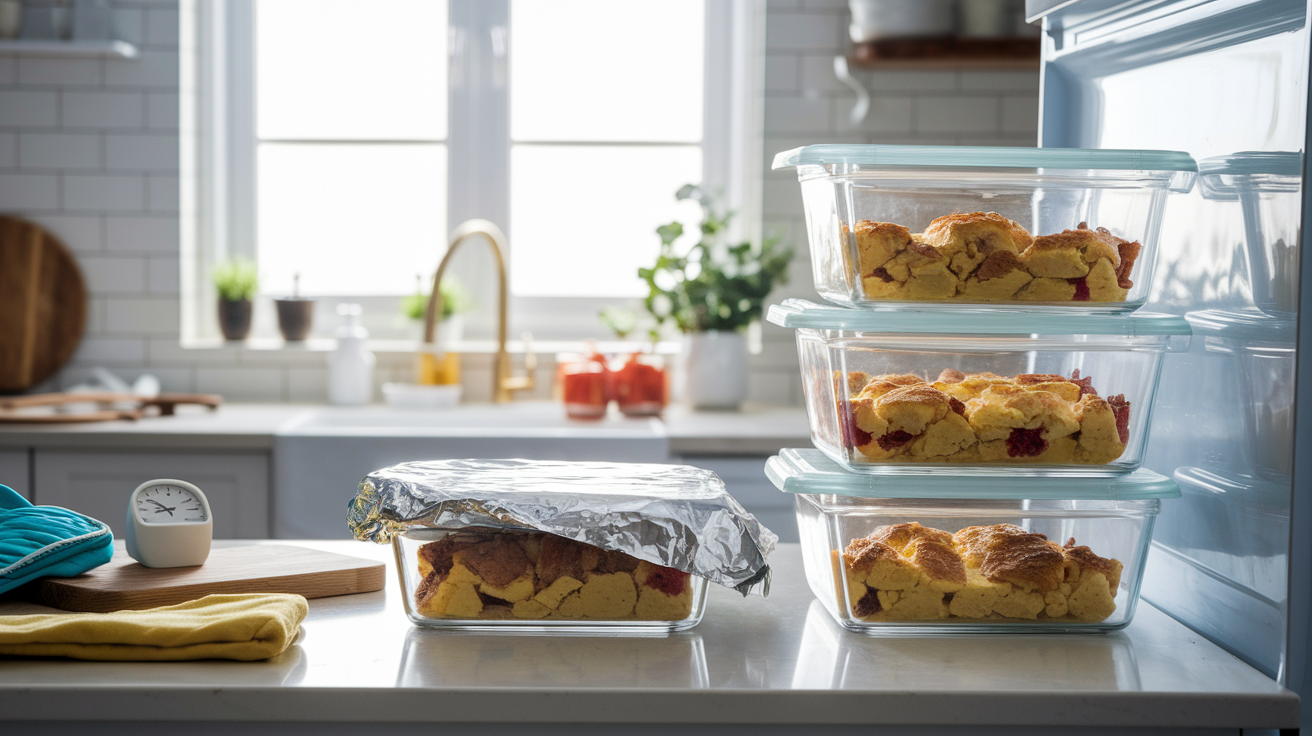
Let the cobbler cool completely before covering and refrigerating. Warm cobbler creates condensation under the cover, which makes the topping soggy. Once cooled, store it covered in the fridge for up to four days. The filling will firm up as it chills, and the topping will soften slightly, but both textures come back when you reheat.
You can prep the bourbon peach filling the night before and keep it in the fridge, then make the batter and assemble the cobbler right before baking. This saves time and lets the peaches macerate longer, which deepens the flavor. Don’t brown the butter ahead of time for the base, though, because reheated browned butter can separate and lose its nutty aroma.
Reheating Instructions
- Preheat your oven to 325°F and place individual portions or the whole cobbler in an oven-safe dish.
- Cover loosely with foil to prevent the top from over-browning, and bake for 15 to 20 minutes until warmed through and the filling is bubbling again.
- For single servings, microwave on 50 percent power for 60 to 90 seconds, checking halfway to avoid overheating, which can make the topping rubbery.
Common Questions About Bourbon Peach Cobbler & Brown Butter Glaze
Why is my filling runny even after baking?
Peaches release a lot of juice, especially if they’re very ripe. Make sure you’re using cornstarch or flour to thicken the filling, and let the cobbler rest for 20 minutes before serving so the juices have time to set.
Can I skip the bourbon?
Yes. Replace the bourbon with an equal amount of water, and add 1/2 teaspoon of vanilla extract to keep some depth of flavor.
How do I keep the topping from getting soggy?
Don’t overmix the batter, and make sure the peach filling is hot when you spoon it over the batter. Bake until the topping is fully golden and a toothpick comes out clean, which means the batter has cooked through.
Does the alcohol cook off completely?
Most of it does, but trace amounts remain even after a long bake. If you need a completely alcohol-free dessert, use the water substitution.
Can I use frozen peaches?
Yes, but thaw them completely and drain off the excess liquid before simmering with bourbon and sugar. Frozen peaches release more water, so you may need to add an extra tablespoon of cornstarch.
What’s the difference between cobbler and crisp?
Cobbler has a biscuit or batter topping that bakes into a soft, cake-like layer. Crisp has a crumbly oat topping that stays crunchy.
Why do I brown the butter in the baking dish instead of a pan?
Browning the butter directly in the dish saves cleanup and lets the butter coat the bottom evenly, which crisps the base of the batter as it bakes.
Final Words
Slide the bubbling cobbler from the oven and let the buttery top rest for about 20 minutes so the filling thickens.
You’ve prepped peaches, reduced bourbon, browned the butter, mixed the batter, layered without stirring, and baked until golden and jammy. Glaze until it ribbons and looks glossy.
Serve warm with a steamy scoop of vanilla ice cream. This bourbon peach cobbler with brown butter glaze is easy to pull off and sure to make dessert feel like a little celebration.
FAQ
Q: What’s the best oven temperature and bake time for bourbon peach cobbler?
A: The best oven temperature for bourbon peach cobbler is 350°F (375°F for deeper dishes), baked about 35–40 minutes; bake until the filling bubbles and the topping is golden and mostly set.
Q: How much bourbon should I use and will the alcohol cook off?
A: Using 1/2 cup bourbon with five cups peaches creates a balanced reduced bourbon flavor; alcohol reduces significantly during simmering and baking, but substitute water or juice to avoid alcohol completely.
Q: How do I choose and prep peaches for the best texture?
A: Choose ripe-but-firm peaches—yellow hold shape better, white are sweeter; freestone peaches are easier to pit, blanch to loosen skins, and frozen peaches work fine if thawed (avoid canned).
Q: How do I brown butter and make a smooth brown butter glaze?
A: Brown butter by melting 8 tablespoons until foamy with golden specks and a nutty aroma, cool slightly, then whisk in sugar and a splash of milk until the glaze ribbons off the whisk.
Q: How do I prevent a runny filling and soggy bottom?
A: Prevent a runny filling by mixing cornstarch with sugar during maceration, keeping fruit-to-liquid ratios balanced, avoiding overcooking fruit, and letting the cobbler rest so juices thicken.
Q: What’s the correct layering method to get a tender topping and jammy fruit?
A: The correct layering method is to pour batter over the hot browned butter without stirring, then spoon the bourbon-reduced peaches on top so the topping bakes tender and the fruit stays concentrated.
Q: How should I store, make ahead, and reheat bourbon peach cobbler?
A: Store cooled cobbler refrigerated up to 4 days or freeze portions; reheat covered in a 325°F oven 15–20 minutes to warm through and revive the topping; you can prepare the filling a day ahead.