
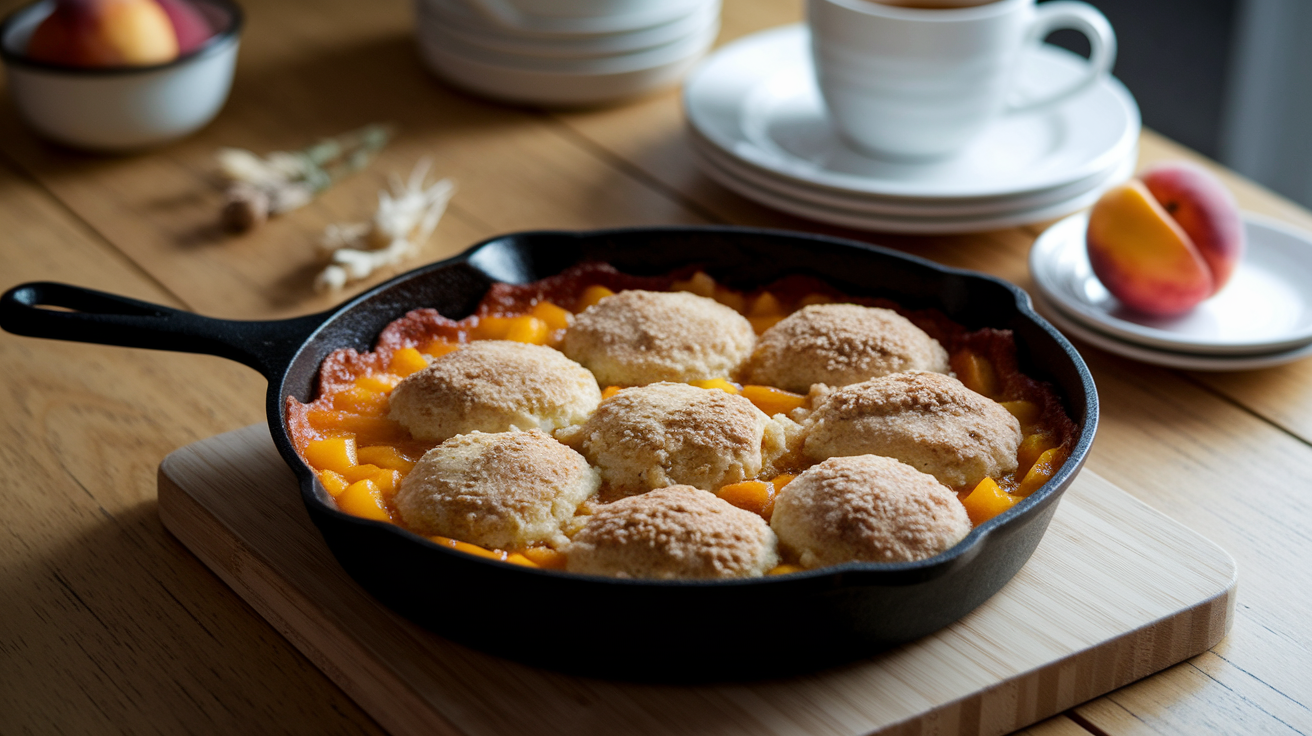
Think a soggy bottom is just part of peach cobbler? Think again.
A puddle of juice under the topping ruins the buttery crisp crust and jammy peach filling you want to serve warm.
In this post you’ll learn the simple, kitchen-friendly fixes that actually work, like pre-cooking or draining the peaches, using a reliable thickener, picking the right pan, and giving the cobbler time to rest so the juices set.
Pick two or three of these steps and your cobbler will come out set, not soupy, every time.
Key Steps to Stop a Soggy Bottom in Peach Cobbler
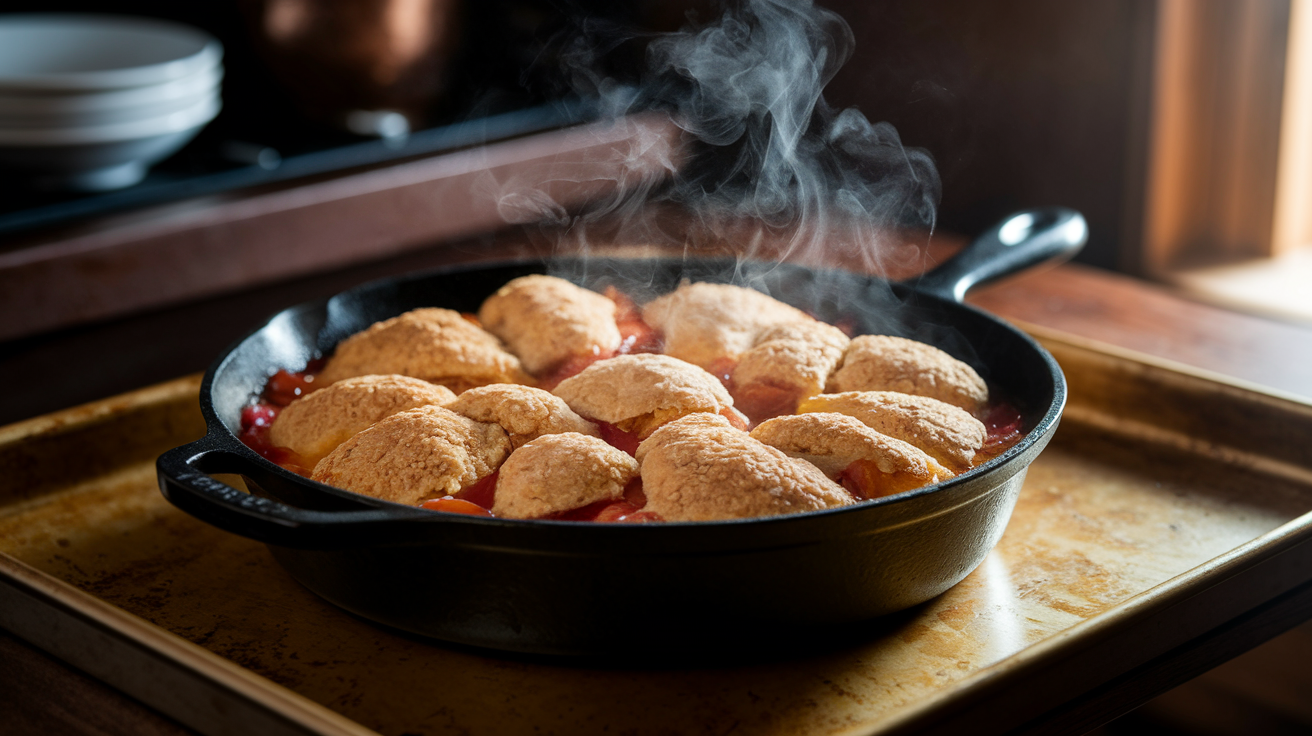
A soggy bottom happens when too much moisture sits under the topping and the bottom heat never gets strong enough to dry it out. The fruit releases juice, the pan doesn’t heat evenly, and you end up with a puddle instead of a set filling.
Several simple steps fix the problem without changing the recipe much. Each one targets either moisture control or heat transfer. Combining a few gives you reliable results.
- Pre-cook peaches to release and reduce excess juice before assembly
- Use a thickener like cornstarch or tapioca to bind the fruit juices
- Preheat the baking pan or use a hot baking sheet underneath
- Place the cobbler on the lower oven rack for better bottom heat
- Don’t overfill the dish, leave headspace for steam and bubbling
- Vent the topping with gaps or slits so steam escapes easily
- Choose a cast-iron skillet or metal pan instead of glass
- Let the cobbler rest 20 to 40 minutes after baking so the filling sets
You don’t need every step to win. Pick two or three and you’ll see the difference right away.
Understanding Why Peach Cobbler Gets a Soggy Bottom (Moisture + Heat Factors)
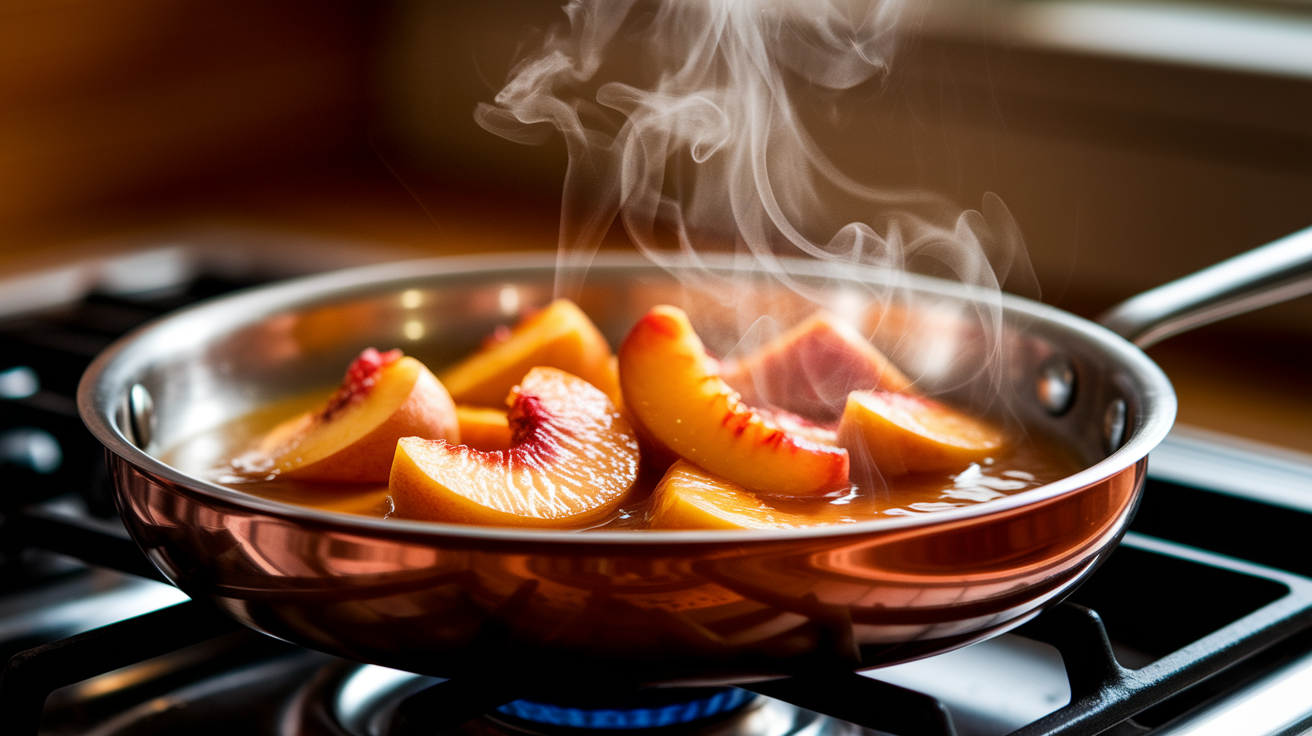
Peaches are packed with juice, especially when ripe. As they heat, sugar and salt pull even more liquid out of the fruit. If you slice peaches thin, they collapse and shed juice faster than if you cut them into chunks. Overripe peaches release the most moisture, which is why slightly firm fruit is the safer choice for cobbler.
Thawing frozen peaches without blotting them dry adds extra water to the filling. Canned peaches come packed in syrup. You’ll need to drain completely or the base will turn into soup. Sugar, lemon juice, and salt all affect how the fruit behaves. They draw out moisture but also help the filling gel if you’re using the right thickener.
Pan material changes everything. Glass and ceramic heat slowly and unevenly, so the bottom stays pale and wet while the top browns. Cast iron and metal pans conduct heat fast and direct, crisping the base before juice can pool. If you only have a glass dish, bump the oven temperature up 10 to 25 degrees and use a preheated baking sheet underneath.
Thickening Agents to Prevent a Soggy Peach Cobbler Bottom (Cornstarch, Flour, Tapioca)
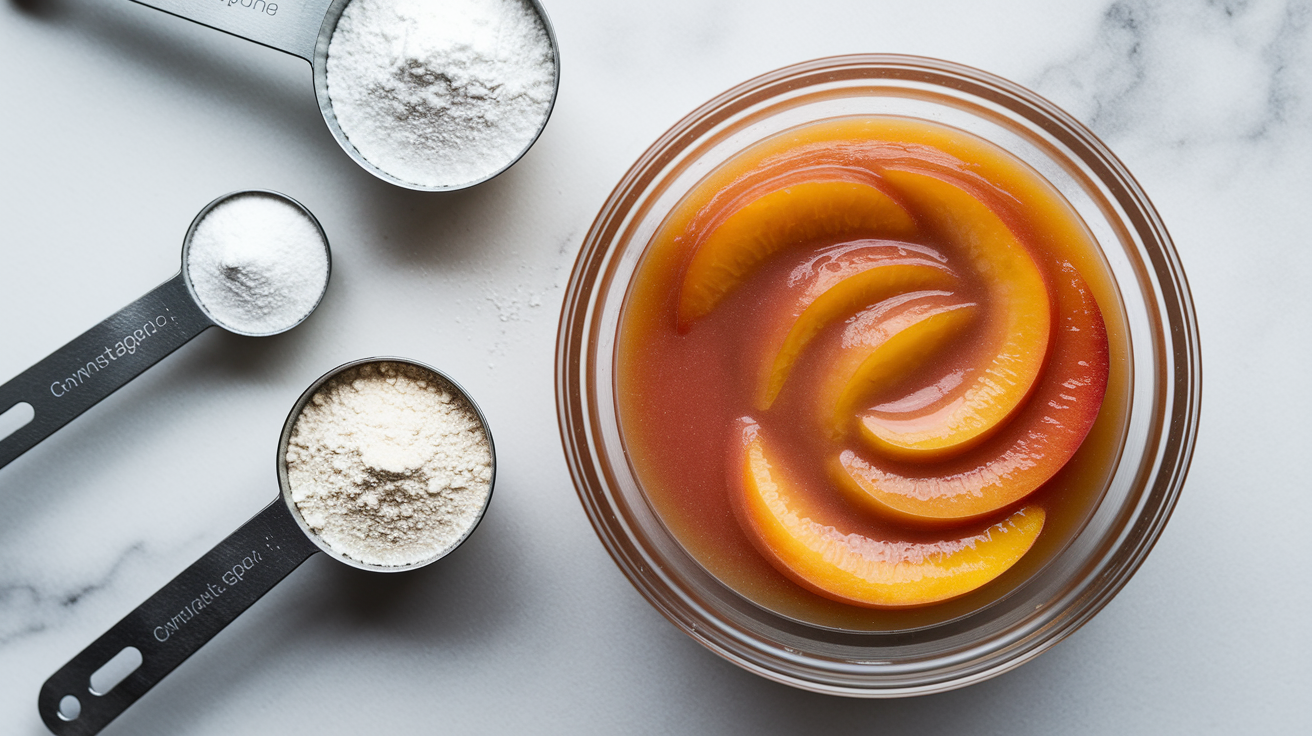
Cornstarch is the most reliable thickener for peach cobbler. It creates a clear, glossy gel and needs less volume than flour, so it doesn’t weigh down the filling or cloud the juices. Use 1 to 1.5 tablespoons of cornstarch per cup of sliced fruit. If your peaches are very juicy, go with 1.5 tablespoons.
Instant tapioca works just as well and sets up with a very clear finish. Use the same ratio, 1 to 1.5 tablespoons per cup of fruit. All-purpose flour is the weakest option. It takes 2 to 3 tablespoons per cup to get a similar set, and it can leave the filling cloudy or starchy-tasting. Lemon juice helps the thickener gel properly and adds brightness to balance the sugar.
| Thickener | Amount per Cup Fruit | Benefits |
|---|---|---|
| Cornstarch | 1 to 1.5 tablespoons | Strong gel, clear finish, minimal volume |
| Instant Tapioca | 1 to 1.5 tablespoons | Very clear, glossy, sets well with acid |
| All-Purpose Flour | 2 to 3 tablespoons | Easy to find, softer set, can taste cloudy |
Reducing Peach Juice Before Baking (Pre-Cooking, Maceration, & Draining)
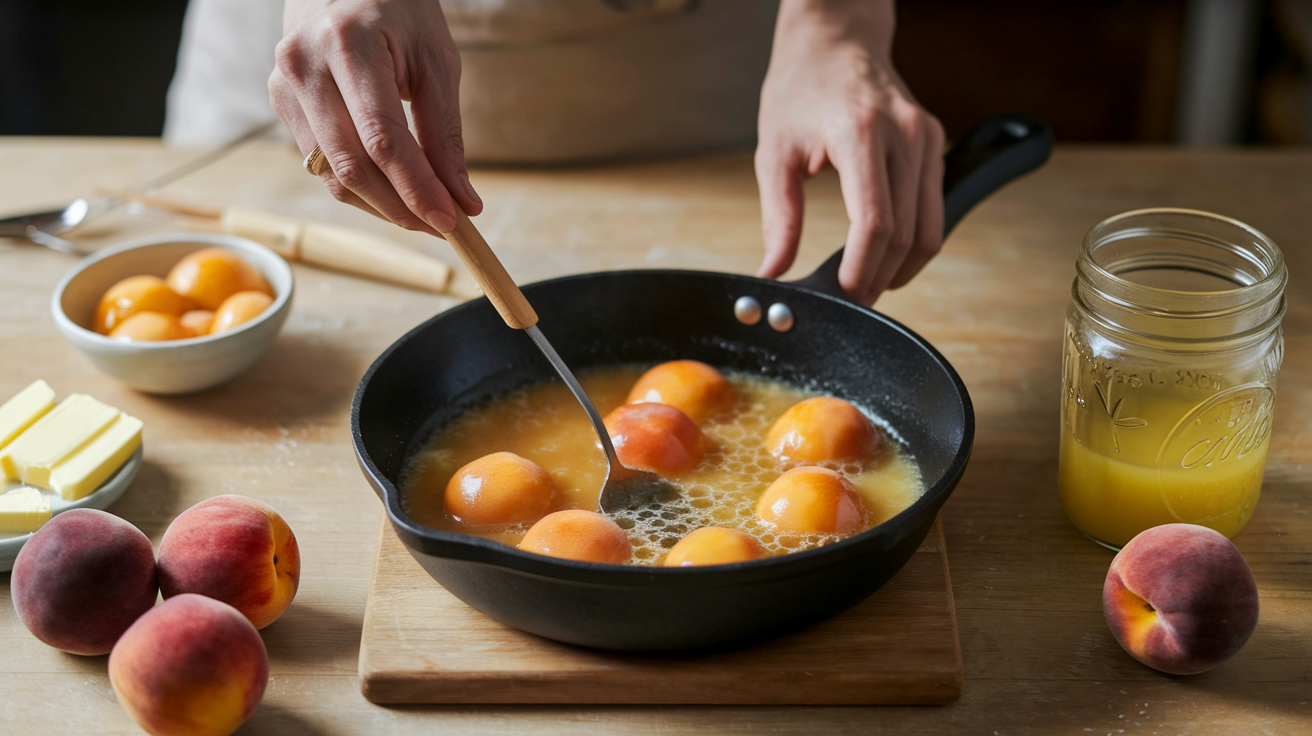
Pre-cooking the peaches on the stovetop is the fastest way to control moisture. Heat them in a skillet with butter and sugar over medium heat for 5 to 15 minutes, stirring occasionally. The juice will release, simmer, and reduce by 10 to 25 percent depending on how ripe the fruit is. You end up with concentrated peach flavor instead of watery liquid that soaks into the crust.
If you prefer raw fruit in the filling, macerate the sliced peaches with 1 to 2 tablespoons of sugar per cup and 1 tablespoon of lemon juice for every 3 to 4 cups of fruit. Let them sit 20 to 30 minutes, then drain the juice through a fine-mesh strainer. You can add a little of that juice back in if the filling looks too dry, but most of it should be discarded or saved for another use. Canned peaches need to be drained completely and patted dry with paper towels. They’re already soft and will turn to mush if you add them with syrup still clinging.
- Slice peaches into chunks, not thin slices, so they hold their shape.
- Heat them in a wide skillet over medium heat with butter and sugar.
- Stir every few minutes so they release juice evenly.
- Simmer uncovered until the liquid reduces and starts to thicken slightly.
- Set aside a small portion of uncooked peaches and stir them in at the end for fresh texture.
- Let the mixture cool for 5 to 10 minutes before transferring to the baking dish.
Choosing the Best Pan to Avoid a Soggy Peach Cobbler Bottom (Cast Iron, Metal, Glass)
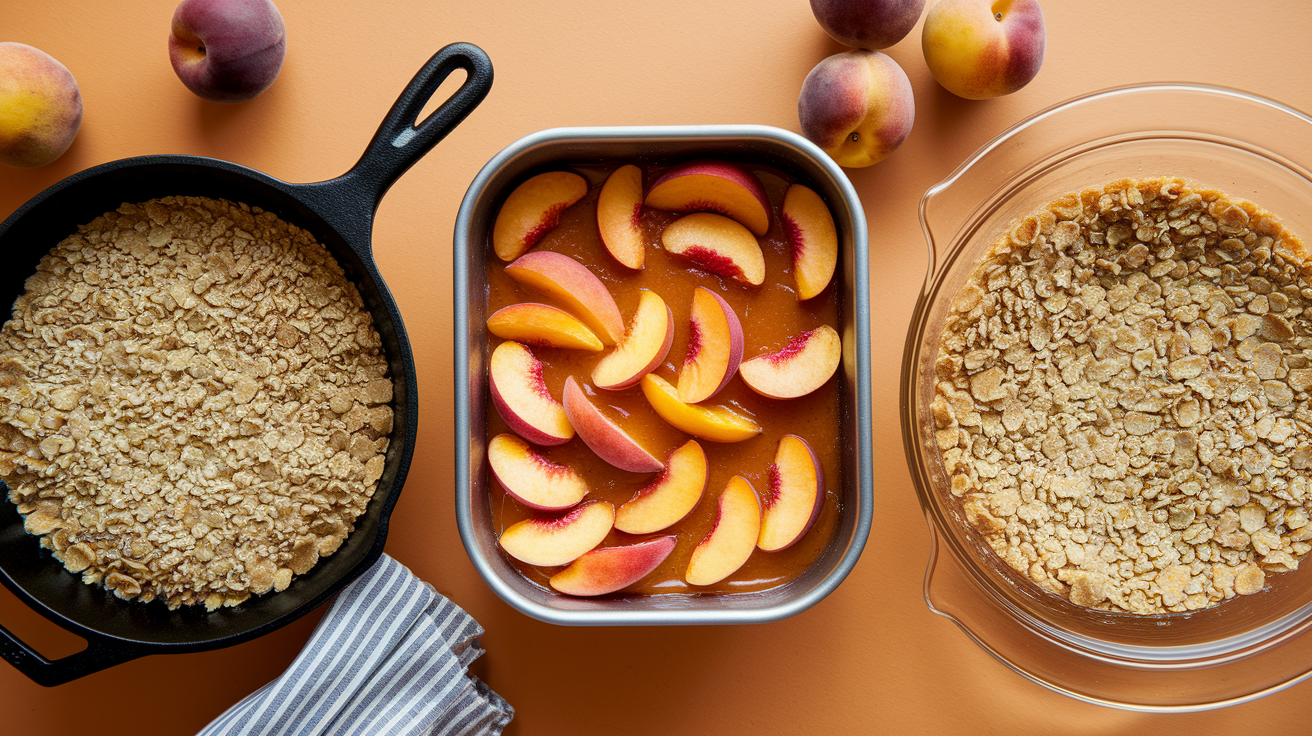
Cast-iron skillets give the crispest bottoms because they hold and transfer heat evenly across the entire base. A 9 to 10 inch cast-iron skillet is ideal for single-batch cobblers with 3 to 6 cups of fruit. Metal pans, especially darker ones, come in second for heat conduction and browning power.
Glass and ceramic pans heat slowly and unevenly, which leaves the bottom pale and soft while the top browns. If you only have a glass 9×13 dish, preheat it empty in the oven for 8 to 10 minutes or place it on top of a preheated baking sheet. That gives the bottom a head start on crisping before the fruit juices settle.
- Cast iron: Best choice, preheats well, browns evenly, holds temperature.
- Metal (aluminum, steel): Second best, heats fast, lighter than cast iron.
- Dark metal pans: Brown faster than shiny ones, good for crisp crusts.
- Glass or ceramic: Slowest heat transfer, requires higher temp or preheated sheet underneath.
Baking Temperatures and Oven Positioning to Prevent Soggy Cobbler Bottoms
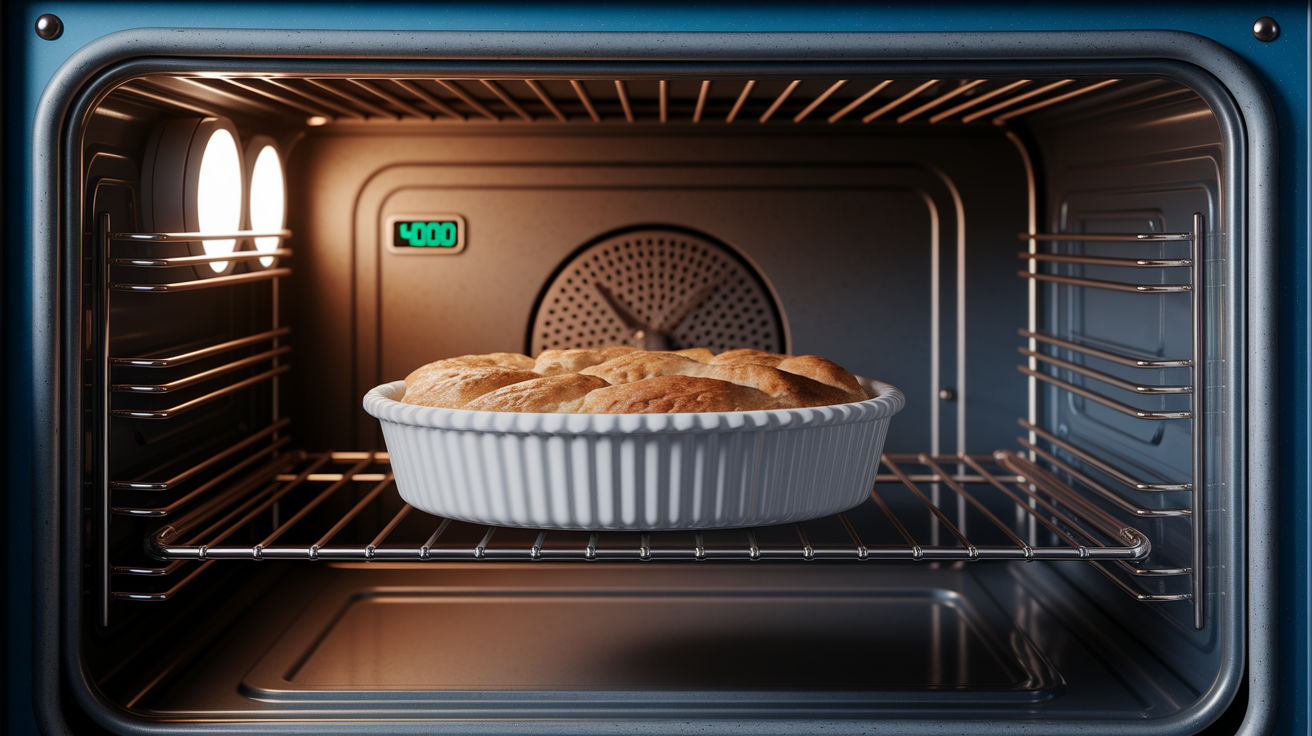
Bake peach cobbler at 375 to 425 degrees Fahrenheit. Higher temperatures evaporate moisture faster and crisp the bottom before juice can pool. Start at 400 degrees for most recipes, then adjust based on your pan and oven.
Place the pan on the lower third of the oven, not the center rack. Lower placement concentrates heat on the bottom and helps the crust set before the topping browns. If you have a baking stone or steel, preheat it on the lower rack and set the cobbler pan directly on top. That conducts extra heat straight into the base. For the final 3 to 8 minutes of baking, you can increase the temperature to 425 degrees or move the pan to the lowest rack to crisp the underside without burning the top.
- Preheat the oven fully before baking, at least 15 minutes.
- Use 375 to 400 degrees as your starting temperature.
- Place the pan on the lower third of the oven.
- Preheat a baking sheet or stone on the lower rack if you want extra bottom heat.
- Finish at 425 degrees for 3 to 8 minutes if the bottom still looks pale.
Assembly Techniques That Stop Soggy Bottoms in Peach Cobbler (Layering, Barriers, Venting)
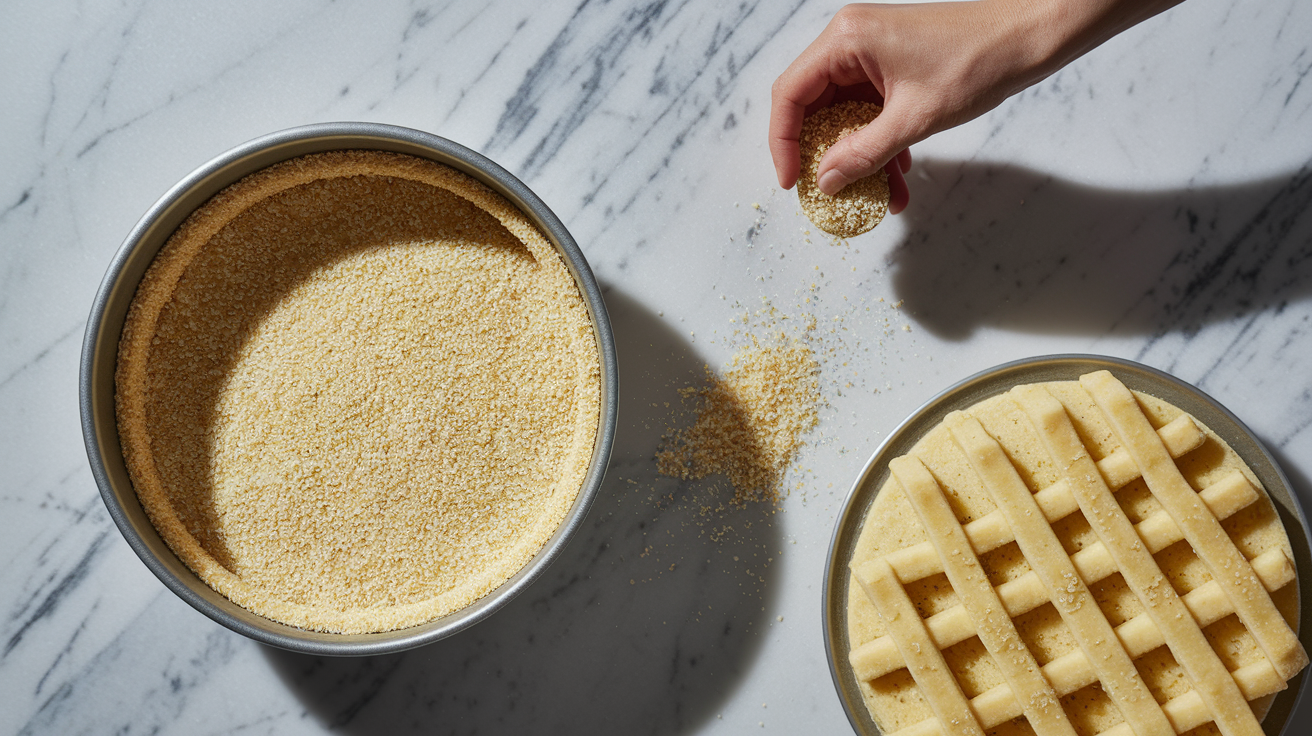
Before adding the fruit, scatter 1 to 2 tablespoons of fine dry breadcrumbs or 2 to 3 tablespoons of coarse cornmeal across the bottom of the pan. This absorbent layer soaks up residual juice and creates a barrier between the crust and the wet filling. Almond meal works the same way and adds a subtle nutty flavor.
Don’t overfill the baking dish. Use 3 to 6 cups of sliced fruit in a 9 to 10 inch pan and leave 1/2 to 1 inch of headspace at the top. This gives the filling room to bubble without overflowing and lets steam escape. If you’re using a drop-biscuit topping, leave gaps between each biscuit instead of spreading it edge to edge. Those gaps let steam vent and prevent the topping from steaming into a gummy layer.
For lattice or pastry tops, cut slits or vent holes before baking. The steam has to go somewhere. If it’s trapped under a solid lid, it condenses and drips back into the filling.
- Sprinkle breadcrumbs, cornmeal, or almond meal on the bottom before adding fruit
- Leave 1/2 to 1 inch of headspace between the filling and the top edge of the pan
- Use a drop-biscuit topping with visible gaps instead of a solid layer
- Cut vent slits in pastry tops so steam escapes during baking
- Don’t pile fruit higher than the pan’s natural depth, it will overflow and turn soggy
Blind-Baking and Preheating Techniques for a Crisp Cobbler Base
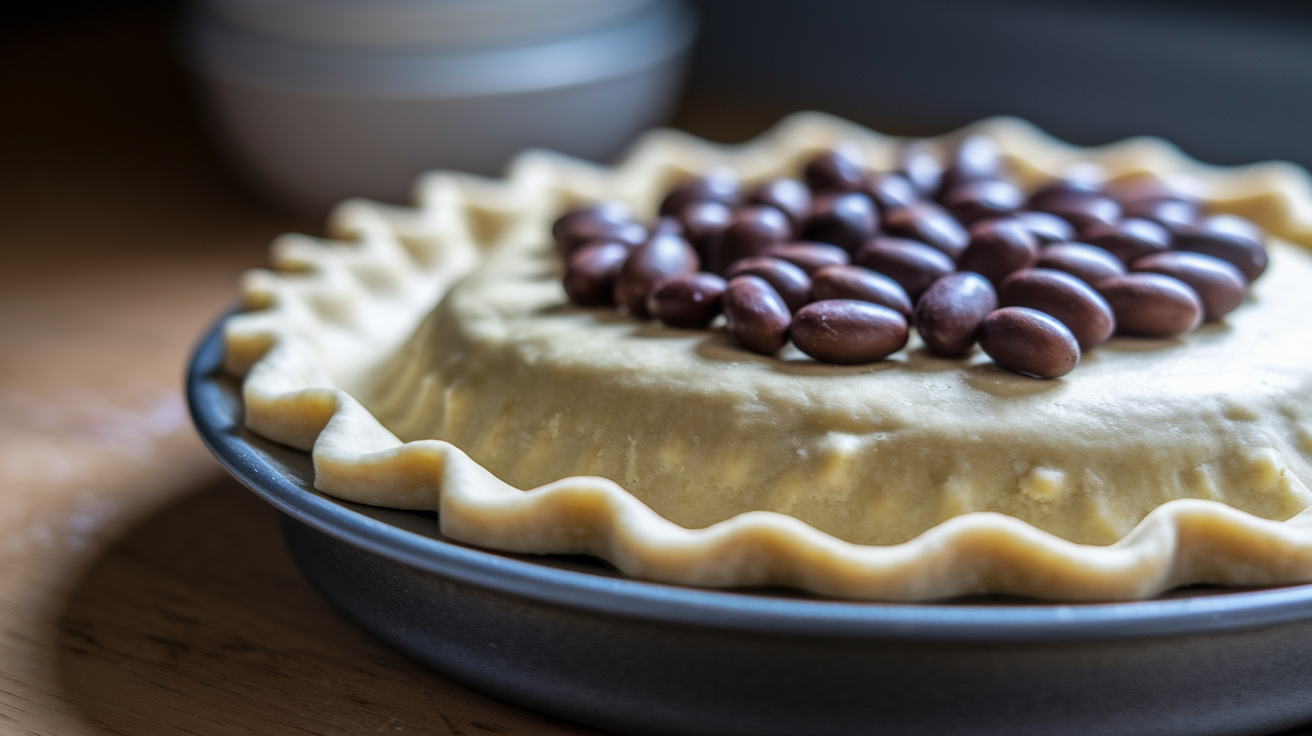
Blind-baking means pre-baking the bottom crust before adding the filling. This step creates a dry, set base that resists sogginess. Par-bake a pastry crust for 8 to 15 minutes at 375 degrees with pie weights or dried beans pressing down on parchment paper. The crust will turn pale golden and firm, then you add the filling and bake the rest of the way.
If you’re using a skillet cobbler with no bottom crust, preheat the empty skillet in the oven for 8 to 10 minutes. Add butter and let it melt, then swirl in a little sugar before pouring in the fruit. The hot pan jump-starts the crisping process and caramelizes the bottom layer of fruit, which adds flavor and helps evaporate moisture.
- Roll out your pastry crust and fit it into the pan.
- Line the crust with parchment paper and fill with pie weights or dried beans.
- Bake at 375 degrees for 8 to 15 minutes until the edges start to turn golden.
- Remove the weights and parchment, add the filling, and continue baking as directed.
Cooling, Resting, and Serving Peach Cobbler Without Causing Sogginess
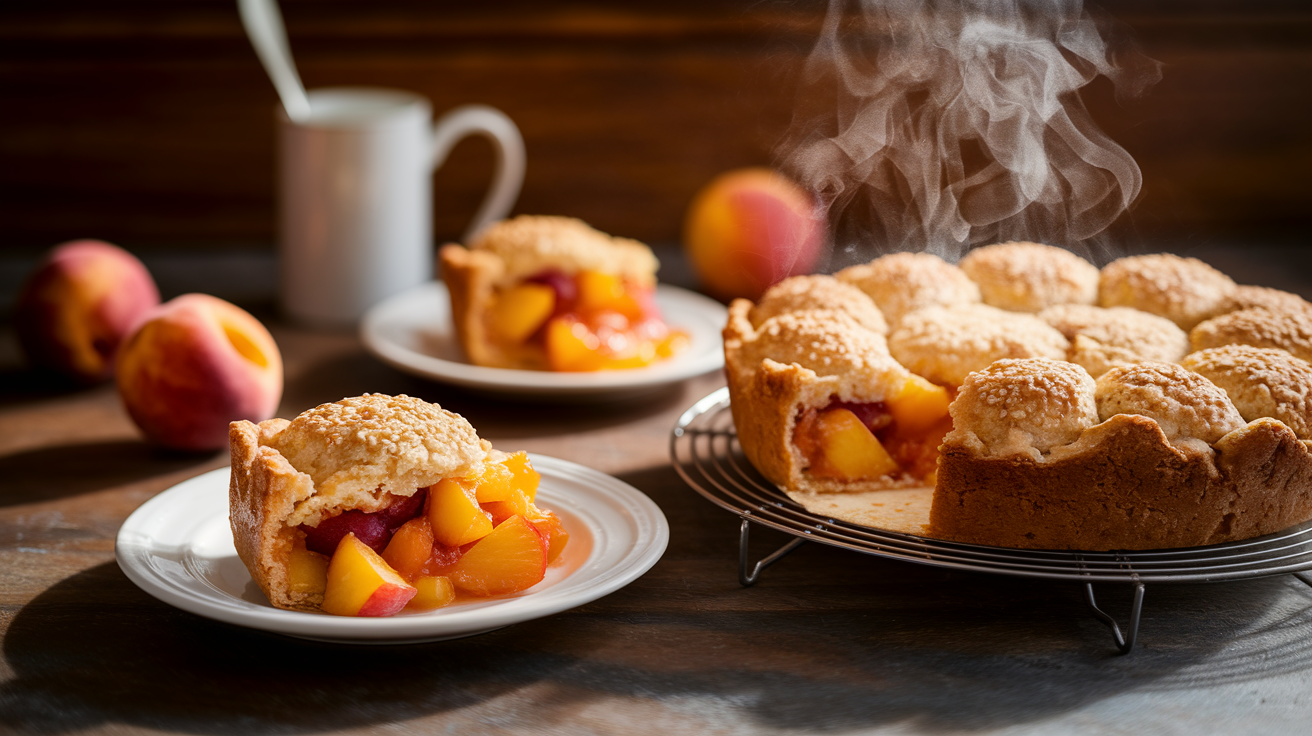
Let the cobbler rest for 20 to 40 minutes after you pull it from the oven. This resting time lets the filling set as it cools. The thickener needs time to gel, and the juices need to stop bubbling before they solidify. If your peaches were very juicy, rest the cobbler for up to 60 minutes.
Serving too soon means the filling will look runny and soak into the topping. If the bottom is still soft after resting, place the pan back on the lower oven rack at 425 degrees for 3 to 8 minutes. This quick blast of heat will dry and crisp the underside without overcooking the fruit. The cobbler’s ready when you can scoop a serving and the filling clings to the fruit instead of pooling in the dish.
Troubleshooting a Soggy Peach Cobbler Bottom (Fixing After Baking)
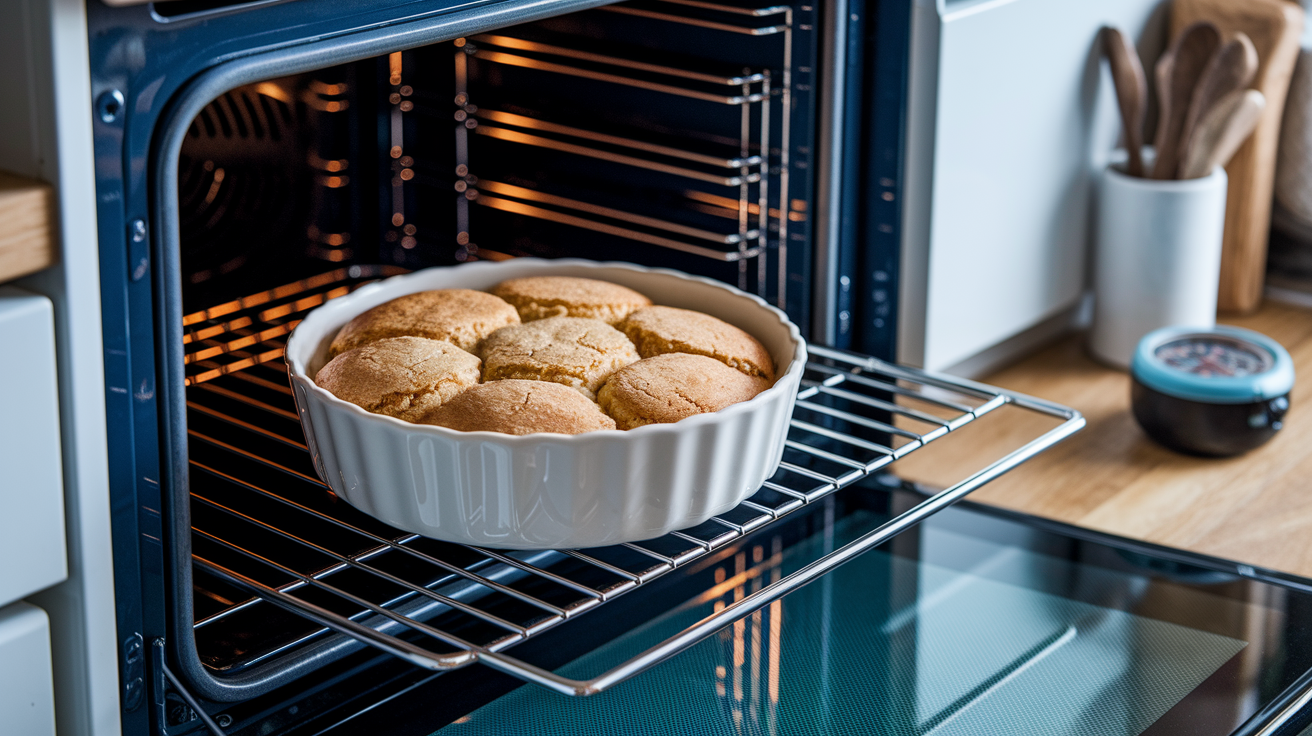
If your cobbler comes out runny, it’s usually under-thickened or underbaked. Reheat it at 400 to 425 degrees for 5 to 12 minutes on the lower rack. The extra heat will evaporate some of the liquid and firm up the filling. If the top is golden but the bottom is still soggy, your oven was too hot or the pan was placed too high. Next time lower the rack and reduce the temperature by 25 degrees.
Frozen cobbler can be stored for up to 3 months, but it needs to thaw overnight in the refrigerator before reheating. Reheat at 350 degrees until warmed through, about 20 to 30 minutes. Storing baked cobbler in the fridge increases sogginess over time because moisture condenses as it cools, so plan to crisp it up again before serving leftovers.
| Problem | Likely Cause | How to Fix |
|---|---|---|
| Filling is runny right after baking | Not enough thickener or underbaked | Reheat at 400°F for 10 to 15 minutes on lower rack |
| Bottom is soggy after cooling | Too much juice or wrong pan material | Pre-cook fruit next time or use cast iron; crisp at 425°F for 5 to 8 minutes |
| Top is burnt but bottom is pale and wet | Oven too hot or rack too high | Lower rack position and reduce temp by 25°F next time |
| Leftovers turn soggy in the fridge | Moisture condenses during storage | Reheat uncovered at 350°F for 15 to 20 minutes to re-crisp |
Final Words
Pull the cobbler from the oven, steam rising and edges bubbling, and you want a crisp bottom, not a puddle.
This post gives the fast fixes: pre-cook or macerate fruit, toss with a thickener, pick a well-heating pan, preheat the pan, mind oven placement, vent the topping, and let it rest.
Use even two or three of these tips and you’ll quickly see how to prevent soggy bottom in peach cobbler, serve a jammy filling with a buttery crisp base, and feel confident every time.
FAQ
Q: How to keep the bottom crust of peach pie from getting soggy?
A: Keeping the bottom crust of a peach pie or cobbler from getting soggy means removing excess juice and improving heat: pre-cook or thicken fruit, preheat a well‑heating pan, vent topping, and rest before slicing.
Q: What are the most common mistakes when making peach cobbler?
A: The most common mistakes when making peach cobbler that cause a soggy crust are using undrained or overripe fruit, skipping a thickener or pre-cook step, baking in a slow‑heating pan, overfilling, and not resting.